
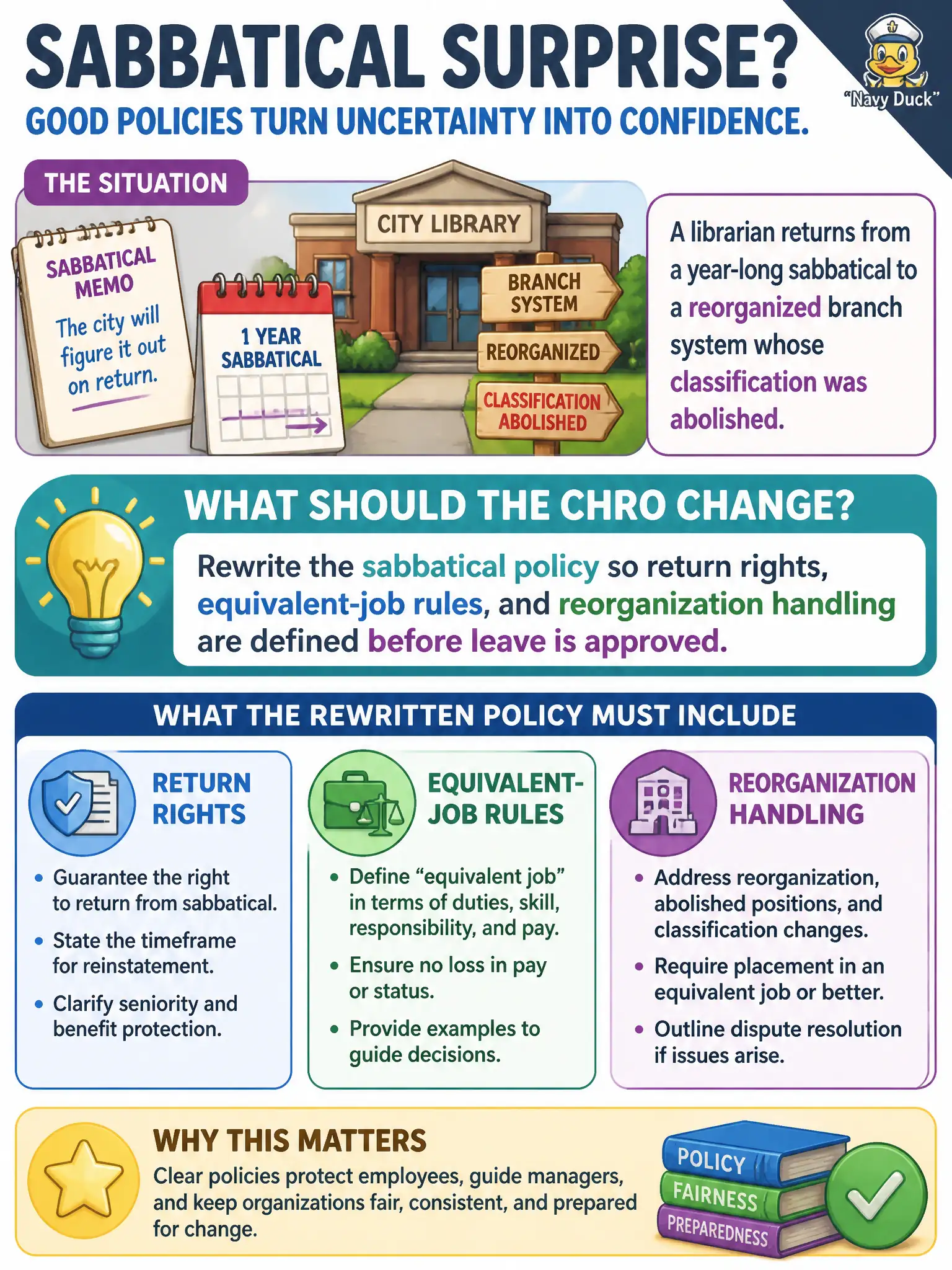
A librarian returns from a year-long sabbatical to a reorganized branch system whose classification was abolished. The sabbatical memo only said the city would figure it out on return. What should the CHRO change?
Select an answer to reveal the explanation.
Short Explanation
A sabbatical without return rights is a trapdoor, not a benefit. Write the landing before anyone takes off—what job, and what happens if the org chart moves. Figuring it out on the way back is how people end up with no chair.
Full Explanation
A librarian returning from a year-long sabbatical to a reorganized branch system whose classification was abolished exposes a sabbatical memo that only promised to figure it out later. The CHRO should rewrite sabbatical policy so return rights, equivalent-job rules, and reorganization handling are defined before leave is approved. Civic benefits that lack a landing are trapdoors; stewardship writes the chair before takeoff.
Converting the sabbatical into a resignation effective on the leave date fails by concept: it retroactively destroys the benefit. Creating a one-time unfunded librarian-at-large slot while leaving policy unchanged fails as a one-off patch that invites the next crisis. Offering severance and treating returns as optional courtesy fails by making return rights discretionary after the employee already left on promised terms.
Exam caveat: reorganization clauses should specify how abolished classifications map to equivalent work or layoff/recall rights consistent with civil service. Operational check: amend the policy, require a return-rights acknowledgment before approval, and stress-test the next sabbatical against a hypothetical reorg. Public employers should record the chosen control and rejected options in the talent or labor file so future leaders understand how the decision protects continuity of resident services.