
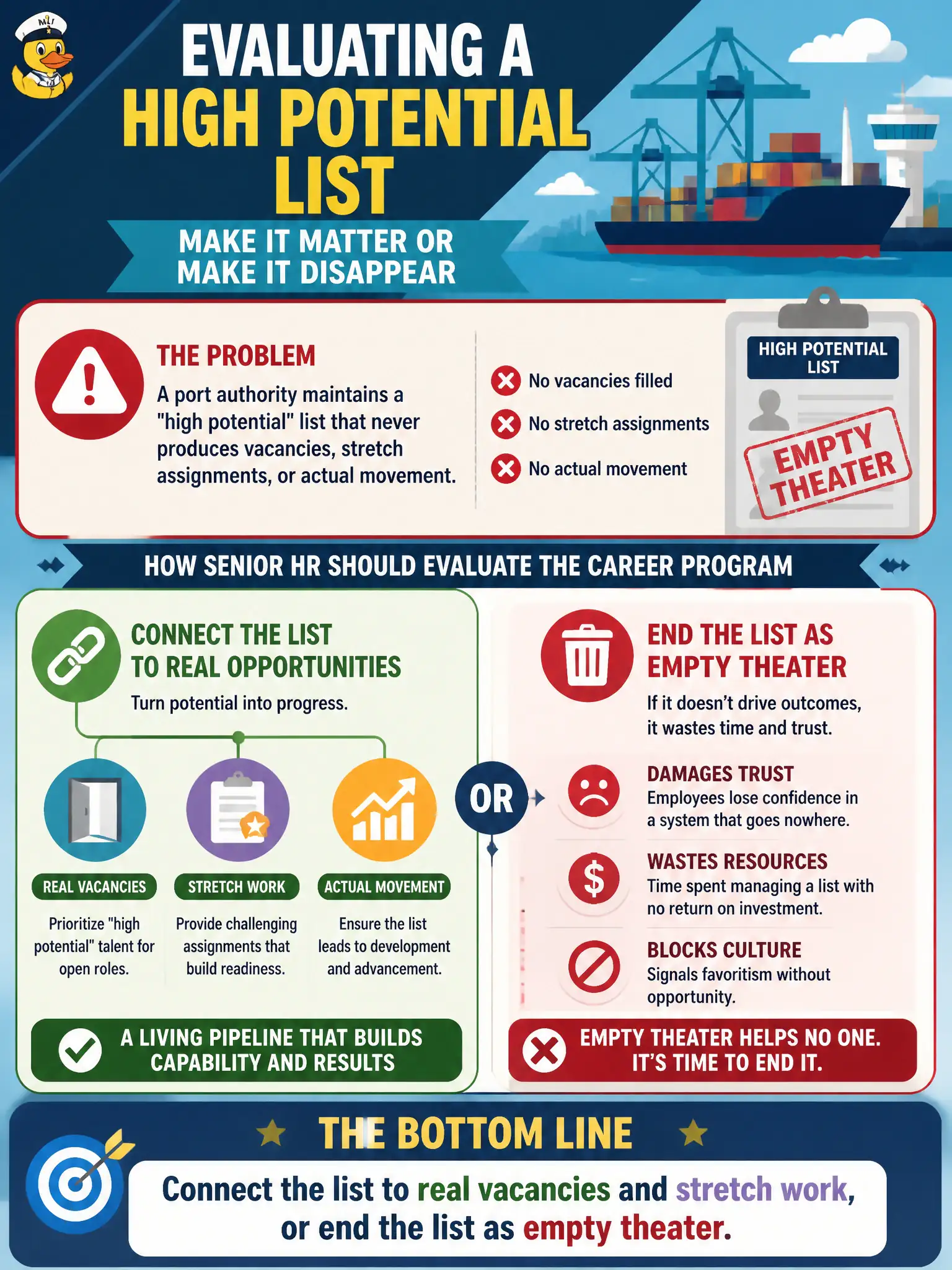
A port authority maintains a "high potential" list that never produces vacancies, stretch assignments, or actual movement. How should senior HR evaluate the career program?
Select an answer to reveal the explanation.
Short Explanation
A high-potential list that never moves anyone is a yearbook, not a career program. Either hook those names to real vacancies and stretch work or kill the theater. People judge the path by whether someone actually gets a job.
Full Explanation
A port authority 'high potential' list that never produces vacancies, stretch assignments, or movement is empty theater. Senior HR should connect the list to real vacancies and stretch work, or end the list. People judge civic career programs by whether someone actually gets a job; a yearbook of names without movement damages trust more than having no list.
Expanding the list so more names feel included without jobs fails by concept: wider theater is still theater. Publishing the list citywide as a retention poster fails if nothing moves behind the poster. Keeping the list secret for five more years and calling it a pipeline fails because secret non-movement is not a pipeline.
Exam caveat: connecting names to opportunities must still follow merit and posting rules—high-potential status is not a sole-source appointment. Operational check: require each listed person to have a stretch or vacancy plan within a cycle, purge inactive names, or retire the program if it cannot feed real work. Public employers should record the chosen control and rejected options in the talent or labor file so future leaders understand how the decision protects continuity of resident services. Re-validate the same control after the next operating cycle against current staffing, budget, and bargaining constraints.