
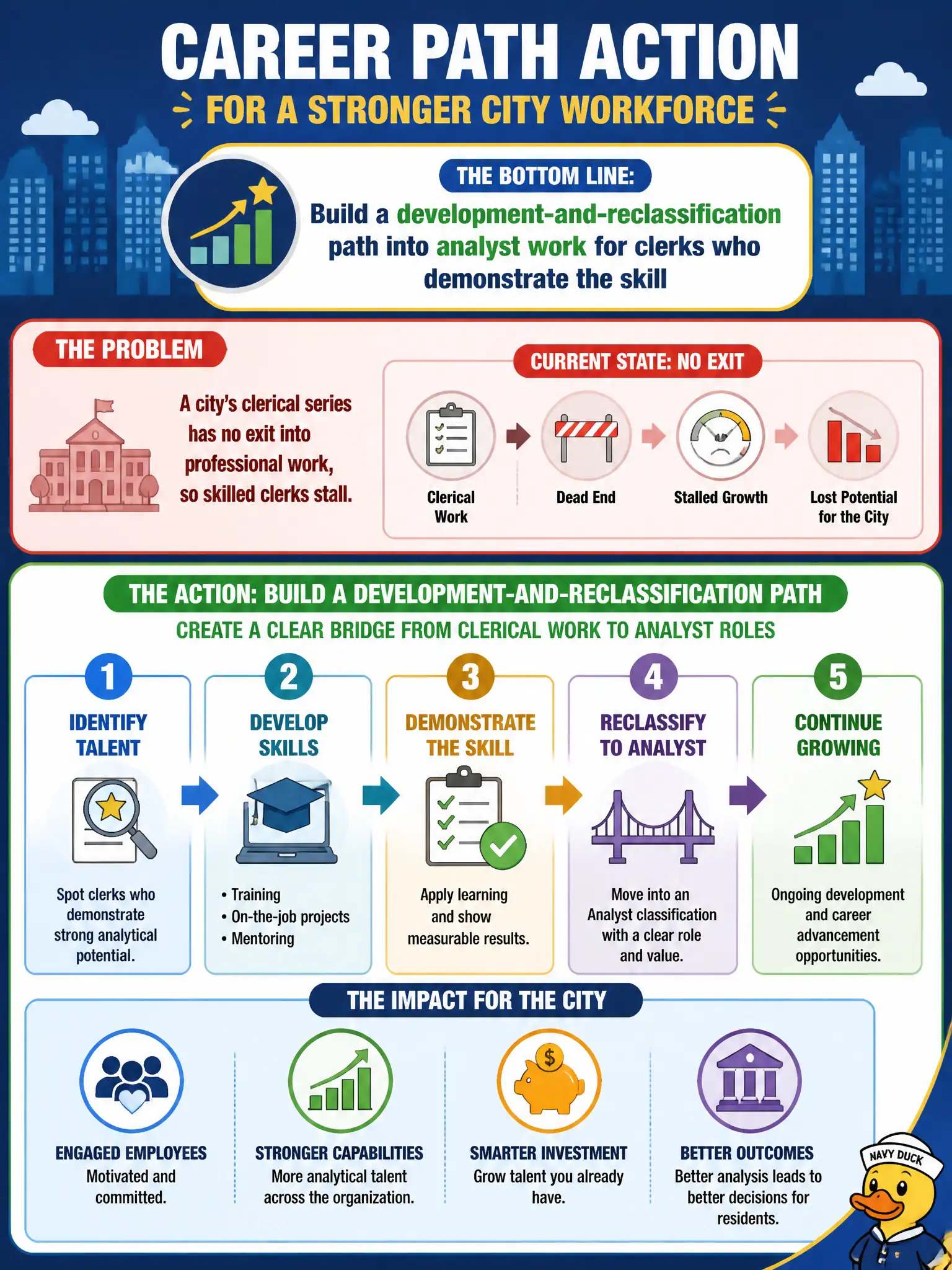
A city's clerical series has no exit into professional work, so skilled clerks stall. What career-path action should senior HR take?
Select an answer to reveal the explanation.
Short Explanation
A dead-end clerical series is a parking lot with a job title. If someone is already doing analyst-level thinking, build a development-and-reclass bridge instead of wishing them luck on the street. Real paths have an exit into the next kind of work.
Full Explanation
A clerical series with no exit into professional work stalls skilled clerks and wastes municipal talent. Senior HR should build a development-and-reclassification path into analyst work for clerks who demonstrate the skill. A dead-end series is a parking lot with a job title; civic employers should bridge people already doing analyst-level thinking rather than wishing them luck on the street.
Telling clerks to leave government if they want analyst work fails by concept: it exports talent the city already trained. Creating a new clerical grade with the same duties fails as title inflation without growth. Limiting analyst jobs to outside private-sector titles fails by ignoring internal capability and paying twice to backfill.
Exam caveat: reclassification and exam rules still apply—build preparatory development and lawful selection bridges, not informal promotions. Operational check: define bridge competencies, offer training and stretch projects, and open a reclass or exam path with clear eligibility. Public employers should record the chosen control and rejected options in the talent or labor file so future leaders understand how the decision protects continuity of resident services.