
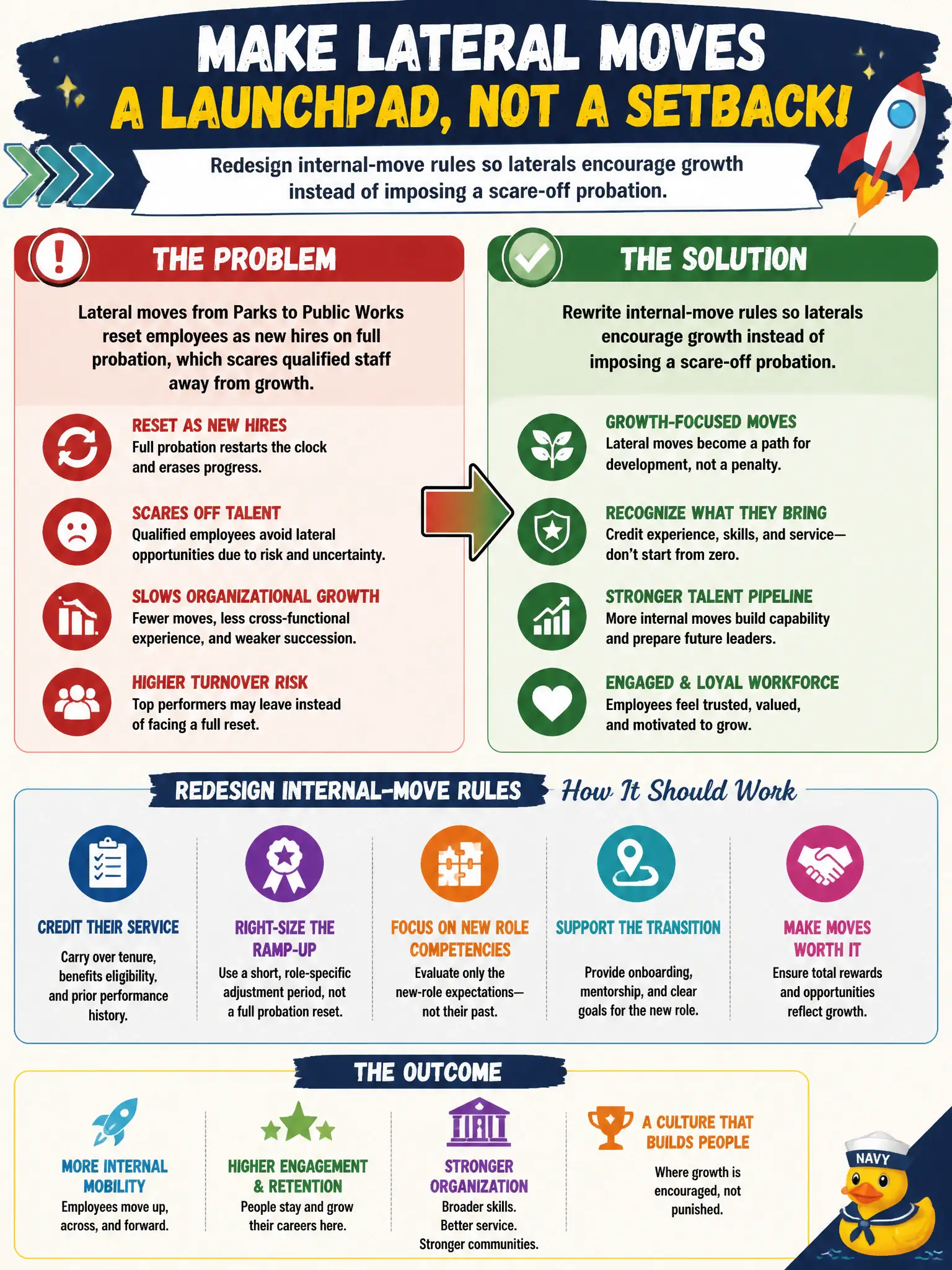
Lateral moves from parks to public works reset employees as new hires on full probation, which scares qualified staff away from growth. What should senior HR redesign?
Select an answer to reveal the explanation.
Short Explanation
Treating a parks-to-streets move like a brand-new hire is a trapdoor under the career ladder. People will stay put rather than risk their standing. Rewrite the internal-move rules so growth does not cost them their safety net.
Full Explanation
Lateral moves from parks to public works that reset employees as new hires on full probation scare qualified staff away from growth. Senior HR should rewrite internal-move rules so laterals encourage development instead of imposing a scare-off probation. Treating an internal civic career step like a brand-new street hire puts a trapdoor under the ladder residents need for cross-trained benches.
Keeping the new-hire reset so receiving departments feel safer fails by concept: false safety for managers creates real mobility chill. Banning laterals and requiring resignation to reapply fails retention and continuity. Offering laterals only to employees already on a performance plan fails by weaponizing mobility and deterring healthy moves.
Exam caveat: receiving departments may use tailored evaluation periods distinct from new-hire probation if rules allow—design the lighter touch explicitly. Operational check: amend civil-service or policy language, communicate the change, and track lateral application volume after the scare-off rule ends. Public employers should record the chosen control and rejected options in the talent or labor file so future leaders understand how the decision protects continuity of resident services.