
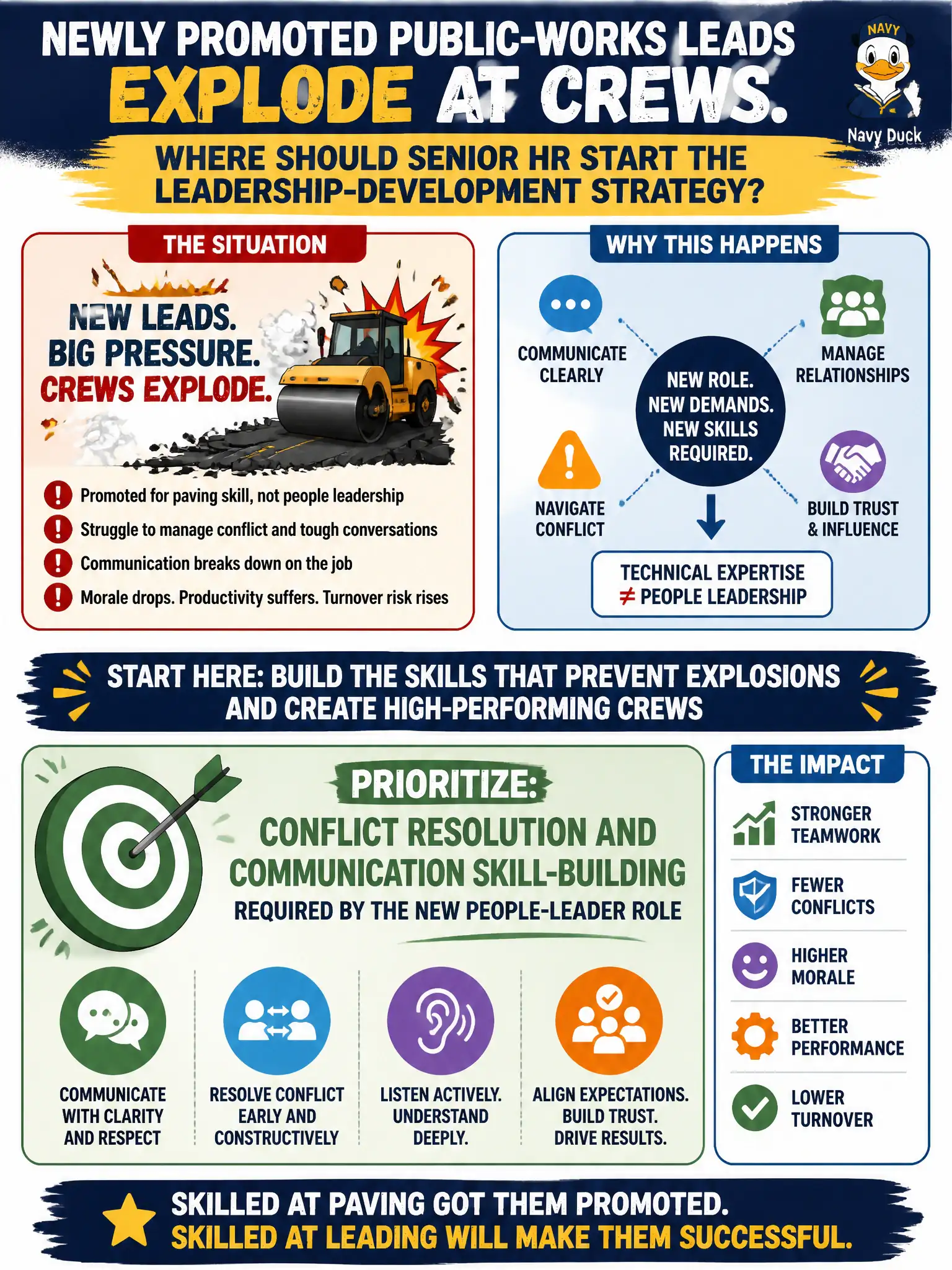
Newly promoted public-works leads were selected for paving skill and now explode at crews. Where should senior HR start the leadership-development strategy?
Select an answer to reveal the explanation.
Short Explanation
The job just changed from running a paver to running people, and more mix-design school will not fix a blow-up on the curb. Start with conflict and communication—the skills the new chair actually requires. Technical stars still need a people-leader curriculum.
Full Explanation
Newly promoted public-works leads selected for paving skill who now explode at crews need leadership development aimed at the new job, not more asphalt certification. Senior HR should prioritize conflict resolution and communication skill-building required by the people-leader role. The job changed from running a paver to running people; civic crew safety and retention depend on that curriculum.
Sending them to another mix-design certification fails by concept: technical depth does not fix curb-side blow-ups. Demoting all new leads because technical promoters never succeed fails as an overbroad, demoralizing assumption. Adding a silent-hour rule on job sites instead of developing leaders fails by managing symptoms without building skill.
Exam caveat: development should be timely after promotion and tied to observed leadership behaviors, with accountability if misconduct continues. Operational check: enroll new leads in conflict and communication practice, observe field interactions, and reassess before the next season's crew assignments. Public employers should record the chosen control and rejected options in the talent or labor file so future leaders understand how the decision protects continuity of resident services.