
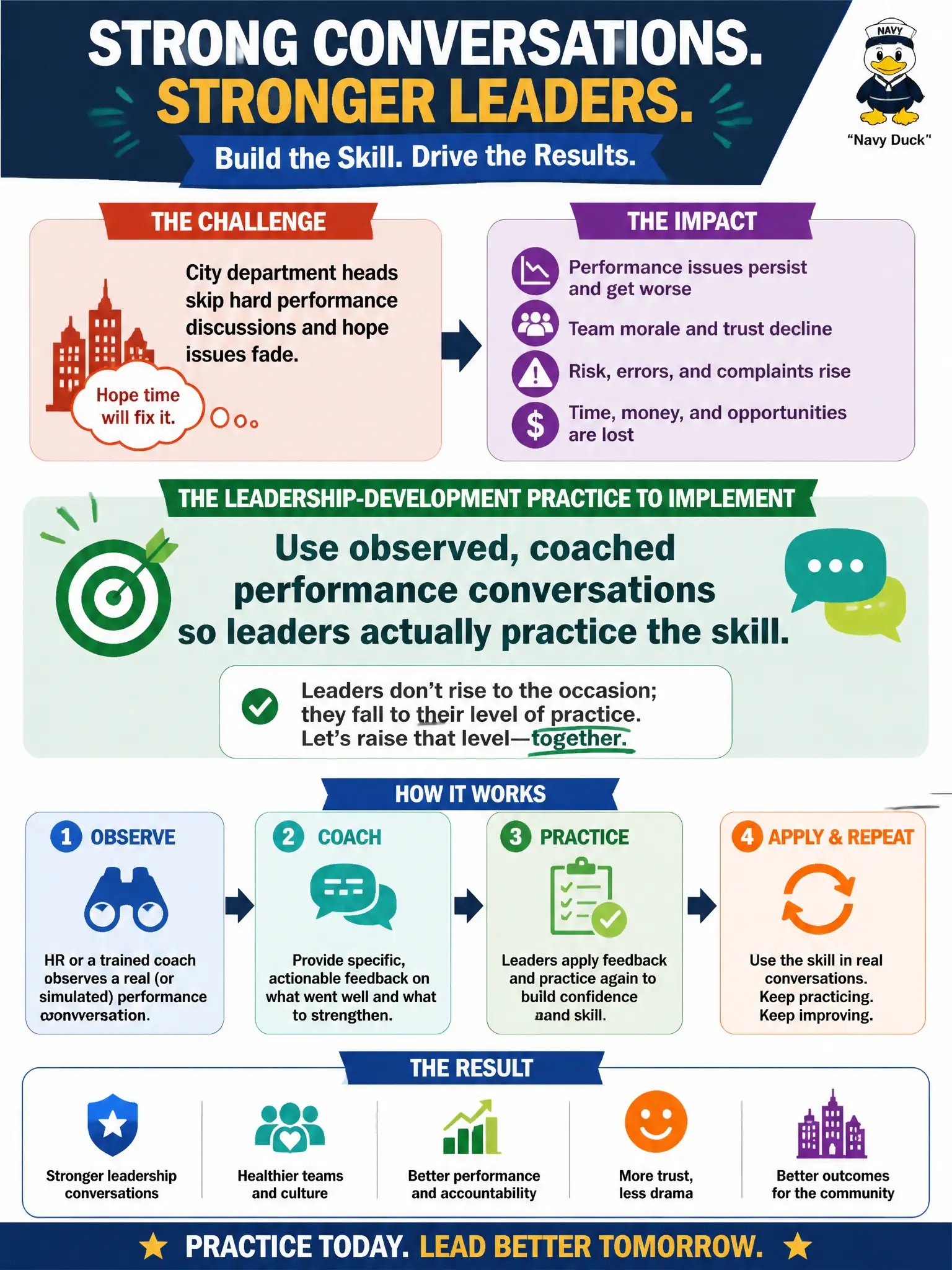
City department heads skip hard performance discussions and hope issues fade. What leadership-development practice should senior HR implement?
Select an answer to reveal the explanation.
Short Explanation
Avoiding the hard talk is a skill gap, not a personality quirk. Leaders get better at performance conversations the same way they get better at budget hearings—by doing them with a coach in the room. Observed practice beats ghostwritten scripts and lawsuit "training."
Full Explanation
City department heads who skip hard performance discussions and hope issues fade have a skill gap, not a quirky personality. Senior HR should implement observed, coached performance conversations so leaders practice the skill. Municipal leaders improve at hard talks the way they improve at budget hearings—by doing them with a coach present. Civic fairness to employees and service continuity require those conversations happen.
Writing the conversations for them and requiring only a signature fails by concept: ghostwritten scripts do not build capability. Removing performance discussions from leader duties and assigning a call center fails by stripping managerial accountability. Waiting until a lawsuit forces a discussion and calling that training fails as reactive, harmful 'development.'
Exam caveat: coached practice must still respect privacy and process rights when real cases are used; simulations are often safer for skill building. Operational check: run observed practice sessions, require leaders to conduct live conversations with coaching debriefs, and track whether chronic avoidance cases decline. Public employers should record the chosen control and rejected options in the talent or labor file so future leaders understand how the decision protects continuity of resident services.