
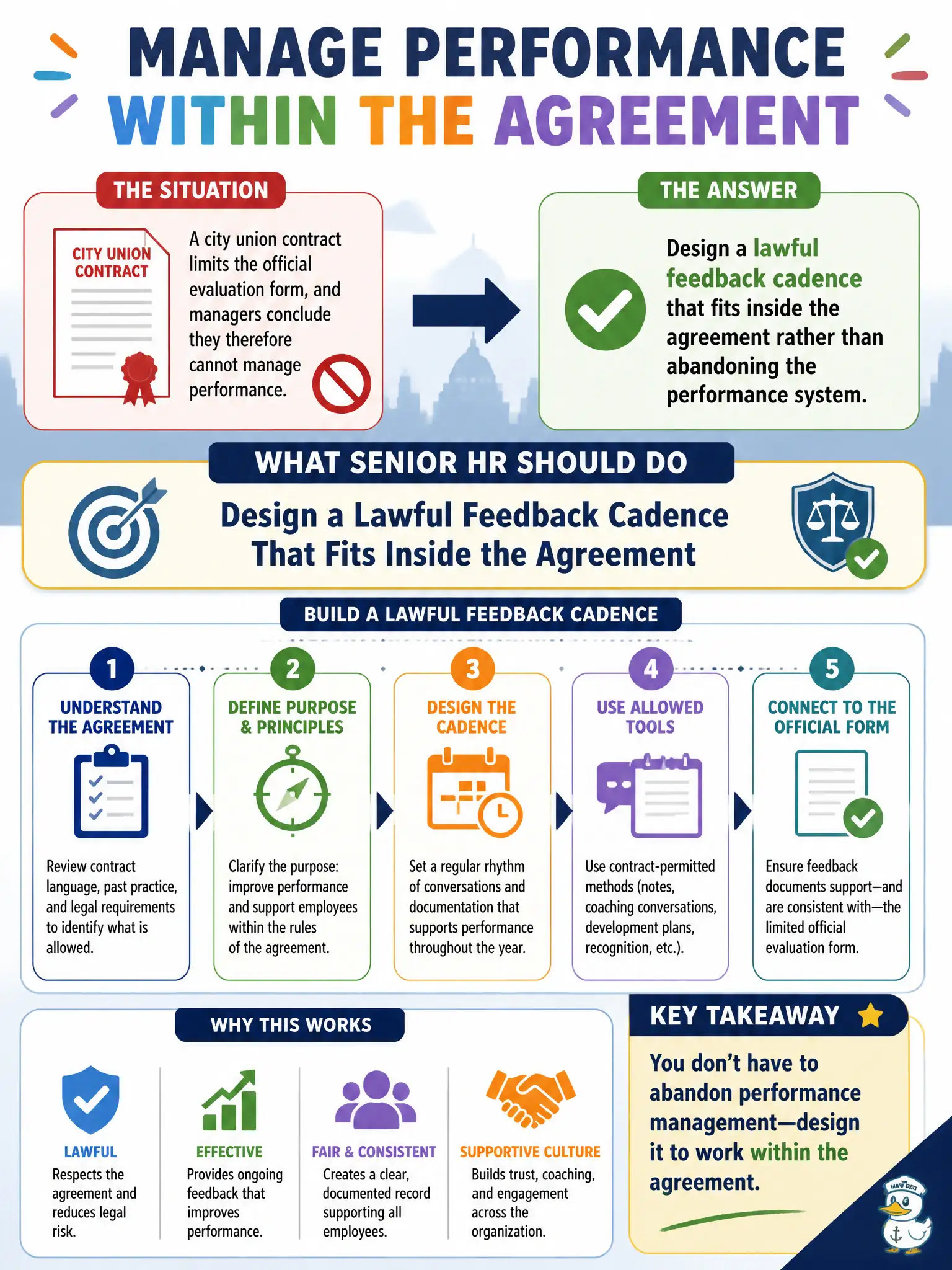
A city union contract limits the official evaluation form, and managers conclude they therefore cannot manage performance. What should senior HR do?
Select an answer to reveal the explanation.
Short Explanation
A contract that limits the form is a fence around the paperwork, not a padlock on managing work. Stay inside the agreement and still run a real feedback cadence. Walking away from performance management because the form is constrained is how a shop goes silent.
Full Explanation
A city union contract that limits the official evaluation form does not abolish performance management. Senior HR should design a lawful feedback cadence that fits inside the agreement rather than abandoning the system. A fence around paperwork is not a padlock on managing work that residents rely on. SPHR leaders stay inside the CBA and still run real coaching.
Ignoring the contract and issuing a new form anyway fails by concept and creates unfair-practice risk. Abandoning performance management until the next negotiation fails by leaving years of unmanaged work. Substituting a vendor 360 tool the contract never contemplated fails if it functions as an unauthorized evaluation device.
Exam caveat: bargain when form changes are mandatory subjects; interim coaching may be allowed if it does not replace the contractual instrument improperly—confirm with labor counsel. Operational check: map permitted feedback practices, train managers on in-bounds cadence, and log coaching without inventing a rival official form. Public employers should record the chosen control and rejected options in the talent or labor file so future leaders understand how the decision protects continuity of resident services.