
In a municipal utilities shop, any coaching conversation is treated as the first step of discipline, so employees hide problems. How should senior HR retrain the performance process?
Select an answer to reveal the explanation.
Short Explanation
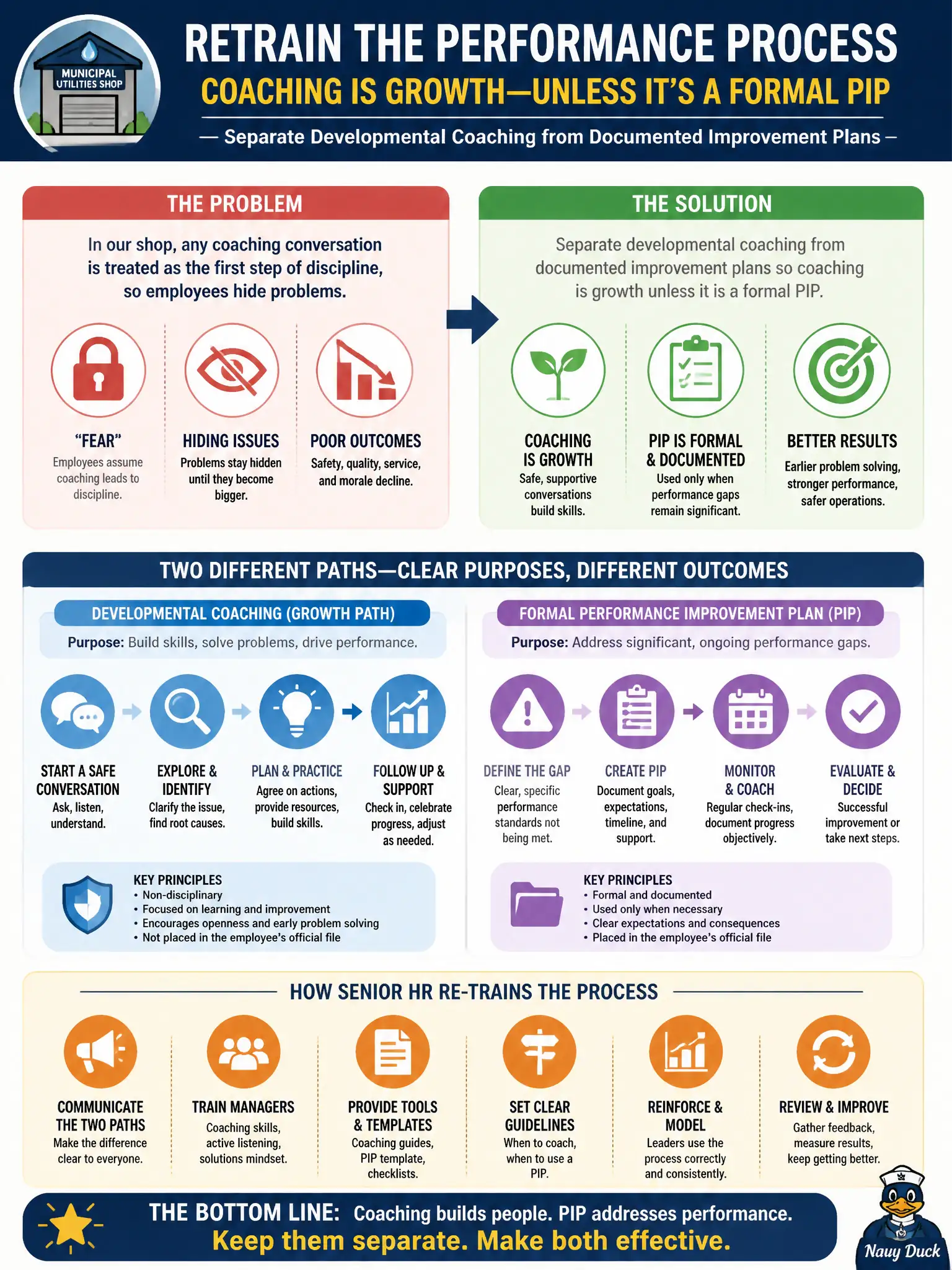
If every tip feels like a trip to the woodshed, people will hide the leak until the pipe bursts. Coaching is how skill grows; a PIP is the documented fork in the road. Split those two so advice is not automatic discipline.
Full Explanation
In a municipal utilities shop where any coaching conversation is treated as the first step of discipline, employees hide problems until pipes burst. Senior HR should separate developmental coaching from documented improvement plans so coaching is growth unless it is a formal PIP. Civic reliability depends on early problem-raising; fear-coded advice destroys that sensor network.
Stopping all coaching so nobody feels punished fails by concept: silence prevents skill growth and still leaves formal discipline for later crises. Routing every coaching note straight to the union as a grievance exhibit fails by turning development into adversarial process by default. Requiring a written reprimand before skill advice fails by making punishment the gateway to learning.
Exam caveat: when performance crosses into formal deficiency, document the PIP distinctly; do not blur labels to evade process. Operational check: train supervisors on coaching versus PIP scripts, label records accordingly, and pulse whether employees still report early issues after the retraining. Public employers should record the chosen control and rejected options in the talent or labor file so future leaders understand how the decision protects continuity of resident services.