
A county's ratings are so inflated that nearly every employee is marked "exceeds," which makes promotion and layoff decisions guesswork. How should senior HR evaluate and fix the performance-management process?
Select an answer to reveal the explanation.
Short Explanation
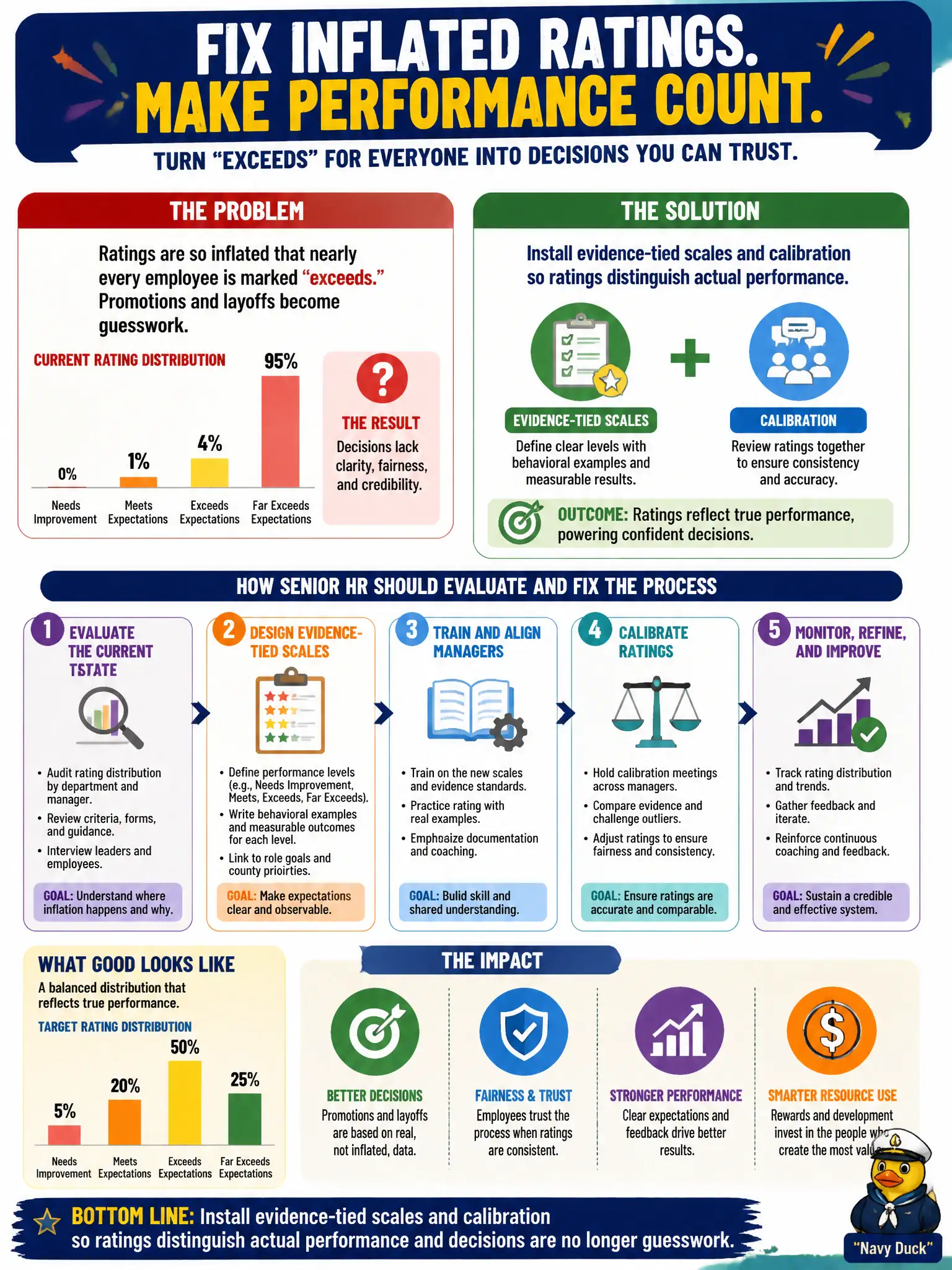
When everyone "exceeds," the scale is a participation trophy, not a decision tool. Promotions and reductions-in-force need differences you can defend. Calibrate to evidence so the words on the form actually mean something.
Full Explanation
When nearly every county employee is rated 'exceeds,' ratings cannot support promotion or layoff decisions. Senior HR should install evidence-tied scales and calibration so ratings distinguish actual performance. Inflated municipal ratings are participation trophies that fail civic duty when scarce opportunities and reductions-in-force need defendable distinctions.
Adding a fifth 'exceeds plus' box fails by concept: more room for inflation worsens discrimination among people. Hiding inflated ratings from employees while keeping them on file fails transparency and still poisons decisions. Converting every rating to 'meets' by policy fails by erasing differentiation instead of restoring truth-telling.
Exam caveat: calibration must use job-related evidence and consistent standards to withstand scrutiny in public-sector appeals. Operational check: train raters, run calibration sessions before finalization, require examples for top ratings, and audit distribution by unit for unjustified clustering. Public employers should record the chosen control and rejected options in the talent or labor file so future leaders understand how the decision protects continuity of resident services. Re-validate the same control after the next operating cycle against current staffing, budget, and bargaining constraints.