
Building inspectors are scored only on inspections completed per day, while the city's published measure is defect-free certificates. How should senior HR redesign the goal mix?
Select an answer to reveal the explanation.
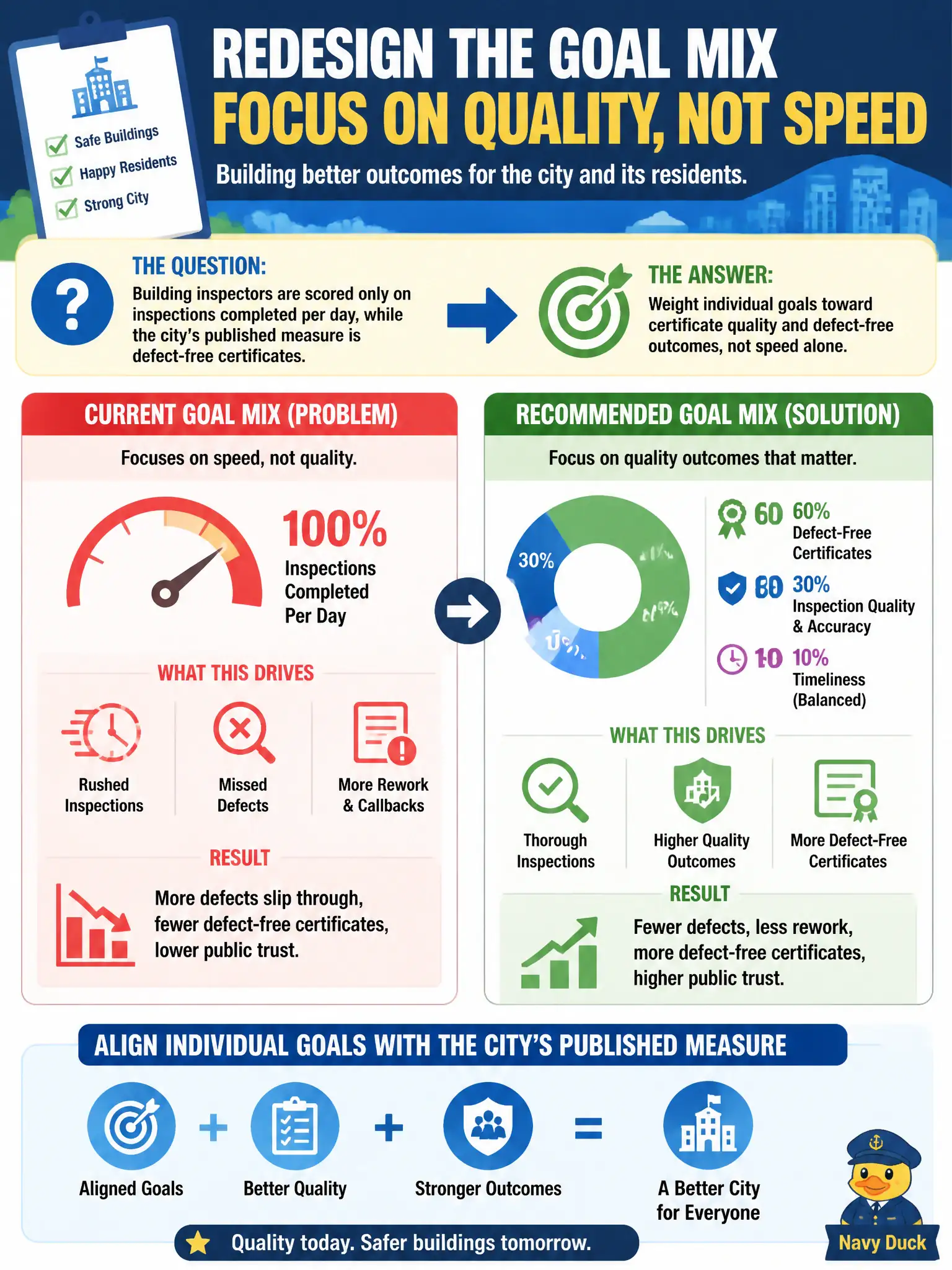
Short Explanation
Pay people to rush the clipboard and they will rush the clipboard. The city is keeping score on clean certificates, not how fast a truck left the curb. Mix quality into the individual goals or speed will keep manufacturing the wrong kind of busy.
Full Explanation
Building inspectors scored only on inspections completed per day will optimize speed while the city's published measure is defect-free certificates. Senior HR should weight individual goals toward certificate quality and defect-free outcomes, not speed alone. Residents and builders experience permitting through certificates that hold up, not through how fast a truck left the curb. Civic quality assurance belongs on the individual scorecard.
Doubling the daily quota so certificates issue faster fails by concept: accelerating volume intensifies the speed bias that creates defects. Removing all numeric goals and relying on professional pride fails because unmanaged systems drift without shared standards. Paying a bonus for every certificate regardless of later defects fails by rewarding issuance volume that may hide quality failures.
Exam caveat: balance productivity and quality—zero volume expectation is unrealistic, but quality must carry material weight. Operational check: add defect and rework measures to inspector goals, sample certificates post-issuance, and calibrate ratings so speed alone cannot earn top scores. Public employers should record the chosen control and rejected options in the talent or labor file so future leaders understand how the decision protects continuity of resident services.