
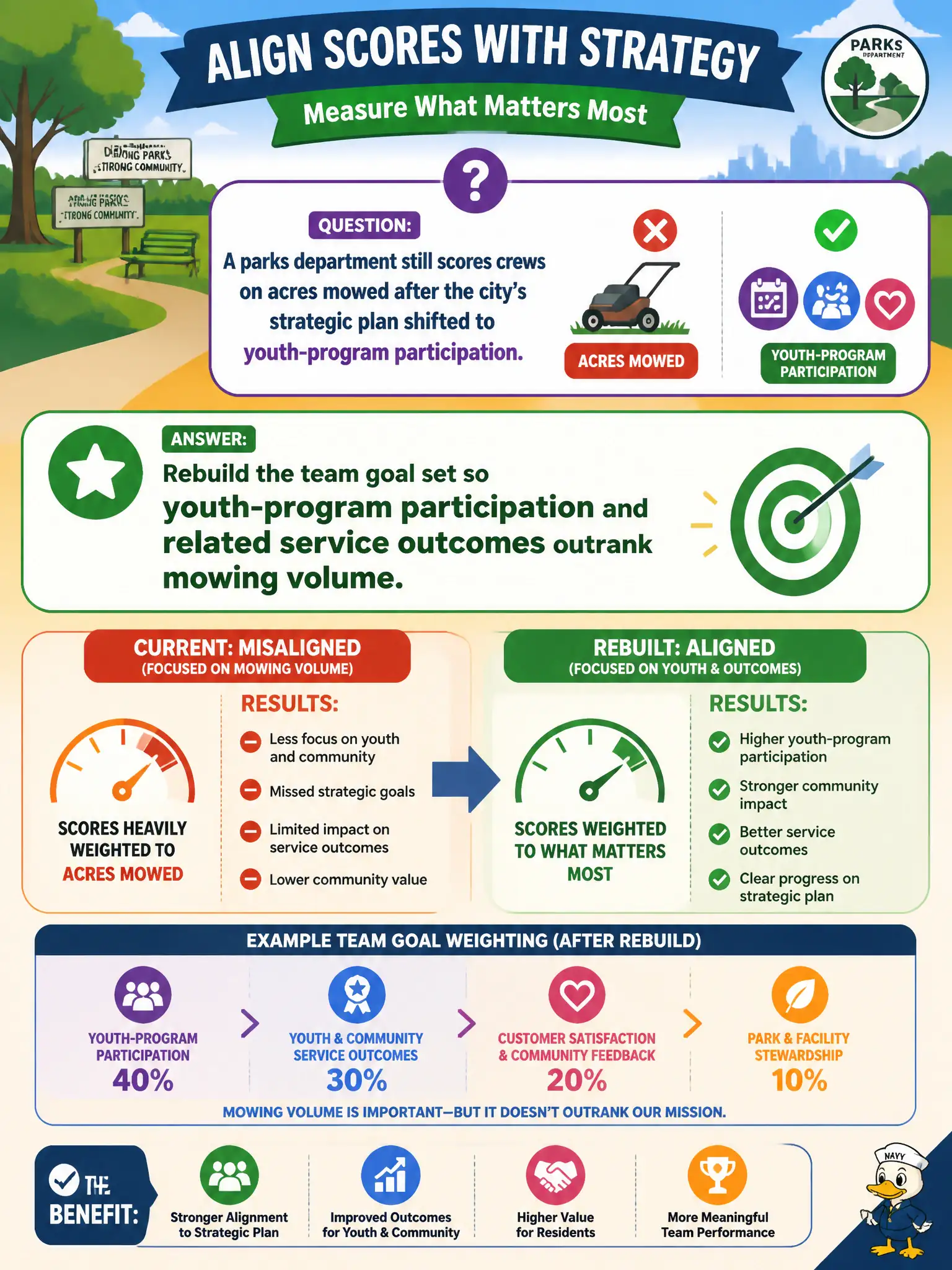
A parks department still scores crews on acres mowed after the city's strategic plan shifted to youth-program participation. What should senior HR change?
Select an answer to reveal the explanation.
Short Explanation
The strategic plan moved the goalposts to kids in programs, but the scorecard still counts grass. Crews will keep mowing because that is what gets a checkmark. Change the goal set so participation and service outcomes outrank acres, or the plan is just a brochure.
Full Explanation
After a city's strategic plan shifts to youth-program participation, parks performance goals that still score only acres mowed are misaligned. Senior HR should rebuild the team goal set so youth-program participation and related service outcomes outrank mowing volume. Crews will chase what is checked; civic strategy becomes brochure language if the scorecard still counts grass. SPHR work retargets goals so resident-facing plan outcomes drive recognition and appraisal.
Keeping mowing as the only scored goal and funding youth programs from a volunteer budget fails by concept: unscored strategy loses to scored acreage. Adding a once-a-year picnic to inflate participation without touching goals fails as a one-off optics fix. Outsourcing mowing so remaining staff have no measurable goals fails by creating a goal vacuum instead of strategic alignment.
Exam caveat: mowing may remain a secondary operational metric for safety and appearance, but it cannot dominate the goal set after strategy shifted. Operational check: publish the new goal weights, brief crews before the season, and track youth participation alongside necessary maintenance indicators. Public employers should record the chosen control and rejected options in the talent or labor file so future leaders understand how the decision protects continuity of resident services.