
A municipal police bureau's officer and sergeant goals omit the consent-decree metrics the city is legally measured on. What is senior HR's correct move?
Select an answer to reveal the explanation.
Short Explanation
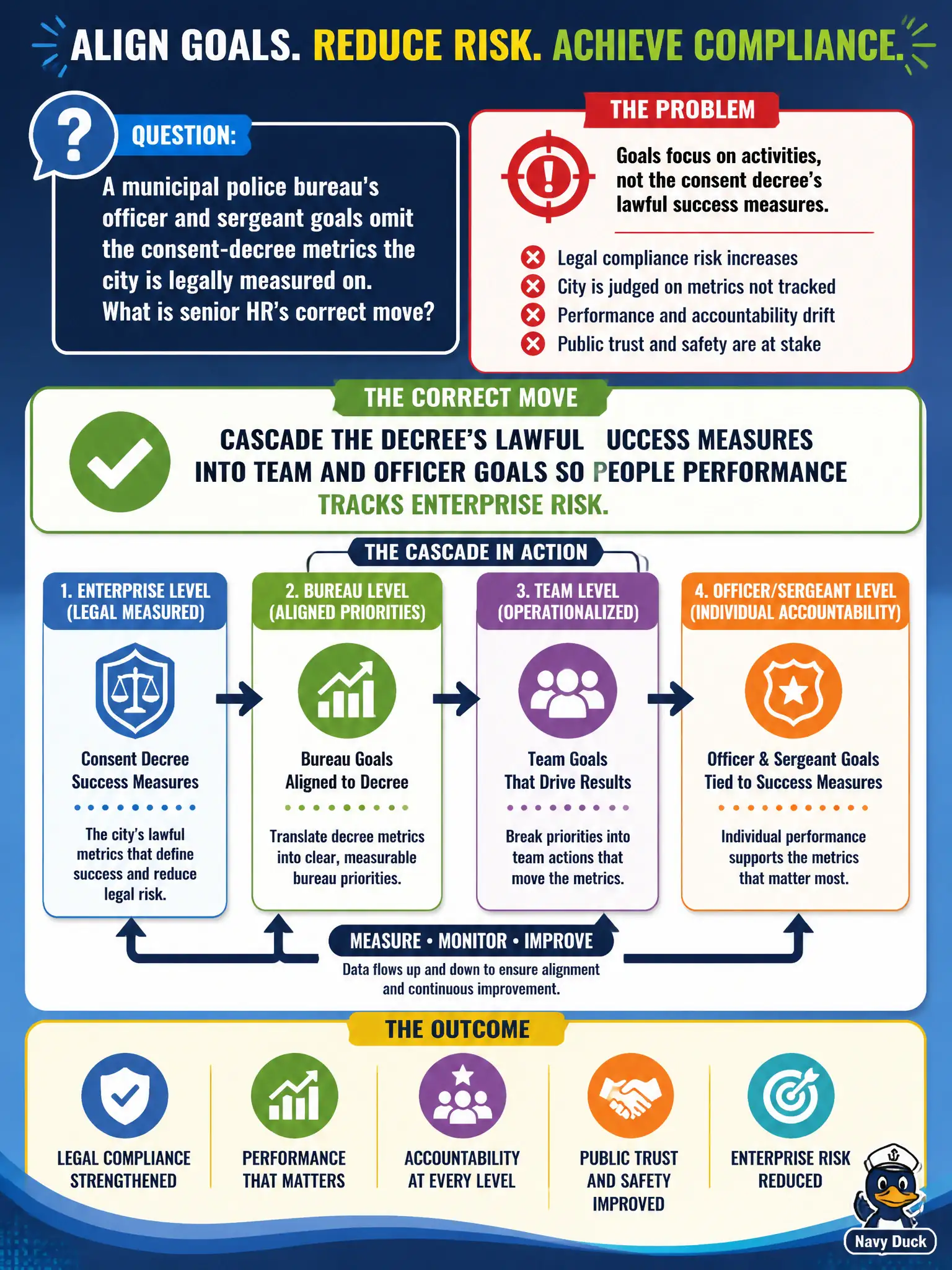
If the city is graded on the decree but officers are graded on something else, the scoreboard is lying. Enterprise measures have to show up in people goals or they stay a binder on a lawyer's shelf. Cascade the lawful metrics into team and officer targets so daily work actually moves the city's risk.
Full Explanation
When a police bureau's officer and sergeant goals omit consent-decree metrics the city is legally measured on, senior HR must cascade those lawful success measures into team and officer goals so people performance tracks enterprise risk. If the city is graded on the decree but individuals are graded on something else, the internal scoreboard lies. Civic accountability and community trust depend on daily work moving the same metrics the court and residents already use.
Keeping individual goals purely operational and treating decree metrics as a legal-only dashboard fails by concept: enterprise risk that never reaches people goals stays a binder on counsel's shelf. Freezing all performance goals until the decree expires fails by abandoning management for years of risk exposure. Replacing every officer goal with only a community-survey score and dropping crime and due-process measures fails by overcorrecting into a single incomplete metric set.
Exam caveat: cascade only lawful, job-related decree measures and respect bargaining and civil-service limits on how goals are set. Operational check: map decree metrics to team and individual objectives, train raters on evidence, and report alignment between people ratings and decree dashboards each quarter.