
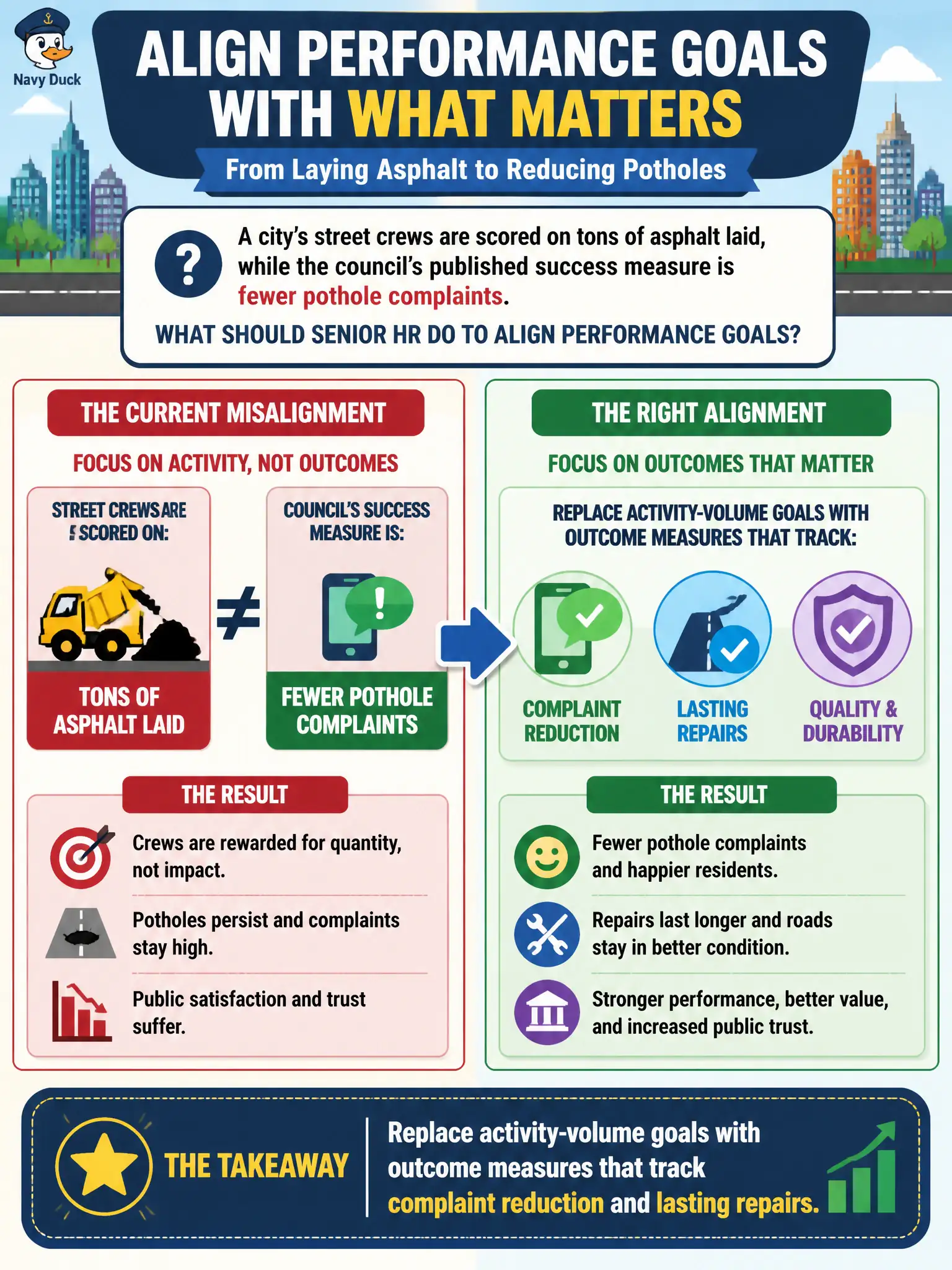
A city's street crews are scored on tons of asphalt laid, while the council's published success measure is fewer pothole complaints. What should senior HR do to align performance goals?
Select an answer to reveal the explanation.
Short Explanation
Judging a street crew by tons of asphalt is like judging a diner by how many pans hit the sink—busy, not better. Residents care that the hole stays gone, not that a truck dumped more mix. Point the goals at fewer complaints and lasting repairs, and the millage will follow the mission.
Full Explanation
Senior HR aligns municipal performance goals to the outcomes residents and council actually publish, not to activity volume that keeps crews busy. When street crews are scored on tons of asphalt laid while the city's success measure is fewer pothole complaints, the correct move is to replace activity-volume goals with outcome measures that track complaint reduction and lasting repairs. Civic framing is direct: millage and trust follow holes that stay gone, not trucks that dump more mix. SPHR goal design makes the crew scoreboard match the public scoreboard.
Raising the tons quota so crews work faster fails by concept: more tonnage can increase activity without improving repair durability or complaint outcomes. Leaving crew goals unchanged and adding a poster campaign about reporting potholes fails because awareness décor does not rewire what supervisors reinforce on the street. Converting pay to piece-rate per ton without changing goal language fails by hardening the wrong incentive and still ignoring the published complaint measure.
Exam caveat: outcome goals must be measurable and within crew influence—do not hold a paving crew solely accountable for citywide complaint spikes driven by weather or underfunding. Operational check: rewrite crew and supervisor goals around complaint reduction and rework rates, brief public works leadership, and compare complaint trends for two seasons after the change.