
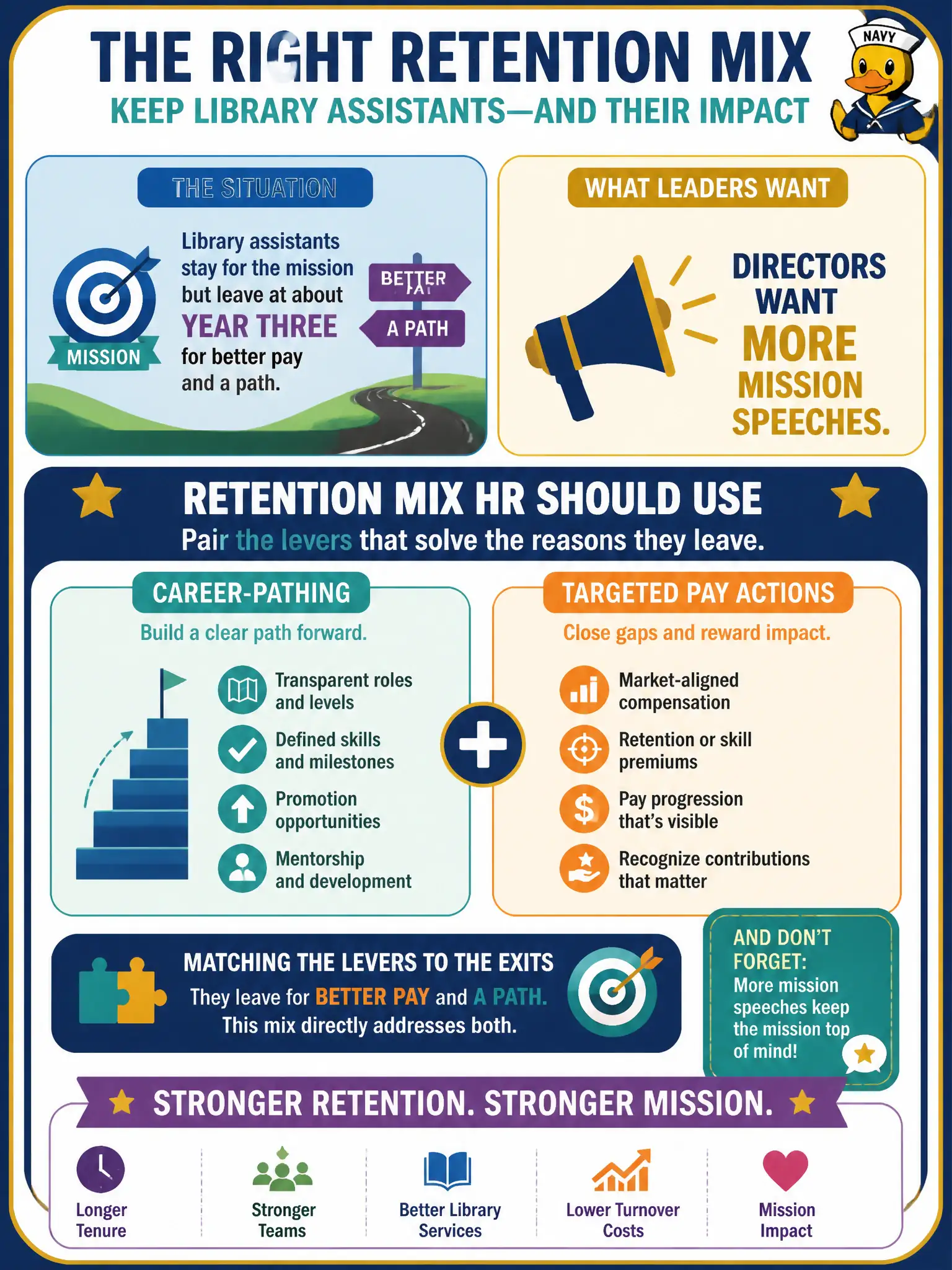
Library assistants stay for the mission but leave at about year three for better pay and a path. Directors want more mission speeches. What retention mix should HR use?
Select an answer to reveal the explanation.
Short Explanation
Mission gets people in the door; year-three exits for pay and a path tell you what keeps them. Speeches will not close a wage-and-ladder gap. Match the lever the data already named.
Full Explanation
Library assistants who stay for mission but leave around year three for better pay and a path are telling HR which retention levers matter. Directors wanting more mission speeches are offering a lever the exit data did not name. HR should pair career-pathing with targeted pay actions that match those exits. Civic cultural institutions recruit on purpose; they retain when wages and ladders catch up to the speech residents hear about caring for staff.
Doubling mission speeches while leaving pay and paths unchanged fails by concept: inspiration does not close a wage-and-ladder gap at year three. Blaming supervisors only and skipping pay and path analysis fails by ignoring structural drivers the exits already cited. Freezing hiring so remaining staff 'feel the mission more' fails by increasing load without addressing pay or growth.
Exam caveat: pay actions need market and internal-equity analysis inside public budget constraints; pathing needs real vacancies or reclass bridges, not empty titles without duty change. Operational check: theme year-three exits, benchmark assistant pay and progression, implement a path-plus-pay package, and track retention through year four. Public employers should document the rationale in the talent plan so council and managers see why rejected options would weaken continuity for residents.