
A city's employee satisfaction survey runs once a year, and results sit unused. Trust in the engagement strategy is falling. What should HR change?
Select an answer to reveal the explanation.
Short Explanation
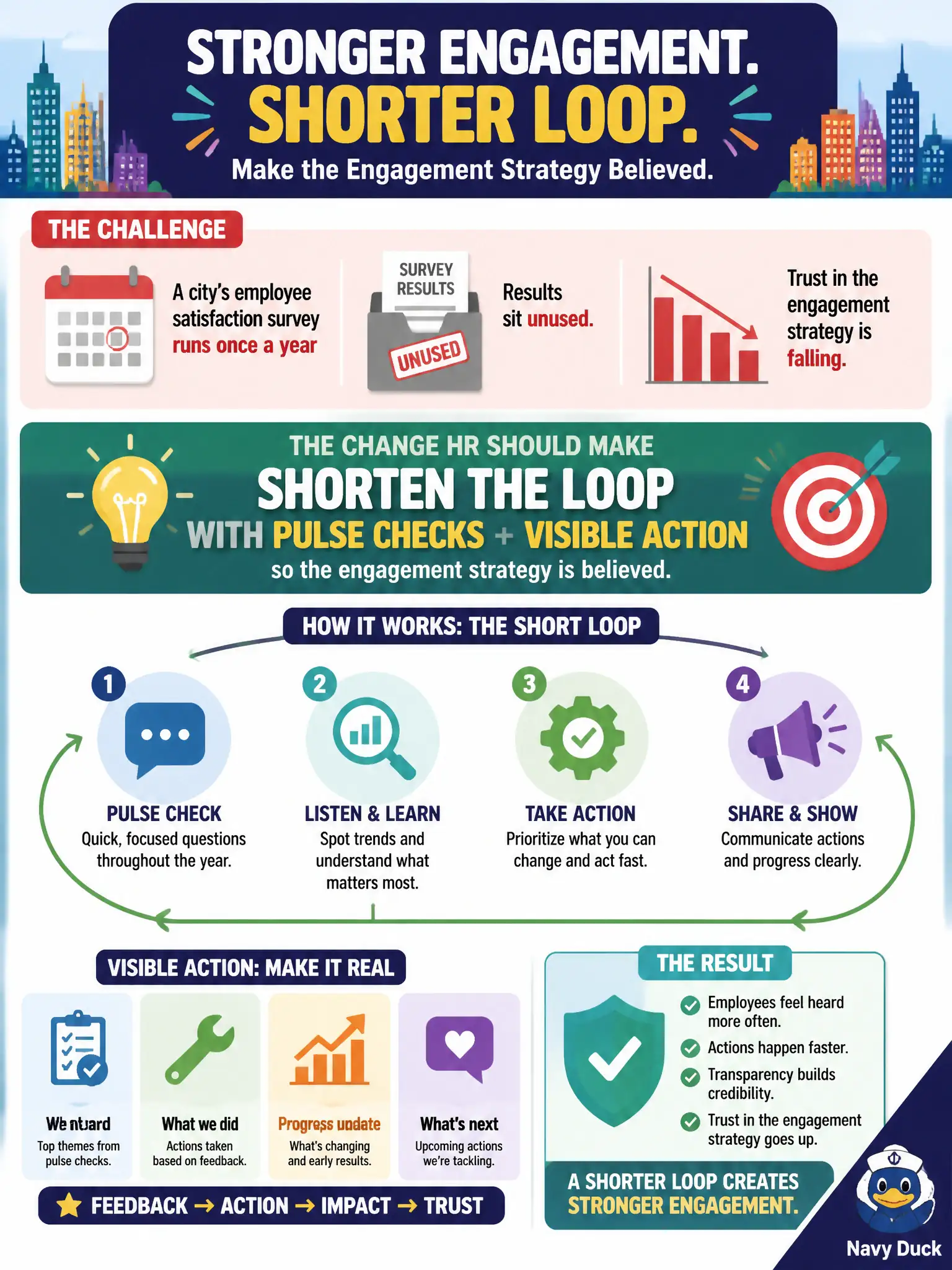
Asking once a year and doing nothing is like a suggestion box that empties into a dumpster. People stop believing the survey. Pulse, then show a change they can see.
Full Explanation
An annual employee satisfaction survey whose results sit unused destroys trust in the city's engagement strategy. HR should shorten the loop with pulse checks plus visible action so employees believe listening leads somewhere. Municipal workforces interpret unused surveys as performative; civic employers rebuild trust by showing a change staff can see in the next quarter, not by lengthening an unread report that never leaves a shared drive.
Keeping the annual survey and adding a longer no-action report fails by concept: more pages without decisions deepen cynicism about leadership. Stopping surveys because unused results 'prove employees do not care' fails by blaming respondents for management inaction. Outsourcing the same annual instrument and delaying sharing another year fails by extending the dead feedback loop.
Exam caveat: action must be prioritized and communicated even when some requests cannot be funded—transparent 'no, because' builds more trust than silence in public organizations. Operational check: run a short pulse, publish top themes, assign owners and dates, and close the loop in an all-hands update within one quarter. Public employers should document the rationale in the talent plan so council and managers see why rejected options would weaken continuity for residents.