
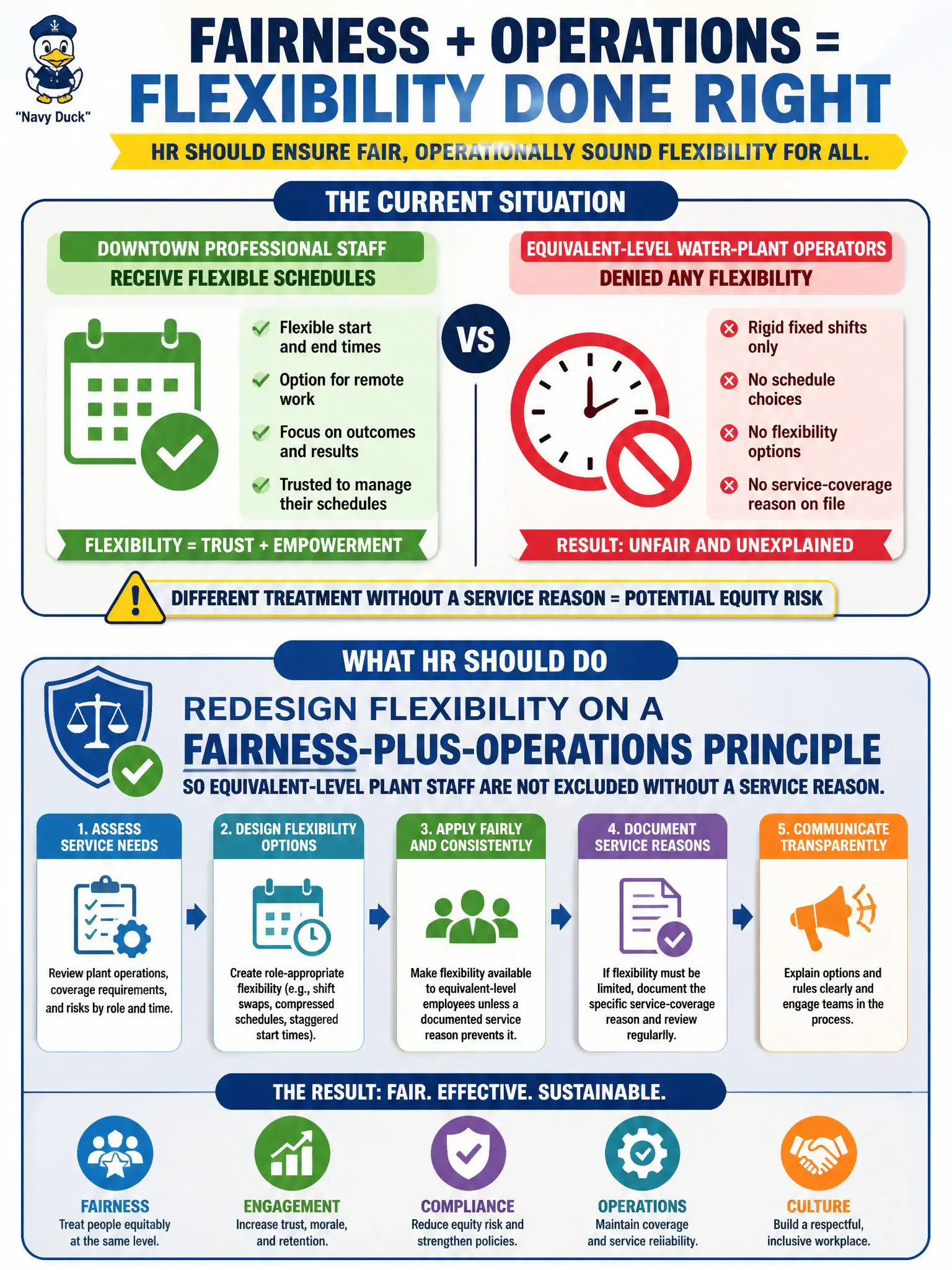
Downtown professional staff receive flexible schedules, while equivalent-level water-plant operators are denied any flexibility with no service-coverage reason on file. What should HR do?
Select an answer to reveal the explanation.
Short Explanation
Flexibility that only lives downtown is a velvet-rope perk. Operations can justify some differences; a blank file cannot. Write the principle so plant staff get a fair shot, not a shrug.
Full Explanation
When downtown professional staff receive flexible schedules but equivalent-level water-plant operators are denied any flexibility with no service-coverage reason on file, HR should redesign flexibility on a fairness-plus-operations principle. Differences may be justified by continuous plant operations; a blank file cannot. Civic equity in work design requires that operators who keep water safe are not excluded by downtown assumption while professionals enjoy modern schedules.
Keeping the downtown-only perk because plant culture is 'assumed' to prefer old schedules fails by concept: assumptions are not operational justification on a public employer's ledger. Ending all flexibility citywide fails by leveling down instead of applying a principled standard. Telling plant staff that public-facing inclusion programming substitutes for schedule flexibility fails because community programming is not a work-design remedy for employees.
Exam caveat: document bona fide coverage constraints; where flexibility is possible through shift swaps or predictable patterns, extend it with safety sign-off. Operational check: inventory equivalent-level roles, require written service reasons for denials, and pilot operator-compatible flexibility options before the next labor or engagement cycle.