
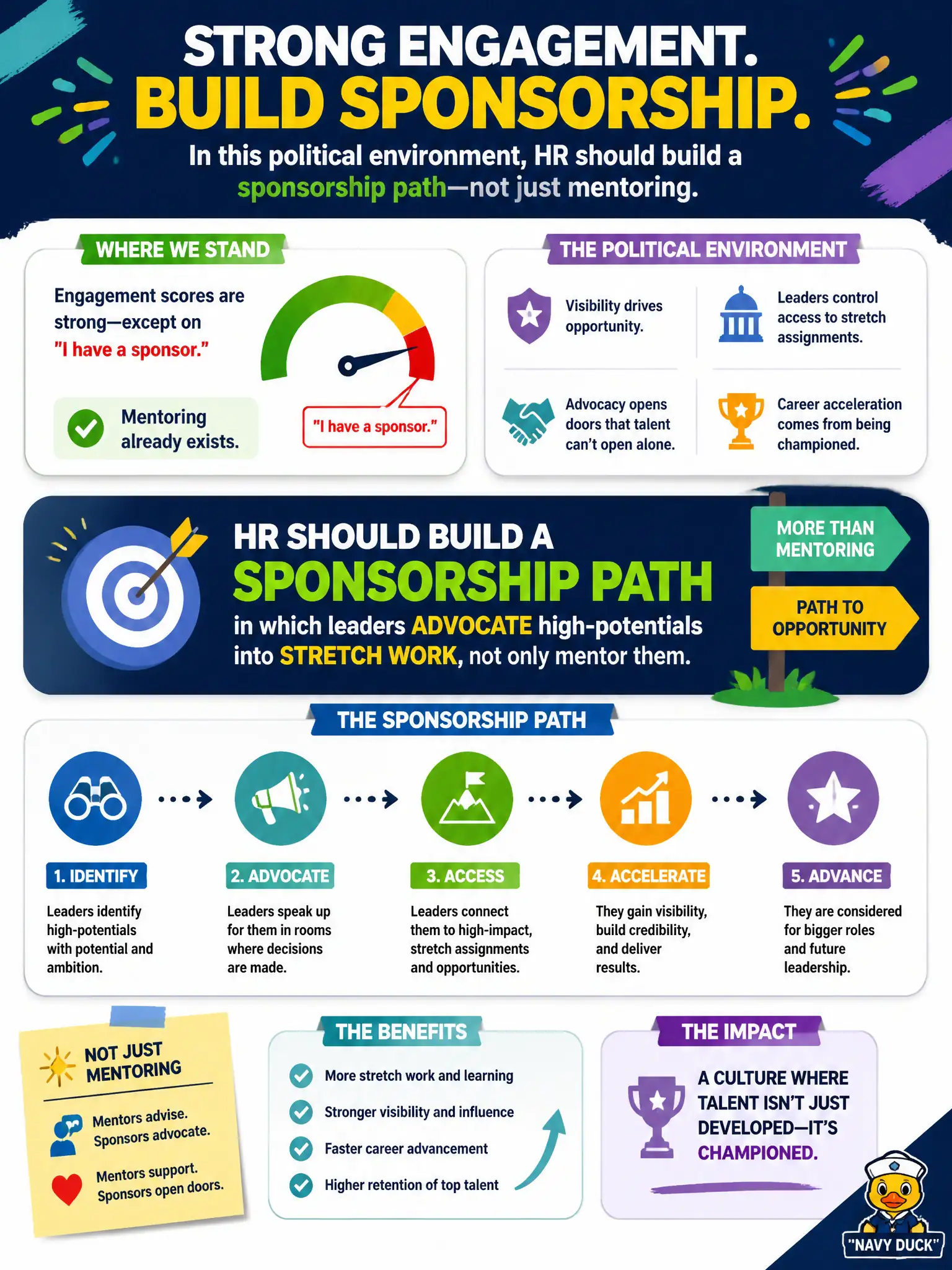
A county's engagement scores are strong except on "I have a sponsor." Mentoring already exists. In this political environment, what should HR build?
Select an answer to reveal the explanation.
Short Explanation
A mentor talks with you; a sponsor talks about you in the rooms that hand out work. Coffee is not advocacy. If the score that failed is sponsorship, build advocacy for opportunity—not another chat calendar.
Full Explanation
Strong county engagement scores except on 'I have a sponsor,' while mentoring already exists, means advocacy into opportunity is the missing construct. In political and hierarchical public environments, mentors talk with employees; sponsors talk about them in rooms that allocate stretch work. HR should build a sponsorship path where leaders advocate high-potentials into stretch assignments, not only mentor them. Civic talent systems that stop at coffee chats leave advancement to informal networks residents never see but still feel through who leads their services.
Adding more informal coffee chats and calling them sponsorship fails by concept: conversation volume is not advocacy for opportunity. Dropping the survey item because mentoring 'covers' advocacy fails analytically by erasing the distinction the data just showed. Assigning every employee a random mentor and stopping the distinction fails by flooding mentoring without creating sponsorship behavior.
Exam caveat: sponsorship must use transparent, job-related criteria to avoid patronage claims common in government settings. Operational check: define sponsor behaviors and eligible stretch roles, match high-potentials under published rules, and re-measure the sponsorship item after two assignment cycles.