
A port authority lists 40 jobs as "key roles," spreading succession spend thin. What should HR do?
Select an answer to reveal the explanation.
Short Explanation
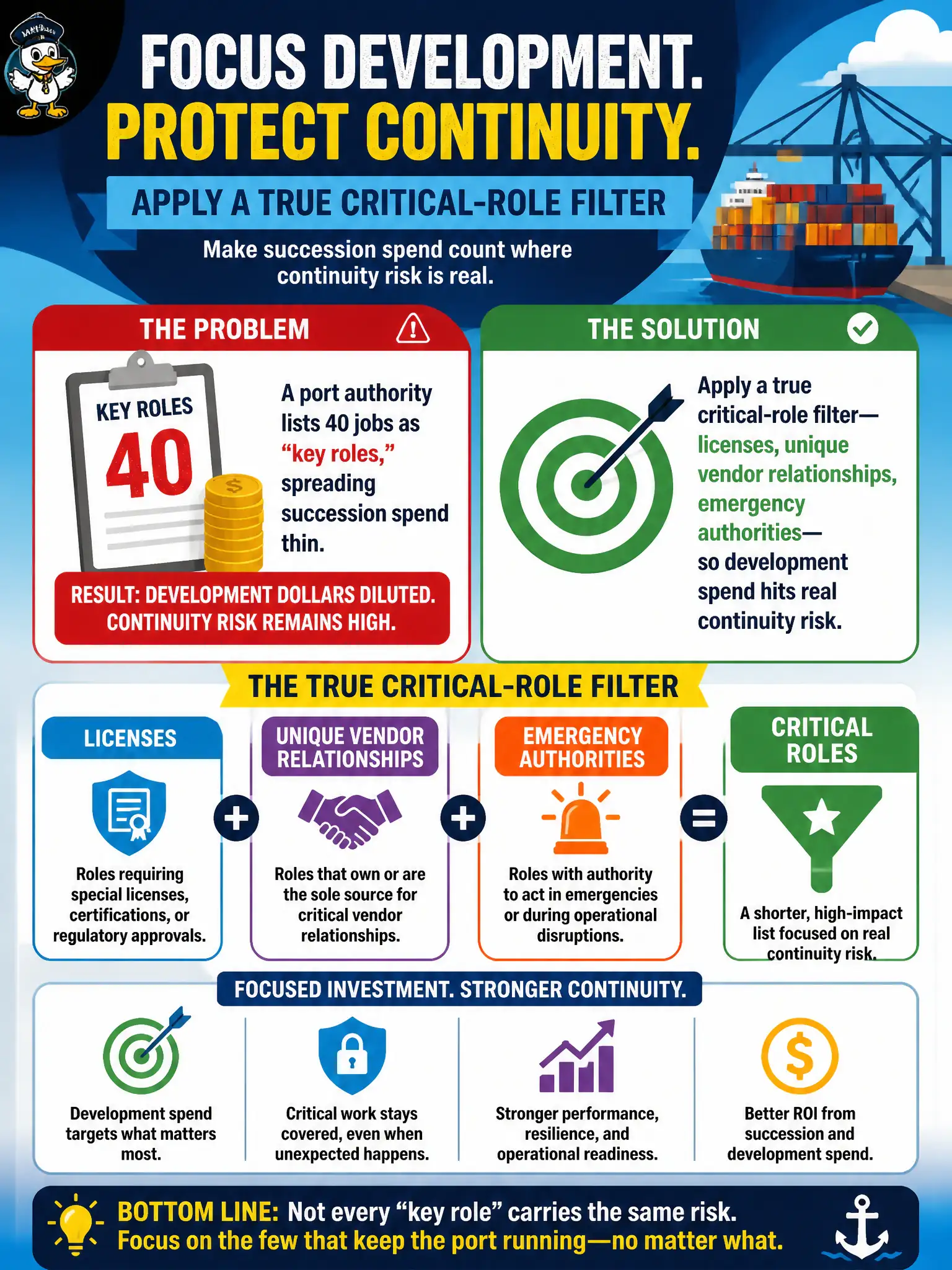
If everything is key, nothing is—like labeling every street an emergency route. Filter for licenses, unique vendors, and emergency authority. Put the development dollars on the jobs that actually stop the port.
Full Explanation
When a port authority lists forty jobs as key roles, succession spend spreads thin and real continuity risk is underfunded. HR should apply a true critical-role filter—licenses, unique vendor relationships, emergency authorities—so development hits jobs that actually stop the port if vacant. Civic logistics and safety systems need ruthless prioritization; if everything is labeled key, nothing receives enough development attention to protect commerce and public safety.
Keeping all forty so every manager feels included fails by concept: inclusion in a vanity list is not enterprise risk management. Adding every supervisor title fails by inflating the list further and diluting coaching dollars. Ranking roles only by pay grade and ignoring licenses or emergency authorities fails because pay is a weak proxy for operational criticality at a port.
Exam caveat: critical-role criteria should be documented and revisited as operations change; political pressure to include a favorite title is not a risk criterion. Operational check: score roles against license, vendor, and emergency factors; cut the list to a defensible set; and reallocate coaching budget to those roles before the next budget cycle.