
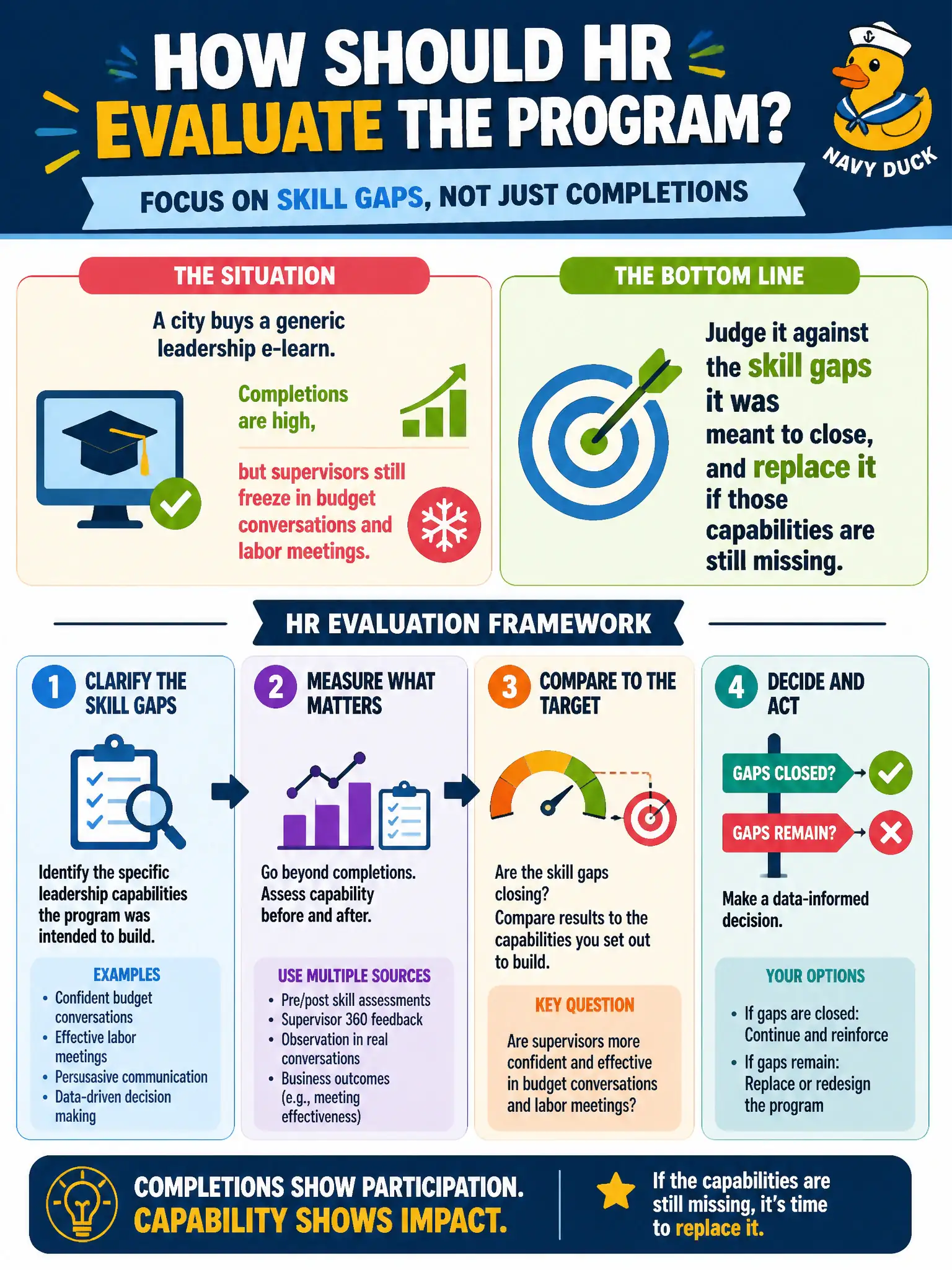
A city buys a generic leadership e-learn. Completions are high, but supervisors still freeze in budget conversations and labor meetings. How should HR evaluate the program?
Select an answer to reveal the explanation.
Short Explanation
A 100% completion badge is a participation trophy if nobody can run a budget sit-down or a labor meeting. Programs get graded on the skill gap they close. If the freeze is still there, replace the e-learn.
Full Explanation
A generic leadership e-learn with high completions but supervisors who still freeze in budget conversations and labor meetings has failed its purpose as workforce development. HR should evaluate the program against the skill gaps it was meant to close and replace it if those municipal capabilities remain missing. City supervisors sit at the intersection of public budgets and labor relations; participation trophies do not protect resident services, bargaining outcomes, or council-facing fluency. SPHR evaluation grades development on transferred skill, not click-through rates.
Keeping the program because completions look strong fails by concept: completion is activity evidence, not capability evidence. Lengthening the same modules fails because more hours of the same clicking do not create budget or labor fluency under pressure. Adding a certificate template and stopping performance checks in real settings fails by substituting credentials for observed skill in the rooms that matter.
Exam caveat: replace with practice-rich development—simulations, coached budget hearings, and labor-role plays—not another generic catalog course with a prettier badge. Operational check: define observable behaviors for budget and labor settings, assess a sample of supervisors in those contexts within one quarter, and sunset the e-learn if gaps persist after a fair trial so civic leadership capacity is built on purpose.