
A 911 center needs certified trainers but cannot pull dispatchers off the console without breaking coverage. How should HR design the development process?
Select an answer to reveal the explanation.
Short Explanation
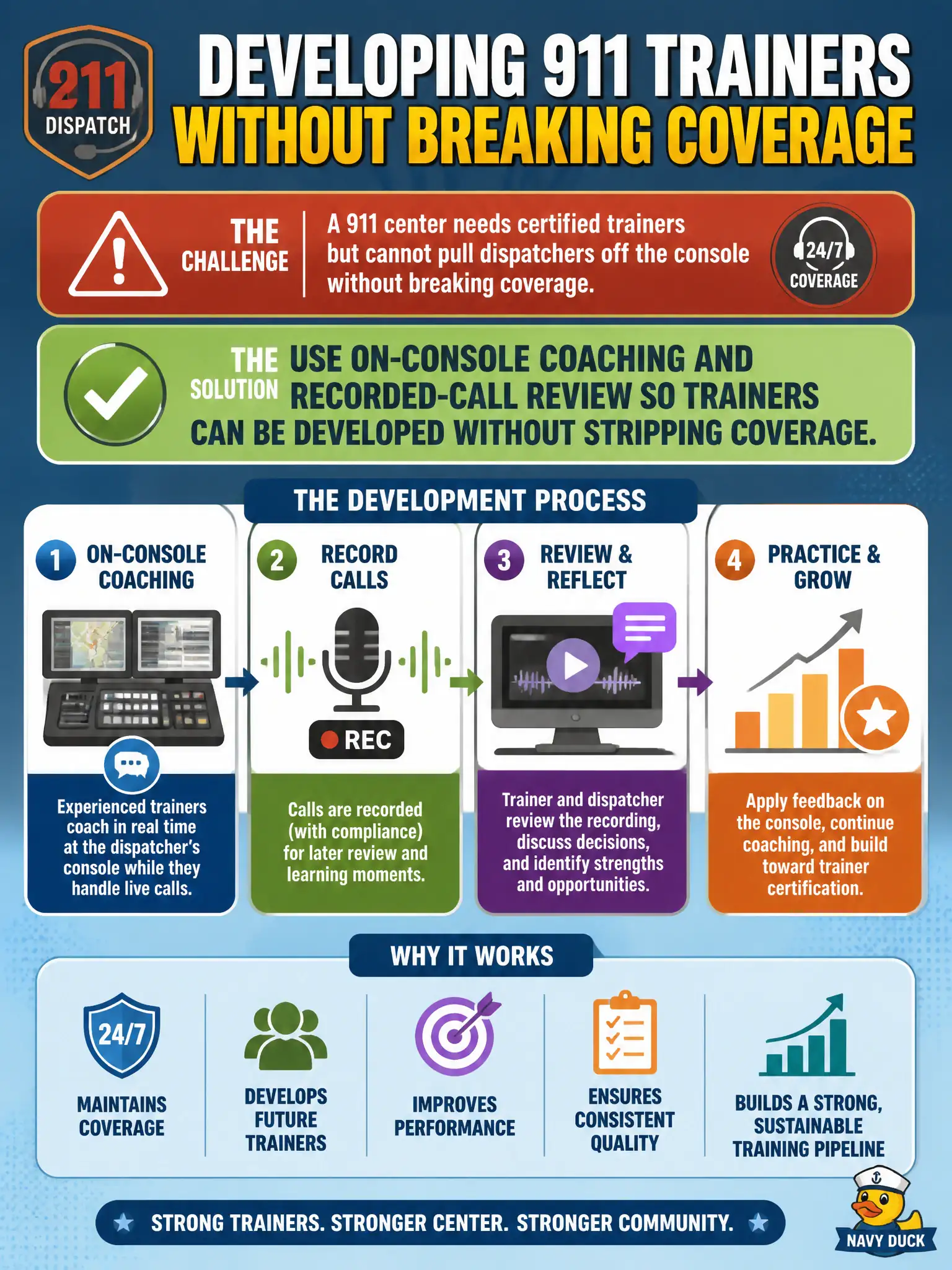
You cannot empty the 911 board to teach people how to staff the 911 board. Development has to ride along with coverage. On-console coaching and recorded-call review build trainers without going dark.
Full Explanation
A 911 center that needs certified trainers but cannot pull dispatchers off the console without breaking coverage must design development that rides along with service continuity. HR should use on-console coaching and recorded-call review so trainers develop without stripping the board. Civic framing is non-negotiable: delayed emergency answer times are not an acceptable tuition for building a trainer bench, and residents judge the city by whether someone answers when they call.
Closing overnight consoles for a week-long academy fails by concept because it knowingly degrades 911 service to create classroom capacity. Waiting until staffing is fully healthy before any trainer development begins fails by making capability growth contingent on a state that high-turnover centers may never reach. Sending every dispatcher to an off-site train-the-trainer conference the same week fails by creating a simultaneous coverage collapse across shifts.
Exam caveat: on-console methods still require qualified coaches, privacy-compliant call review, and documented competency standards for trainer certification under applicable rules. Operational check: schedule coaching against minimum staffing, sample recorded calls with structured rubrics, certify trainers without a coverage blackout, and report both trainer pipeline and answer-time metrics to leadership.