
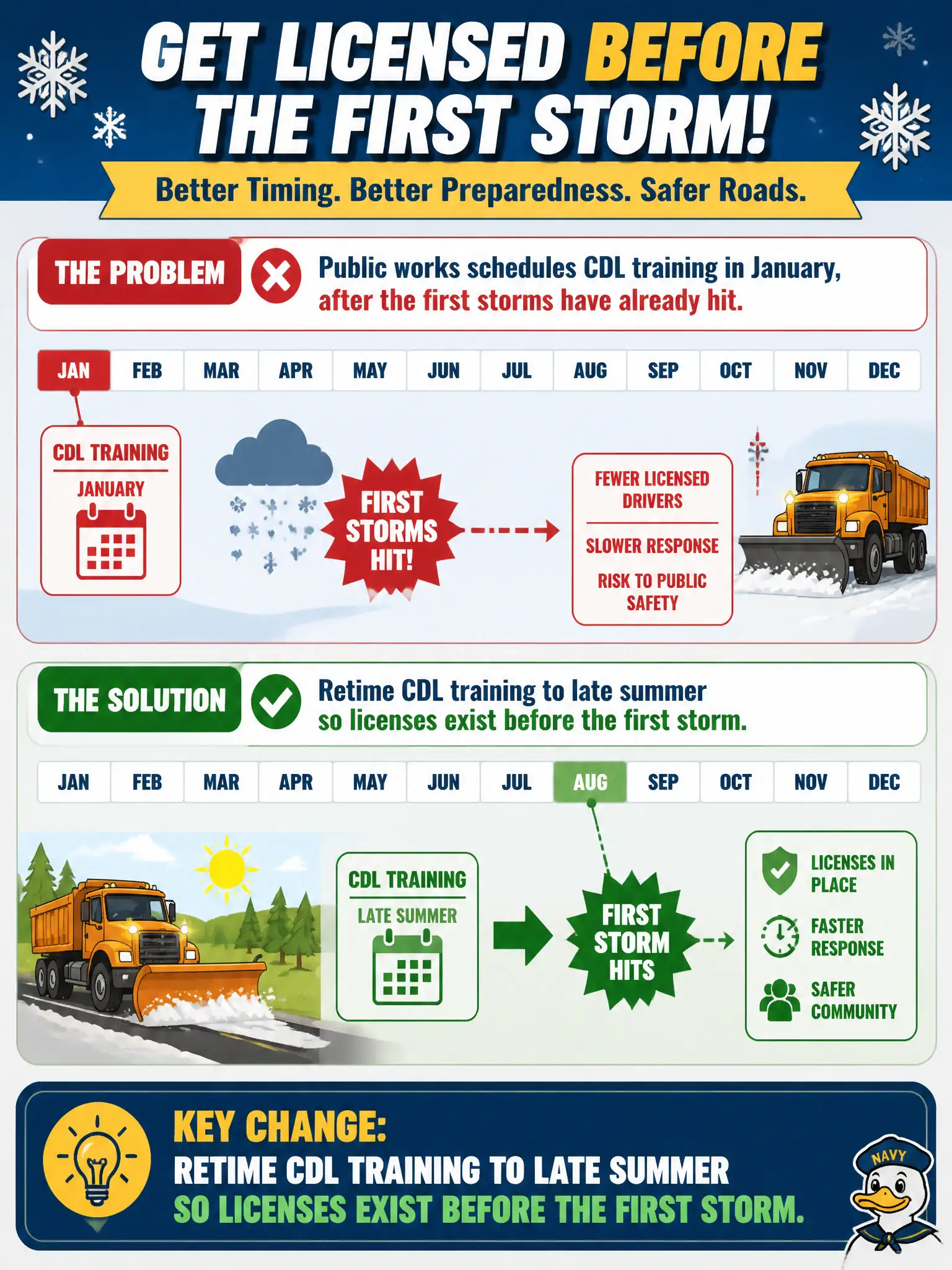
Public works schedules CDL training for snow-plow operators in January, after the first storms have already hit. What should HR change in the workforce-development design?
Select an answer to reveal the explanation.
Short Explanation
Teaching someone to drive the plow after the blizzard is like issuing umbrellas in July. Timing is part of the development design, not a footnote. Get the CDLs in late summer so the licenses exist when the snow does.
Full Explanation
Scheduling CDL training for snow-plow operators in January—after the first storms—mis-times workforce development relative to the city's winter service duty. HR should retime CDL training to late summer so licenses exist before the first storm. Civic framing is operational: residents judge winter readiness by whether plows roll, and training calendars are part of that readiness system, not an administrative footnote.
Keeping January classes and paying unlicensed operators overtime to wait out storms fails by concept: overtime cannot manufacture a license during a storm peak. Moving CDL training to after fiscal-year close to keep the budget line unused fails because budget cosmetics are not a development design principle. Treating license timing as solely an operations problem and leaving the calendar unchanged fails because HR owns development timing when capability gates service.
Exam caveat: retiming must still meet legal CDL and medical-card requirements; earlier classes are worthless if candidates are not eligible. Operational check: lock summer CDL cohorts against the plow roster, verify licenses before leaf season ends, and report licensed coverage to public works leadership as a winter-readiness metric.