
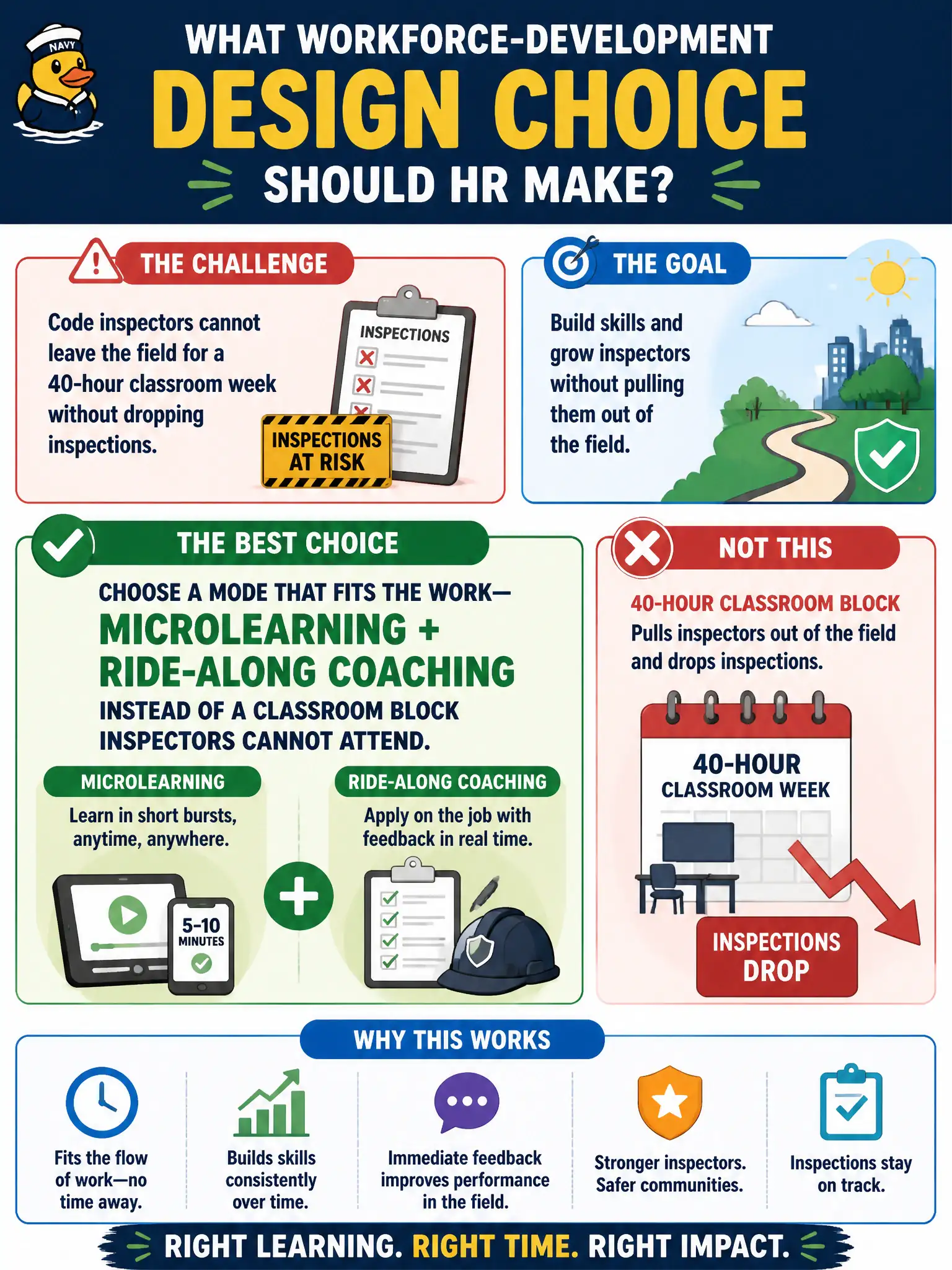
Code inspectors cannot leave the field for a 40-hour classroom week without dropping inspections. What workforce-development design choice should HR make?
Select an answer to reveal the explanation.
Short Explanation
Mode is the delivery vehicle, not a badge of seriousness. If inspectors live in the field, a 40-hour classroom is a parked bus they cannot board. Microlearning and ride-along coaching take the class to the work.
Full Explanation
Code inspectors who cannot leave the field for a forty-hour classroom week without dropping inspections need workforce-development design that fits the work mode, not a badge of classroom seriousness. HR should choose microlearning plus ride-along coaching so capability grows without creating an inspection backlog that harms property owners and public safety. In municipal inspection services, delivery mode is part of strategy: if the workforce lives in the field, development must travel with them.
Canceling development until volume falls enough for a classroom week fails by concept: waiting for spare capacity often means never developing. Pulling every inspector off the street for the same block class fails because it trades training for a known service failure. Counting ride time as training only if delivered as a garage lecture fails by forcing field-native learning into an artificial classroom wrapper.
Exam caveat: mode flexibility does not waive documentation of competencies or required certifications; microlearning still needs assessed outcomes. Operational check: map required competencies to short modules and coached ride-alongs, schedule without blanking inspection coverage, and audit completion against quality metrics rather than seat time alone.