
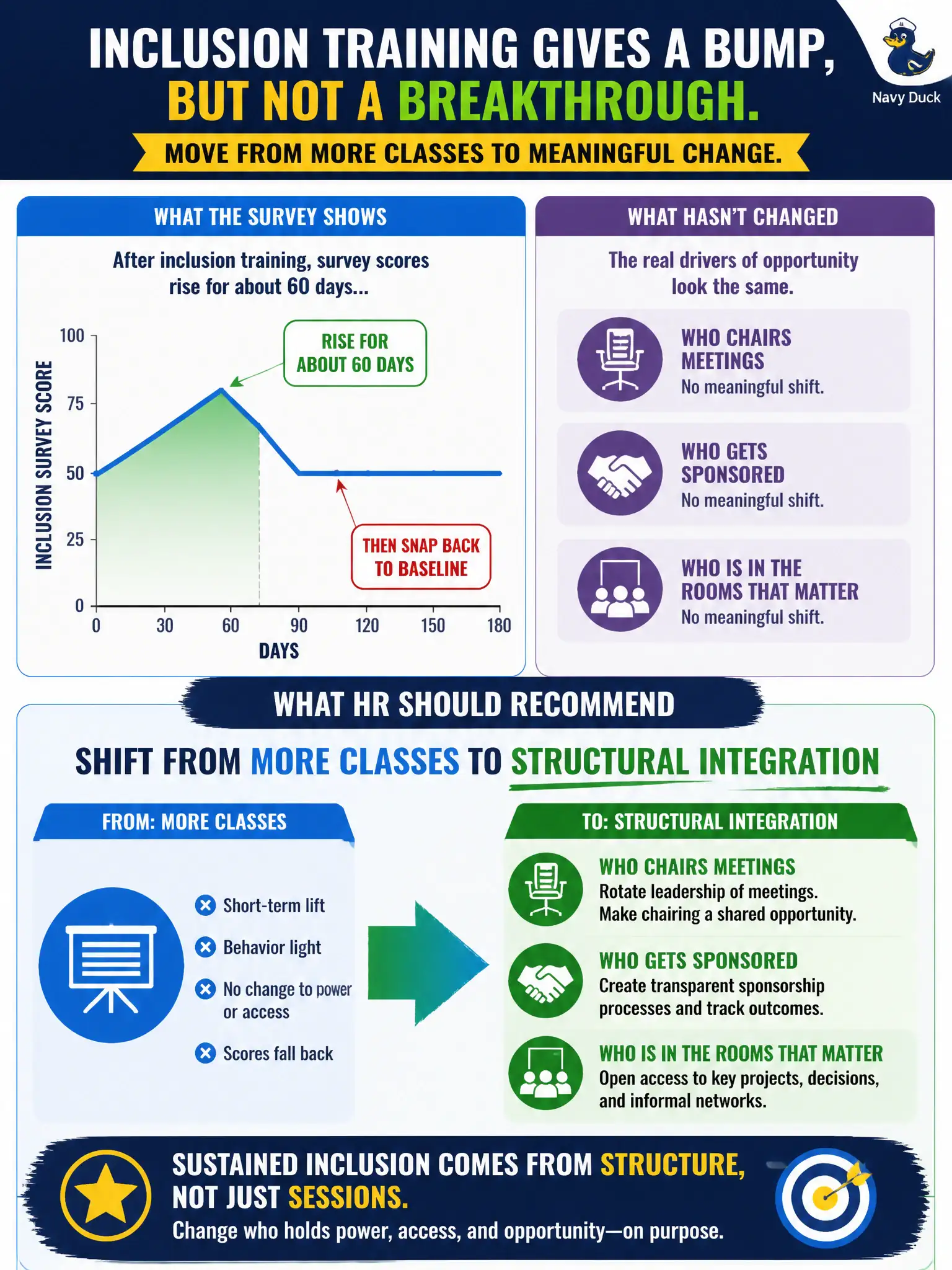
After inclusion training, a county's survey scores rise for about 60 days and then snap back to baseline. Who chairs meetings and who gets sponsored has not changed. What should HR recommend?
Select an answer to reveal the explanation.
Short Explanation
A 60-day bump after class is like a gym membership that expires when the parking lot hits. If chairs and sponsorship never change, the culture did not. Build the structure, not another slide deck.
Full Explanation
When county inclusion scores rise for about sixty days after training and then snap back while who chairs meetings and who gets sponsored never changed, the intervention was awareness theater, not structural integration. HR should shift from more classes to changing the rooms that matter—chair roles, sponsorship into stretch work, and decision forums—so inclusion becomes how power and opportunity move. Civic employers owe residents a workforce developed by fair access to influence, not a temporary survey bump that fades when the parking lot fills again.
Repeating the same training quarterly until bounce-back disappears fails by concept: dosage of the same class cannot substitute for unchanged power structures. Stopping measurement because scores revert fails analytically—reversion is evidence the intervention did not stick, not that surveys are worthless. Replacing the vendor while leaving chairs and sponsorship unchanged fails because the delivery brand is not the integration lever.
Exam caveat: structural moves must be documented and job-related; do not confuse equity of opportunity with quotas detached from qualifications. Operational check: publish criteria for chair and sponsorship opportunities, track who receives them for two cycles, and only then judge whether inclusion scores stabilize for the right reason.