
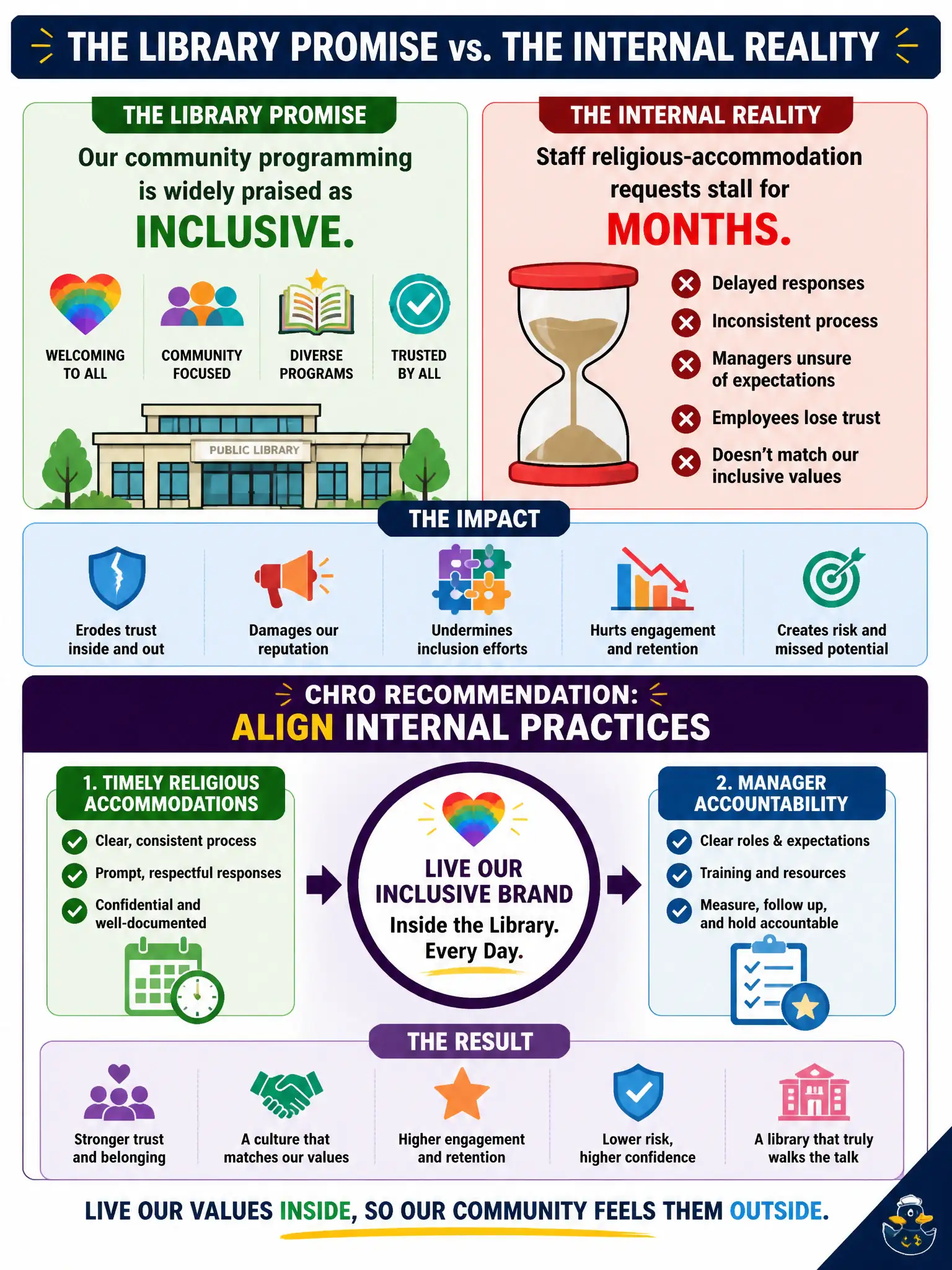
A public library's community programming is widely praised as inclusive, but staff religious-accommodation requests stall for months. What should the CHRO recommend?
Select an answer to reveal the explanation.
Short Explanation
A welcoming story hour does not fix a stalled accommodation for the person running the desk. Public brand and employee culture are different rooms. Make the inside match the sign out front.
Full Explanation
A public library can win praise for inclusive community programming while still failing inclusion integration internally if staff religious-accommodation requests stall for months. The CHRO should align internal practices—timely religious accommodations and manager accountability—with the inclusive brand the library sells to the public. Civic framing is direct: residents experience the library's values through staff who are either respected or exhausted by unanswered requests; public brand and employee culture are different rooms, and SPHR work is making the inside match the sign out front.
Using programming awards as proof that internal culture is integrated fails by concept: external service praise is not evidence of employment practice health. Pausing all public programming until every request is closed fails by overcorrecting service delivery rather than fixing the accommodation process. Telling staff that public-facing inclusion fulfills the city's employee-culture duty fails because community events do not discharge duties owed to employees as workers.
Exam caveat: religious accommodation still requires an interactive process and undue-hardship analysis; 'timely' means disciplined process control, not rubber-stamping every request. Operational check: invent a request aging metric, name manager owners, clear the backlog with documented decisions, and report internal accommodation timeliness alongside public inclusion claims so stewardship is measurable.