
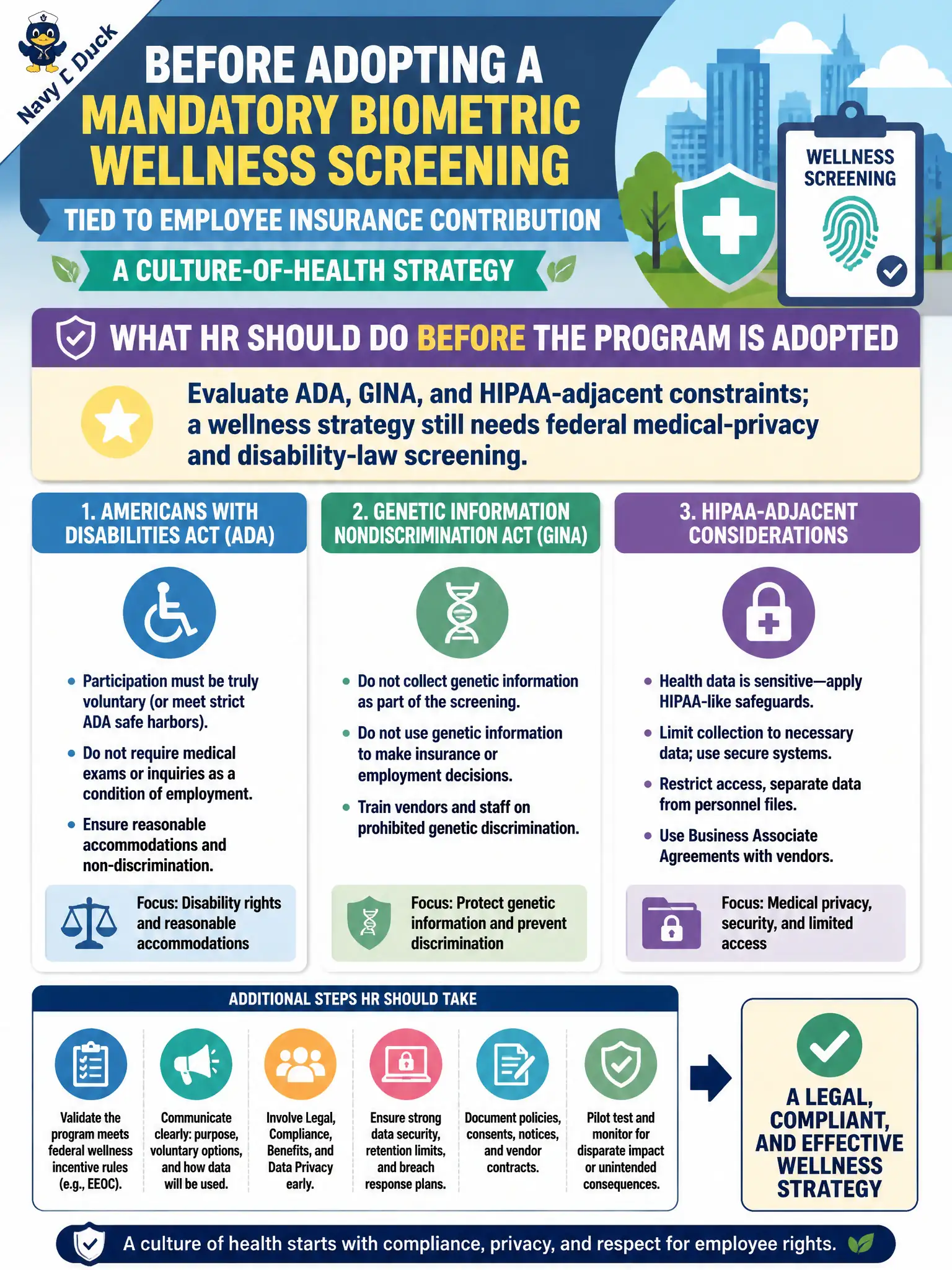
A city wants a mandatory biometric wellness screening tied to the employee insurance contribution as a culture-of-health strategy. What should HR do before the program is adopted?
Select an answer to reveal the explanation.
Short Explanation
A mandatory biometric screening tied to insurance is not a fruit-bowl wellness campaign. ADA, GINA, and medical-privacy rules all have something to say about involuntary medical exams and genetic information. Screen the culture-of-health idea against those statutes before anyone is told to roll up a sleeve.
Full Explanation
A mandatory biometric wellness screening tied to insurance contributions is a medical-inquiry and genetic-information strategy problem, not a fruit-bowl wellness campaign. Before adoption, HR must evaluate ADA, GINA, and HIPAA-adjacent constraints. Involuntary medical exams, penalties that make 'voluntary' programs coercive, and collection of family medical history create federal exposure even when the mayor wants a culture of health. Wellness strategy still requires disability-law and medical-privacy screening.
Launching immediately because wellness incentives are 'always voluntary' ignores how large penalties and mandates destroy voluntariness. Collecting family medical history to enrich data walks into GINA risk. Tying large premium penalties to refusal and labeling nonparticipants noncompliant is the coercion pattern regulators scrutinize.
Exam caveat: properly designed voluntary wellness programs with limited incentives can be lawful; the vignette's mandatory framing and insurance tie are the red flags. The concept is legal screening before adoption, not a ban on all wellness.
Operational check: route the proposal through counsel against ADA/GINA incentive and voluntariness rules; strip family medical history collection; redesign any incentive within permitted bounds; document that nonparticipation is not misconduct; and delay go-live until the legal screen clears.