
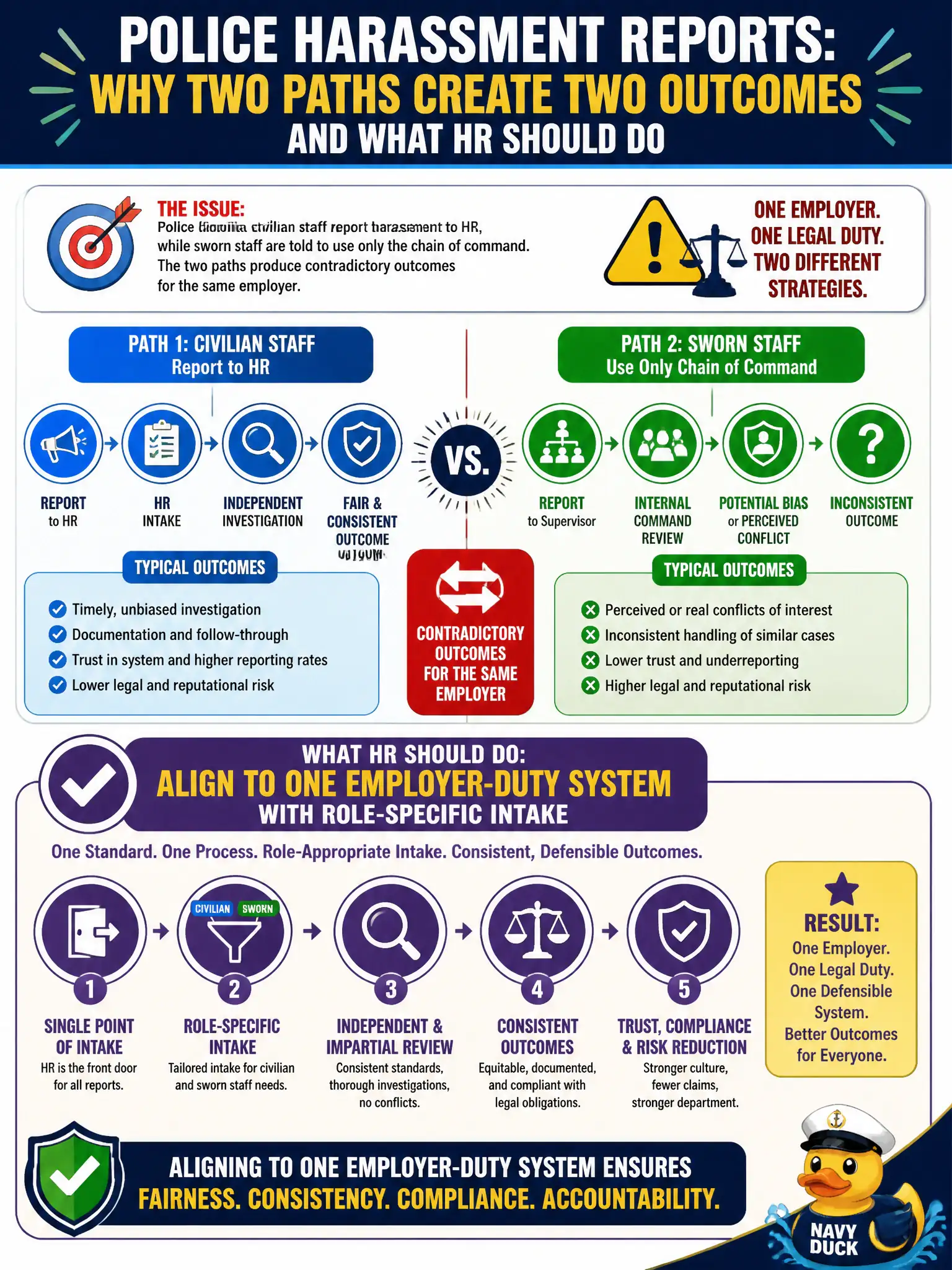
Police civilian staff report harassment to HR, while sworn staff are told to use only the chain of command. The two paths produce contradictory outcomes for the same employer. What should HR do?
Select an answer to reveal the explanation.
Short Explanation
One employer cannot have two harassment-reporting universes—one for civilians and one for badges. Role-specific intake is fine; contradictory duties are not. Build one backbone so the city's legal obligation is the same story in both buildings.
Full Explanation
One municipal employer cannot run two harassment-response universes—one for civilians and one for sworn—without fracturing legal duty and trust. When civilian staff report to HR while sworn staff are told to use only chain of command, and outcomes contradict, HR must align to one employer-duty system with role-specific intake. Role-specific intake can respect operational realities (e.g., who receives a first report), but investigation standards, non-retaliation, documentation, and remedial action must be one backbone. Contradictory strategies for the same employer are a governance failure, not cultural sensitivity.
Keeping wholly separate strategies so sworn culture is untouched preserves the contradiction the scenario flags. Routing every sworn complaint only to the union and closing HR's file abandons employer duty. Forcing civilians into the sworn chain when the alleged harasser sits in that chain recreates the classic reporting conflict the policy should prevent.
Exam caveat: one duty system is not identical rituals for every rank. The concept is consistent employer obligation and outcomes, allowing intake paths that still reach an independent, competent process.
Operational check: rewrite the policy with one investigatory standard and dual intake doors that both feed the same case system; train sworn and civilian supervisors together; track outcome consistency by employee type; and audit closed cases quarterly for disparate handling.