
A U.S. transit authority operates garages in two states. Each garage has begun writing its own leave and overtime rules. Federal employment-law obligations are the same at both sites, but a few state wage-hour rules genuinely differ. How should HR align strategy?
Select an answer to reveal the explanation.
Short Explanation
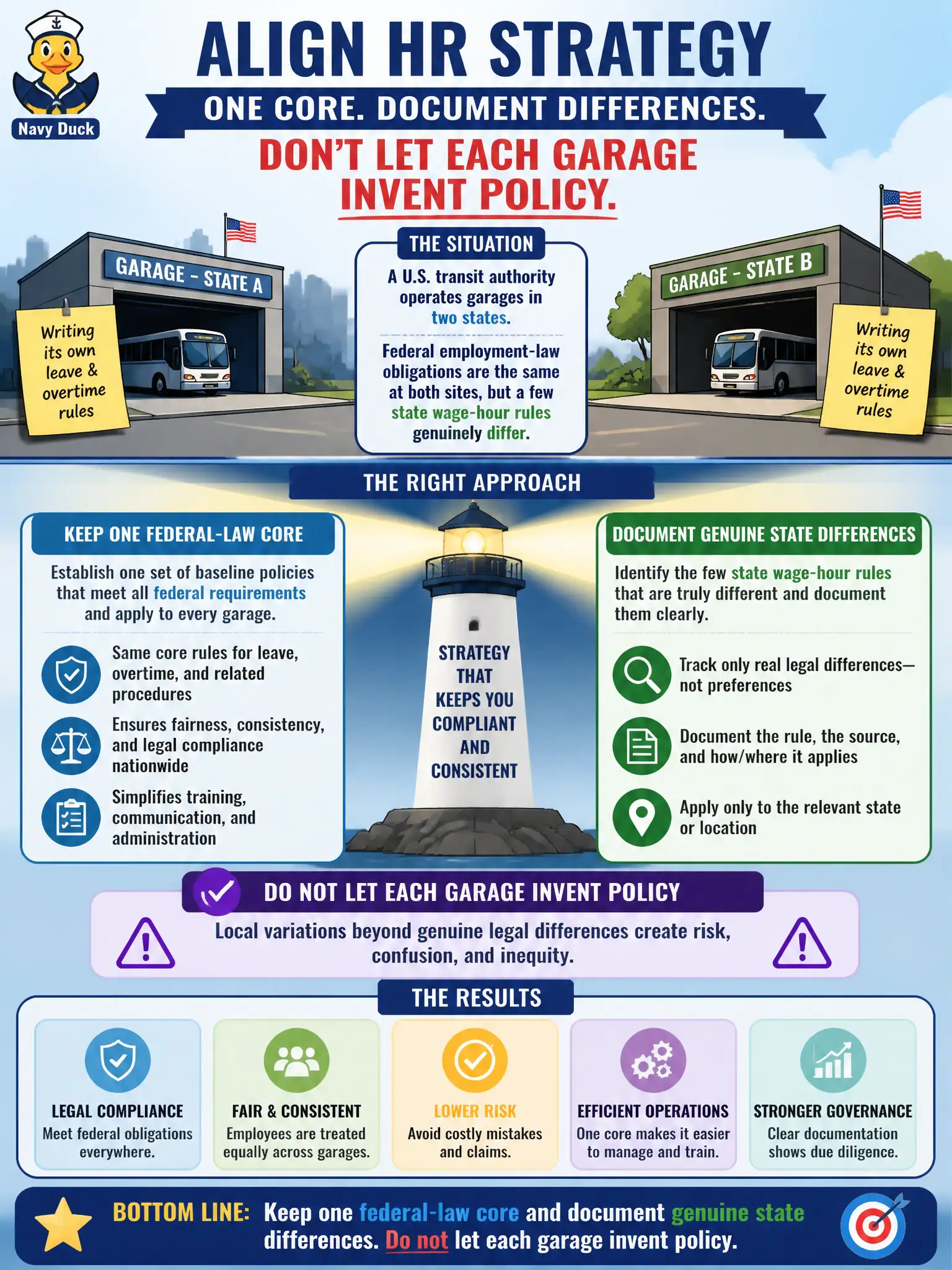
Two U.S. states is not two HR countries. Keep a federal-law core, write down the real state differences, and stop each garage from inventing overtime folklore. A binder of local garage rules is not a multi-site strategy.
Full Explanation
Multi-site public employers operating across U.S. states need one federal-law core with documented genuine state differences—not garage folklore. When each transit garage begins writing its own leave and overtime rules, HR should keep the federal core intact, write down real state wage-hour differences, and stop local invention. Federal obligations (FLSA overtime concepts, anti-discrimination, and other national baselines that apply) do not change because the garage sits across a state line; only specific state rules may. A binder of local garage policies is not a multi-site strategy.
Letting each garage publish a complete local handbook with no enterprise core guarantees inconsistency and compliance drift. Applying only the more lenient state's rules at both sites and ignoring federal law is unlawful simplification. Freezing all leave and overtime administration until the authority exits a state abandons operations instead of aligning them.
Exam caveat: documenting state differences is not optional customization for every supervisor preference. Only genuine statutory or regulatory differences belong in the addenda.
Operational check: inventory garage-level leave and OT memos; map each against federal core and state statutes; withdraw unauthorized local rules; publish one core handbook with state addenda; and train payroll and garage supervisors together so administration matches the written design.