
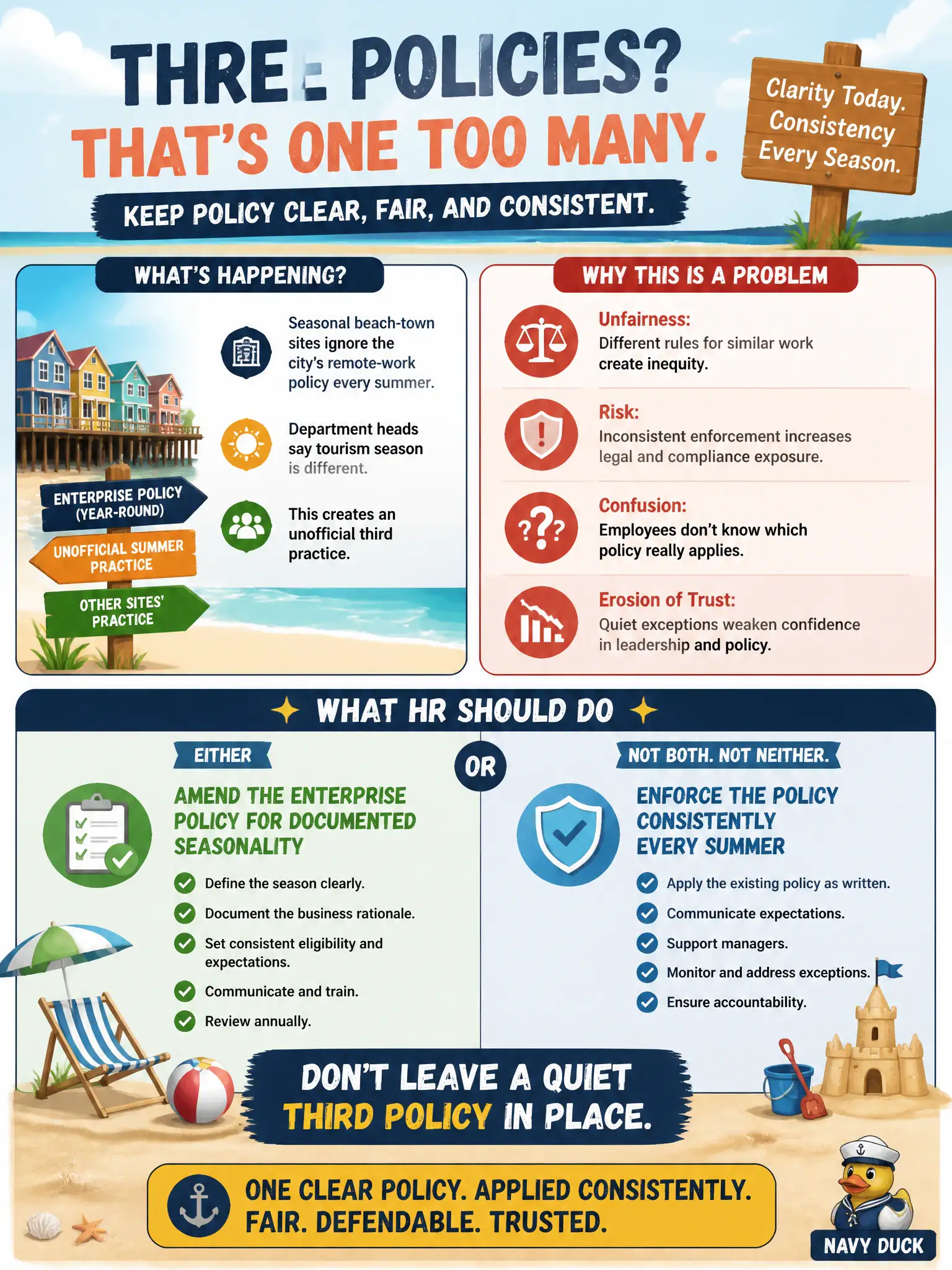
Seasonal beach-town sites ignore the city's remote-work policy every summer, creating an unofficial third practice. Department heads say tourism season is different. What should HR do?
Select an answer to reveal the explanation.
Short Explanation
A quiet summer exception is still a policy—just an honest one the city never wrote. Either amend the enterprise remote-work rule for documented seasonality or enforce it. A third unofficial practice is how cities lose the plot.
Full Explanation
Unofficial third practices are still policy—just unwritten, uneven, and indefensible. When seasonal beach-town sites ignore the city's remote-work policy every summer and create a quiet tourism exception, HR must either amend the enterprise policy for documented seasonality or enforce it. Leaving a silent third practice teaches every other department that written rules are optional when a director claims uniqueness. SPHR alignment requires honest policy design, not deniable seasonal folklore.
Quietly tolerating and denying the practice when asked institutionalizes hypocrisy. Abolishing remote work citywide, including for year-round jobs the policy already covers, punishes compliant units instead of resolving the seasonal conflict. Letting each beach supervisor write a personal memo with no city review fragments the employer further.
Exam caveat: amending for seasonality requires real operational justification and written guardrails—not a blank summer waiver. Enforcement without amendment is also valid; what fails is the unacknowledged third way.
Operational check: decide amend-or-enforce within a fixed deadline; if amending, define eligible roles, blackout dates, and approval authority; if enforcing, notify beach directors in writing before season peak; spot-check summer schedules against the chosen rule; and close exception tickets that cite 'tourism season' without policy basis.