
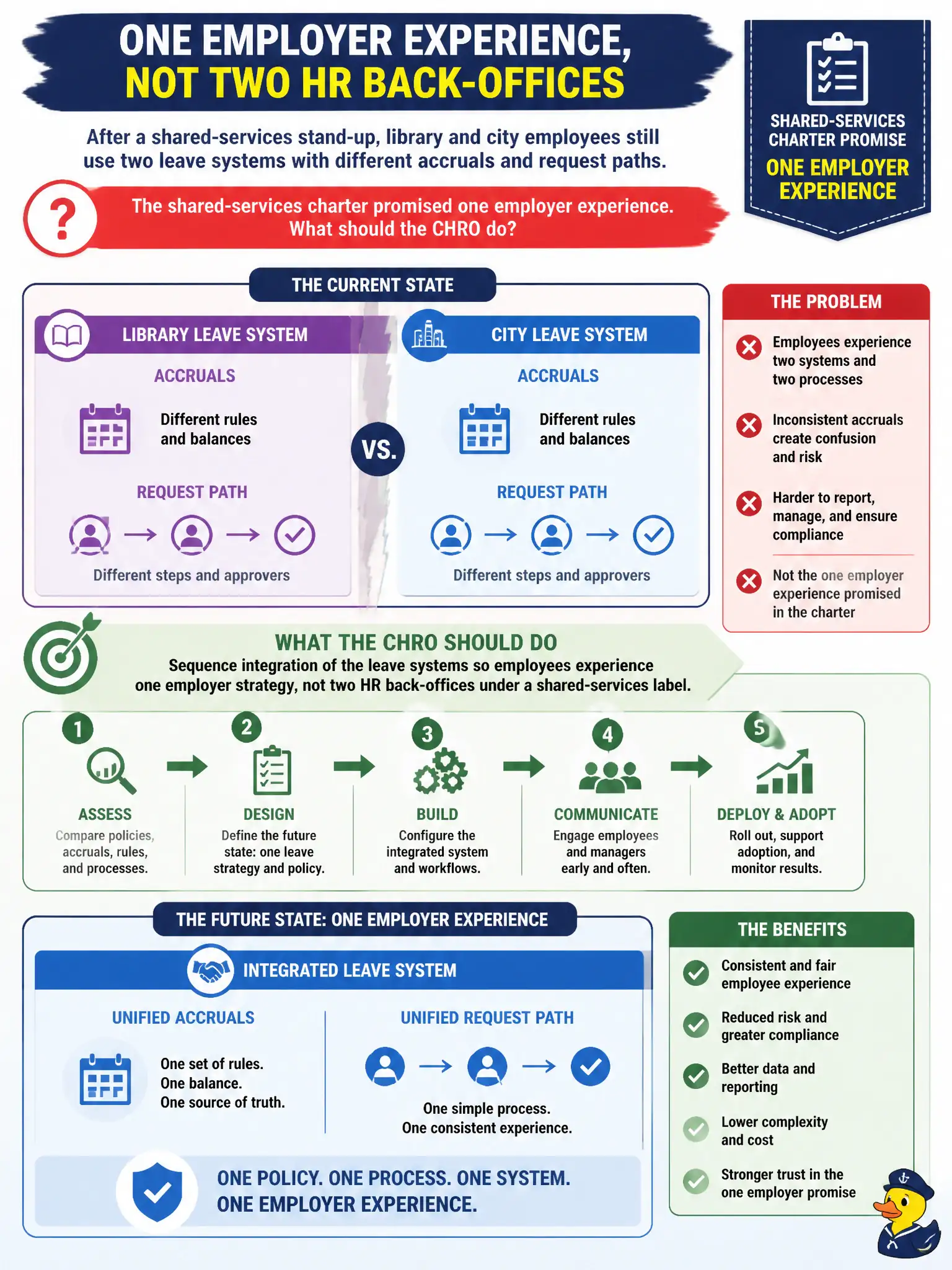
After a shared-services stand-up, library and city employees still use two leave systems with different accruals and request paths. The shared-services charter promised one employer experience. What should the CHRO do?
Select an answer to reveal the explanation.
Short Explanation
Shared services with two leave systems is a new logo on two old back offices. Employees still live two employers. Sequence the integration so leave actually works like one city, not a merger that never finished.
Full Explanation
Shared-services labels do not create one employer experience—integrated systems do. After a shared-services stand-up, if library and city employees still use two leave systems with different accruals and request paths, the CHRO must sequence integration so employees experience one employer strategy rather than two HR back-offices under a new logo. Leave is lived daily: balances, approvals, and rules shape whether people believe the charter's promise. Leaving dual systems in place indefinitely makes the charter a branding exercise.
Calling the dual experience a library tradition abandons the shared-services commitment. Forcing an overnight cutover with no manager playbook completes the charter on paper while creating payroll and service chaos. Adding a third shadow spreadsheet multiplies complexity instead of integrating.
Exam caveat: sequencing integration is not infinite delay. The concept requires a deliberate path to one leave experience, with interim controls—not perpetual dual systems excused as change management.
Operational check: publish a leave-integration roadmap with accrual mapping, blackout dates, and manager scripts; run a parallel pilot on one library unit; reconcile balances before cutover; measure ticket volume and mis-accrual errors for sixty days; and retire the legacy system only after the error rate meets an agreed threshold.