
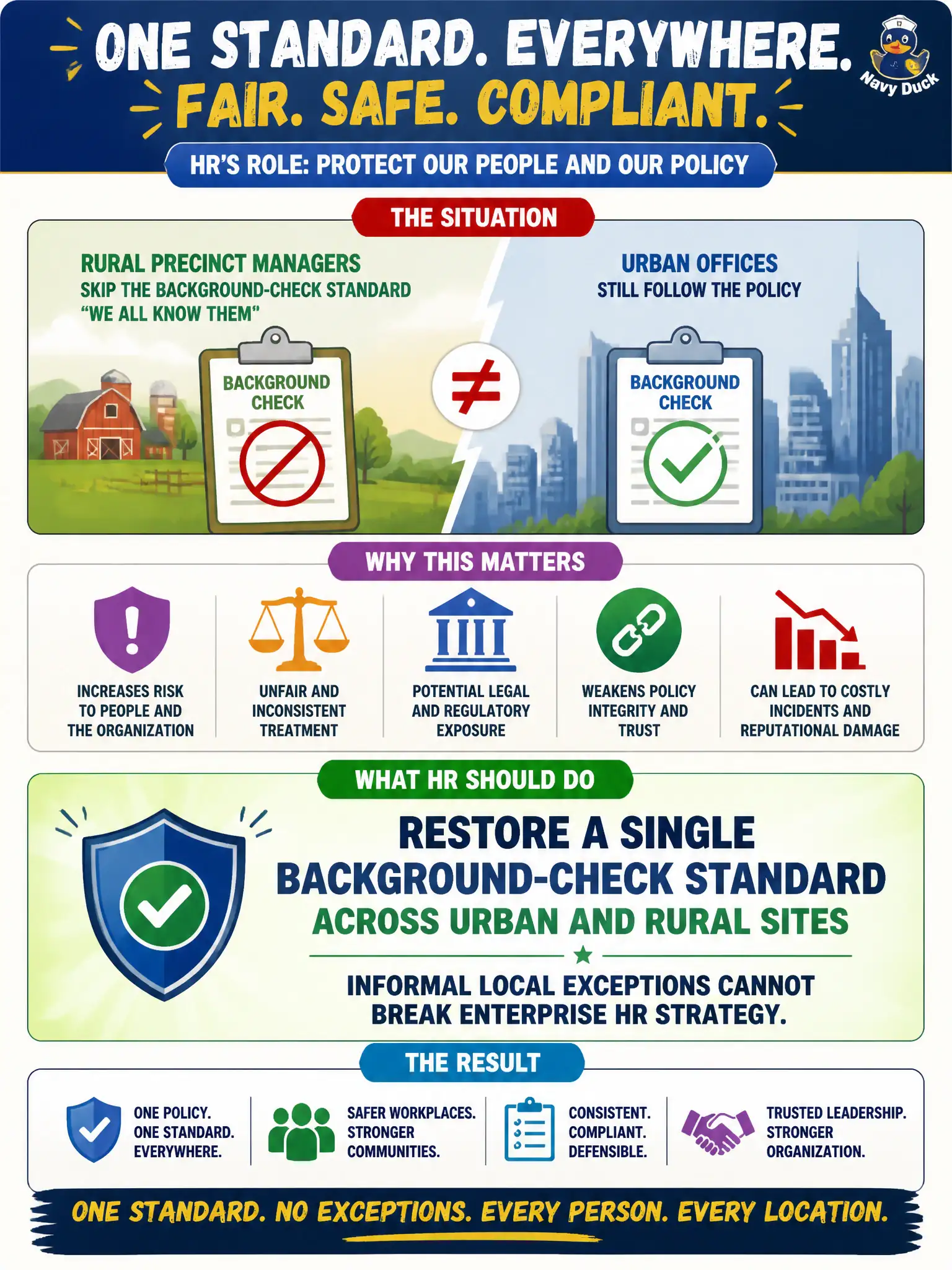
Rural precinct managers in a county skip the background-check standard "because we all know them," while urban offices still follow the policy. What should HR do?
Select an answer to reveal the explanation.
Short Explanation
"We all know them" is not a background check. Rural familiarity does not cancel an enterprise standard the urban offices still follow. One county, one check—otherwise the strategy is a ZIP-code exception.
Full Explanation
Enterprise HR strategy cannot survive ZIP-code exceptions. When rural precinct managers skip background checks 'because we all know them' while urban offices still follow policy, HR must restore a single background-check standard across sites. Informal familiarity is not a vetted background; it is unrecorded risk that will look like selective enforcement after the first rural misconduct case the city 'should have known.' One county employer owes candidates and the public one integrity standard, regardless of how long someone has lived in the precinct.
Authorizing rural skips for long-tenured locals writes the exception into policy and guarantees unequal protection. Applying the standard only to urban hires and grandfathering rural practice freezes the double standard. Replacing checks with neighbor-reference forms substitutes social proof for investigative standards the enterprise already adopted.
Exam caveat: a single standard can still include role-based depth (e.g., deeper checks for public-safety-sensitive roles). The concept forbids geography-based waivers of the enterprise control, not risk-based differentiation by job.
Operational check: reissue the background standard as non-waivable by site; audit rural and urban files for completion before offer; require a named compliance owner for each precinct; and report exception attempts to the county administrator so informal culture cannot quietly rebuild the loophole.