
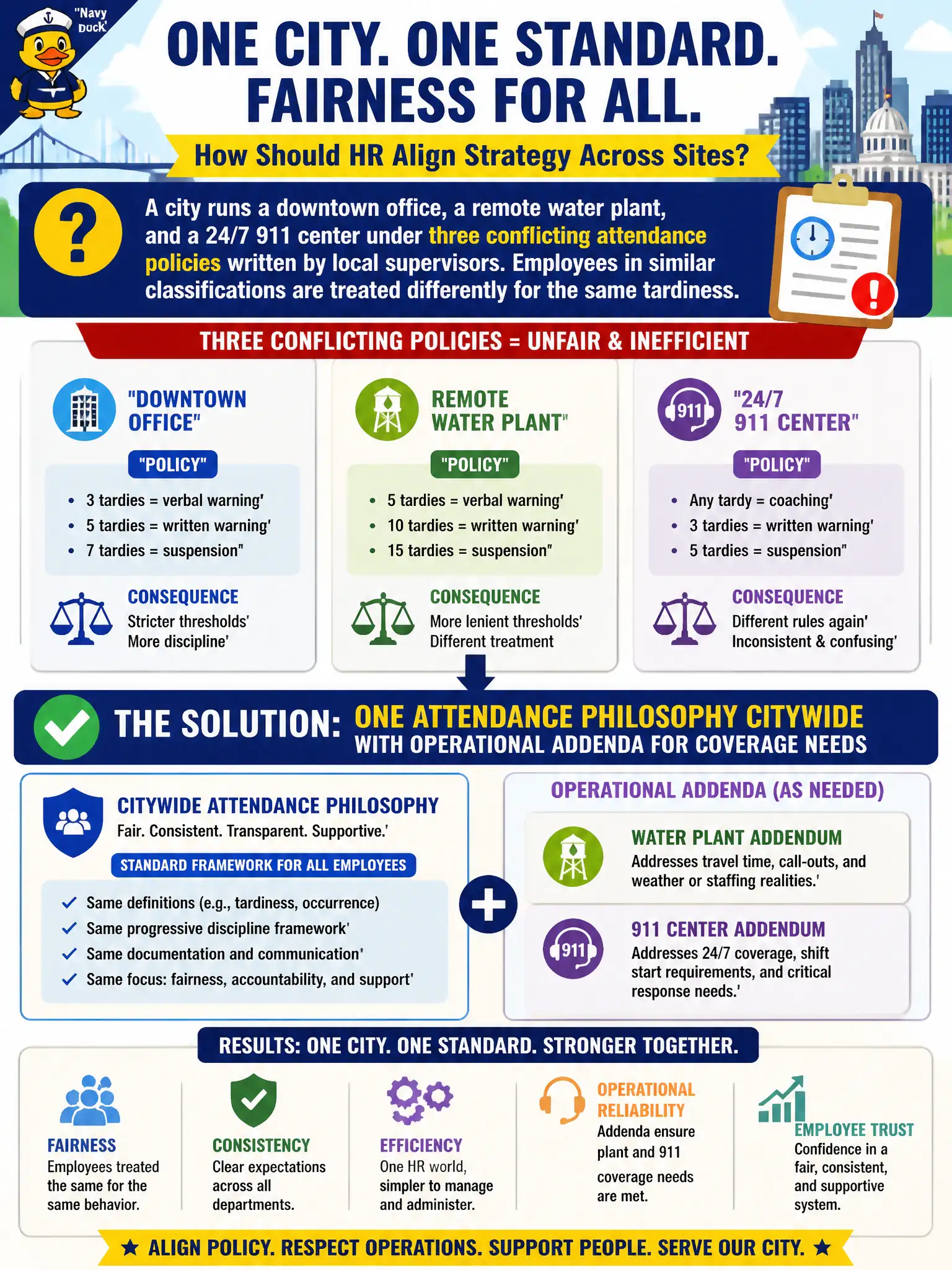
A city runs a downtown office, a remote water plant, and a 24/7 911 center under three conflicting attendance policies written by local supervisors. Employees in similar classifications are treated differently for the same tardiness. How should HR align strategy across sites?
Select an answer to reveal the explanation.
Short Explanation
Three attendance policies for one city is like three speed limits on the same street depending on which garage you parked in. Plants and 911 may need different coverage rules, sure. Those are addenda under one philosophy—not three random HR planets.
Full Explanation
SPHR alignment across locations allows operational variation under a single strategy. A city with a downtown office, remote water plant, and 24/7 911 center cannot run three unrelated attendance worlds written by local supervisors when employees in similar classifications are treated differently for the same tardiness. The correct design sets one citywide attendance philosophy—definitions of tardiness, progressive discipline, notice, and leave interaction—then allows documented operational addenda for plant coverage and 911 continuity. Residents and employees experience one employer; sites get the flexibility coverage actually requires.
Leaving each site fully autonomous preserves the inconsistency that creates equity and grievance risk. Imposing downtown office hours on the plant and 911 with no addenda ignores legitimate continuous-operations needs and will be ignored or litigated. Suspending attendance rules until a consultant rewrites civil-service law abandons management control and rewards the conflict.
Exam caveat: one philosophy plus addenda is not a loophole for each supervisor to reinvent discipline. Addenda must be written, approved, and limited to operational coverage differences, not personality-based enforcement.
Operational check: publish a single attendance policy core; attach plant and 911 addenda with examples of coverage exceptions; train supervisors on the shared progressive-discipline ladder; spot-audit comparable tardiness cases across the three sites quarterly; and correct divergent practices before they harden into past practice.