
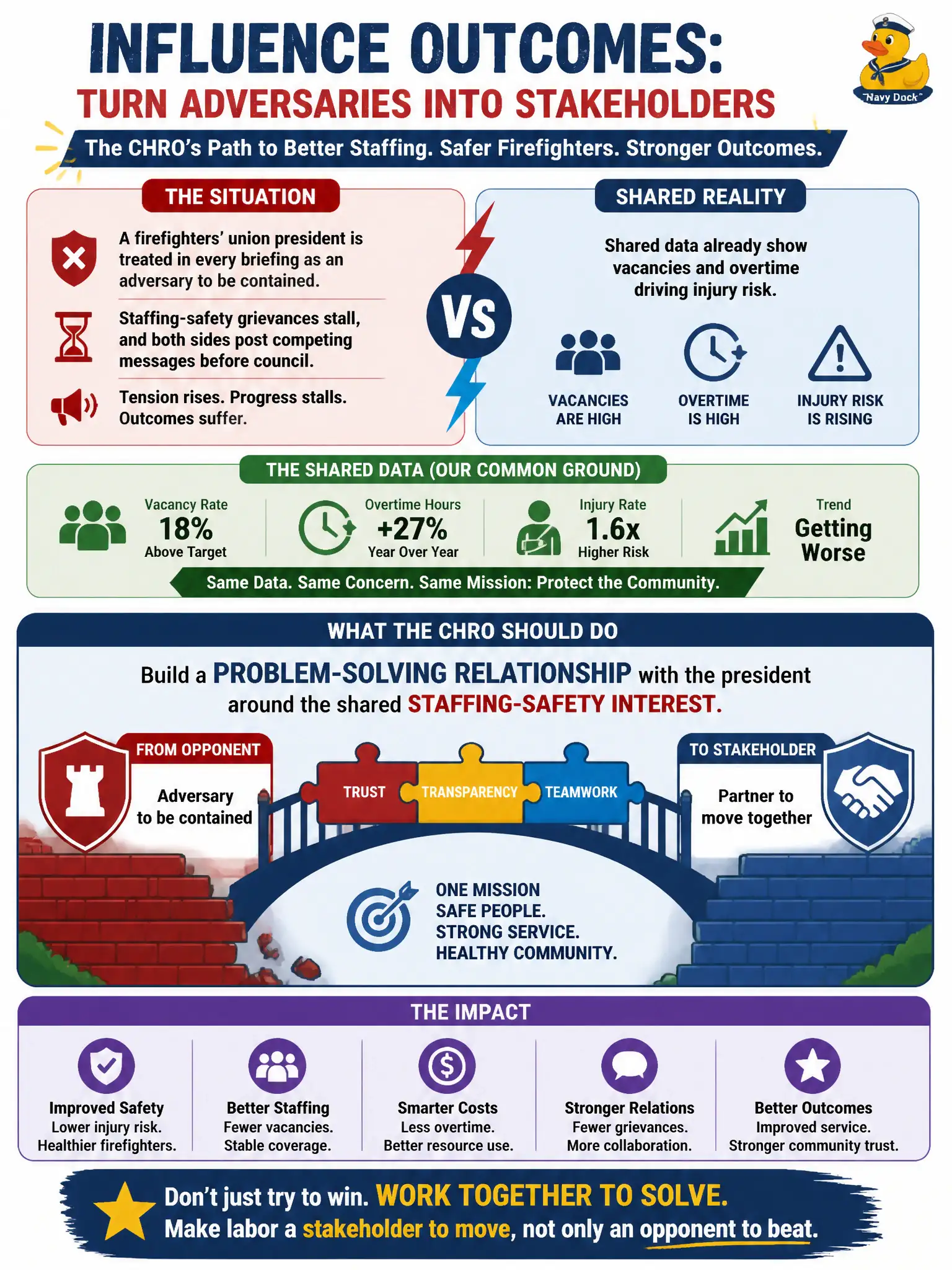
A firefighters' union president is treated in every briefing as an adversary to be contained. Staffing-safety grievances stall, and both sides post competing messages before council. Shared data already show vacancies and overtime driving injury risk. What should the CHRO do to influence outcomes?
Select an answer to reveal the explanation.
Short Explanation
Treating a fire union president as a permanent enemy is like refusing to talk to the other driver after a fender-bender—you still share the intersection. Staffing-safety is a joint problem: vacancies and overtime hurt firefighters and the city. Build a problem-solving relationship on that shared interest so outcomes can move.
Full Explanation
Labor leaders are municipal stakeholders under SPHR influence responsibility, not permanent enemies to be contained. When staffing-safety grievances stall and both sides post competing messages before council, the CHRO should build a problem-solving relationship with the firefighters' union president around the shared interest already visible in the data: vacancies and overtime are driving injury risk. A working relationship does not surrender management rights; it creates a channel where joint facts can move staffing, safety controls, and council messaging before the next injury or political spat. Treating the president only as an adversary freezes information, inflames public conflict, and leaves unused the shared safety evidence that could justify resources.
Escalating every grievance to binding arbitration closes informal problem-solving and raises cost without fixing the underlying vacancy-overtime-injury loop. Barring chiefs from speaking except through the city attorney militarizes routine dialogue and often worsens safety lag. Leaking overtime numbers to the press substitutes media pressure for stakeholder work and can breach trust, bargaining norms, and message discipline the city still needs.
Exam caveat: relationship-building is not the same as conceding every demand or bypassing the bargaining table. The tested concept is stakeholder engagement around shared operational risk, not abandoning hard bargaining where interests truly conflict.
Operational check: schedule recurring staffing-safety huddles with the president and fire leadership using one shared vacancy/OT/injury dashboard; agree on what can be problem-solved administratively versus what must be bargained; coordinate council talking points so both sides stop ambushing each other; and measure progress by grievance cycle time and injury trends, not by how often the president is 'contained.'