
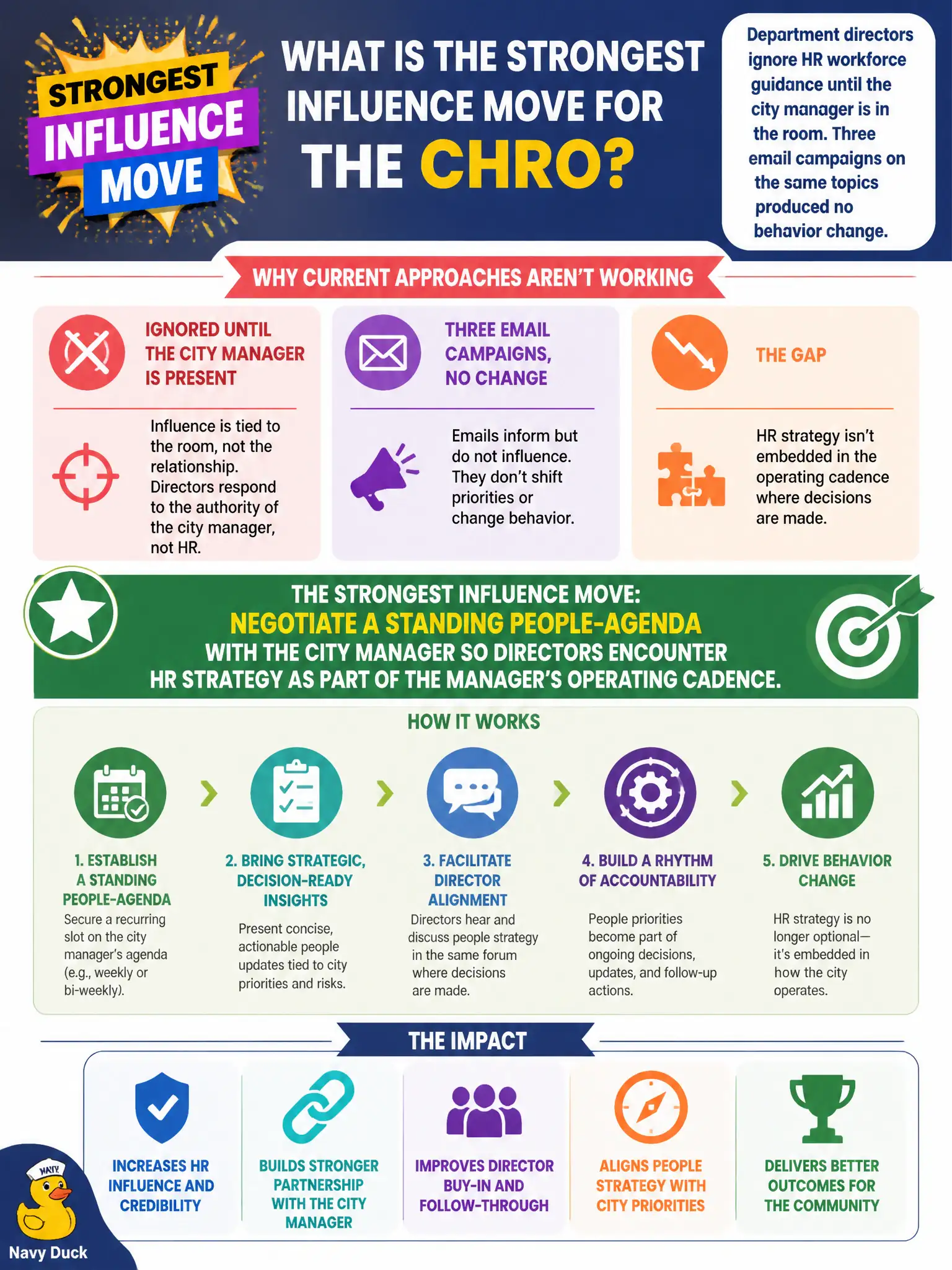
Department directors ignore HR workforce guidance until the city manager is in the room. Three email campaigns on the same topics produced no behavior change. What is the strongest influence move for the CHRO?
Select an answer to reveal the explanation.
Short Explanation
If directors only listen when the city manager walks in, more email is like posting more flyers on a locked door. Influence lives in the room where decisions actually get made. Park a standing people-agenda on the manager's calendar so HR strategy rides the same operating cadence the directors already obey.
Full Explanation
When department directors ignore HR workforce guidance until the city manager appears, the constraint is authority architecture, not message volume. The strongest influence move is to negotiate a standing people-agenda with the city manager so directors encounter HR strategy inside the manager's operating cadence. Directors already rearrange priorities for that room; attaching workforce decisions—vacancies, classification disputes, labor risk, and service-level staffing—to that cadence converts optional email into required operating work. SPHR stakeholder influence is about where decisions are made and whose voice is treated as non-optional, not about producing more memoranda.
A longer weekly digest fails because awareness was never the bottleneck; directors already receive guidance and still wait for the manager. Forcing CC on every personnel email creates noise, resentment, and shadow work without changing decision rights. Waiting for a crisis and then briefing council weaponizes noncompliance after harm has already hit residents and staff, which is political escalation rather than operating influence.
Exam caveat: a standing agenda is not a license for HR to bypass directors on every transaction. The concept is elevating strategic people issues into executive rhythm; day-to-day operational HR still belongs with departments under clear policy.
Operational check: propose a recurring people block on the manager's leadership meeting with a fixed scorecard (critical vacancies, overtime leakage, grievance lag, compliance deadlines); require directors to bring decisions, not just reports; track which guidance items close only after appearing on that agenda; and retire redundant email campaigns once the cadence is live.