
A utility’s strategic goal is fewer boil-water notices, and staff resist a certification-and-shift change. How should HR connect the disruption to strategy?
Select an answer to reveal the explanation.
Short Explanation
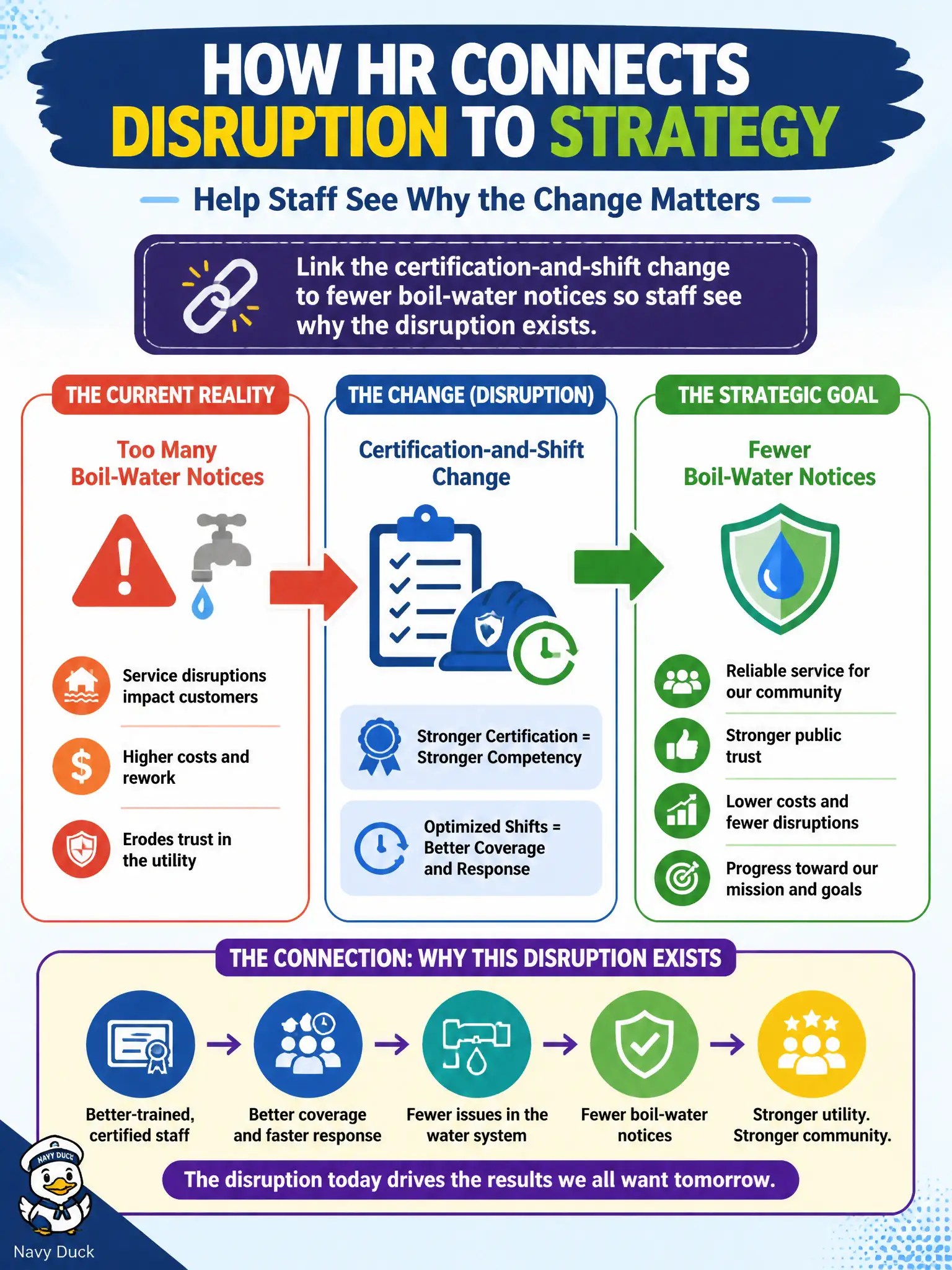
People will live with a messy shift change if they can see it is about keeping the water safe. “HR said so” does not do that job. Tie the certification and schedule disruption to fewer boil-water notices, which is the actual city goal.
Full Explanation
Linking the certification-and-shift change to fewer boil-water notices so staff see why the disruption exists is the correct change communication approach: connect the disruption to the organizational goal, not to HR authority, payroll convenience, or a hidden risk narrative. People will live with a messy shift change if they can see it is about keeping water safe for residents; “HR said so” does not do that job. Framing the change as a payroll convenience with no water-quality link trivializes the strategy. Hiding the operational goal so people do not worry about boil-water risk withholds the very reason that justifies discomfort. Exam caveat: SPHR change communications create line of sight from disruption to strategy outcomes. Operational check: open briefings with the boil-water reduction goal, show how certification and shifts reduce that risk, invite questions, track understanding, and refuse HR-authority framing as the primary message for the utility workforce. Certification and shift disruption in a water utility must be narrated as fewer boil-water notices for residents. HR-authority, payroll-convenience, or hidden-risk framings strip meaning and fuel resistance; line-of-sight to the strategic safety goal sustains the change.