
Middle managers quietly reverse a flexible-schedule change that council already adopted. What should HR add to the change plan?
Select an answer to reveal the explanation.
Short Explanation
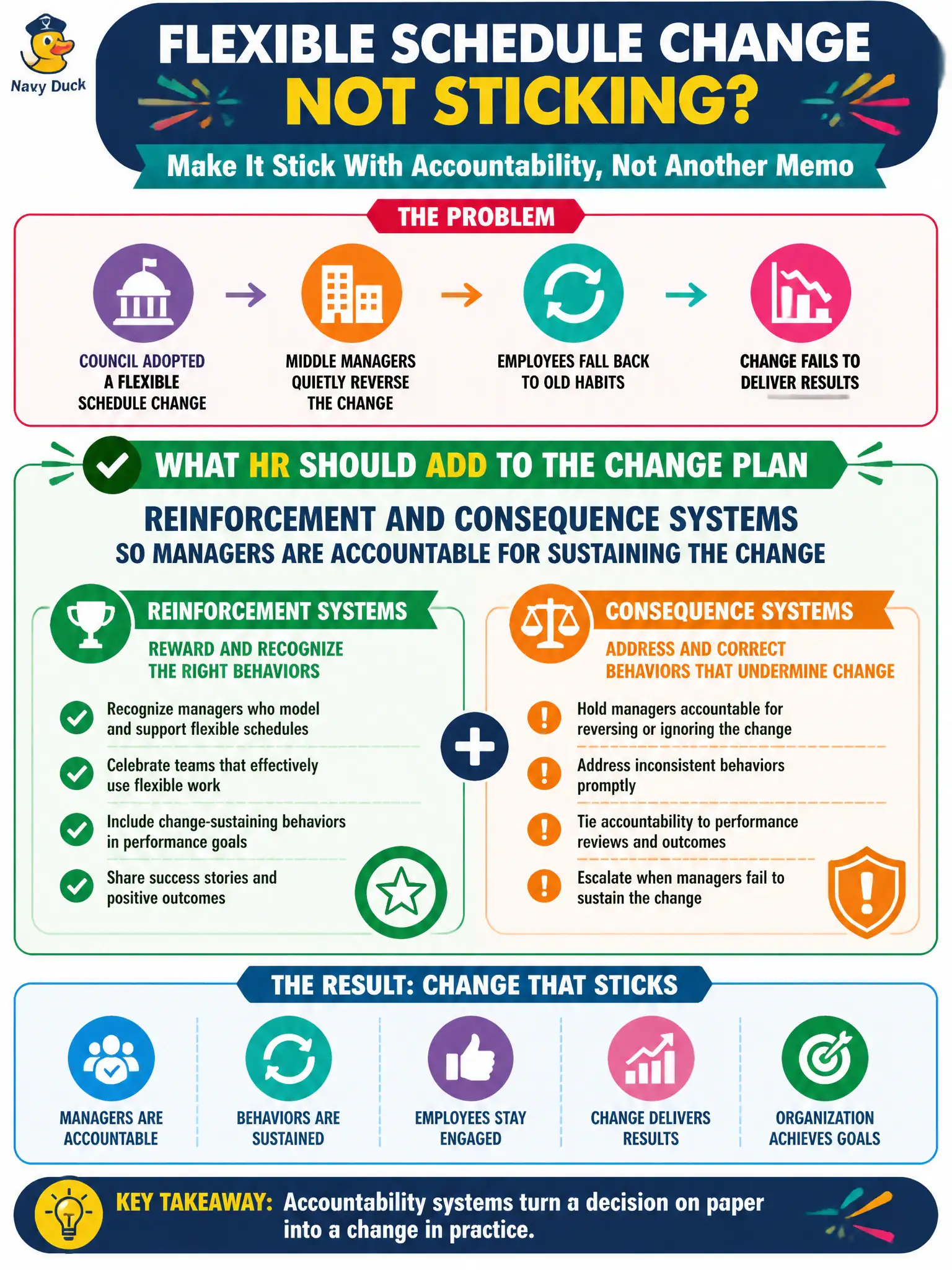
If bosses quietly put everyone back on the old clock, another memo will not save the change. Sustainment needs reinforcement and real consequences for managers who reverse it. Change strategy includes what happens after the announcement.
Full Explanation
Adding reinforcement and consequence systems so managers are accountable for sustaining flexible schedules—rather than reissuing memos, ignoring reversals because managers “know local needs,” or canceling flexible schedules citywide—is correct when middle managers quietly undo a council-adopted change. If bosses put everyone back on the old clock, another memo will not save the change; sustainment needs reinforcement and real consequences. Ignoring reversals nullifies council policy. Canceling the policy citywide rewards resistance and abandons the adopted civic flexibility goal. Exam caveat: SPHR change plans include manager accountability and reinforcement to prevent silent rollback. Operational check: monitor schedule compliance, coach and discipline managers who reverse the adopted policy without authority, align performance expectations, and report sustainment to council so the municipal flexible-schedule change holds. Silent middle-manager rollback of council-adopted flexible schedules is a sustainment failure. Reinforcement and consequences for unauthorized reversal protect adopted policy; memo reprints and citywide cancellation reward resistance. Assign an owner, a measure, and a review date so the choice remains visible in civic oversight.