
A police-reform consent decree requires new evaluation criteria. How should HR design the change path so the decree becomes practice?
Select an answer to reveal the explanation.
Short Explanation
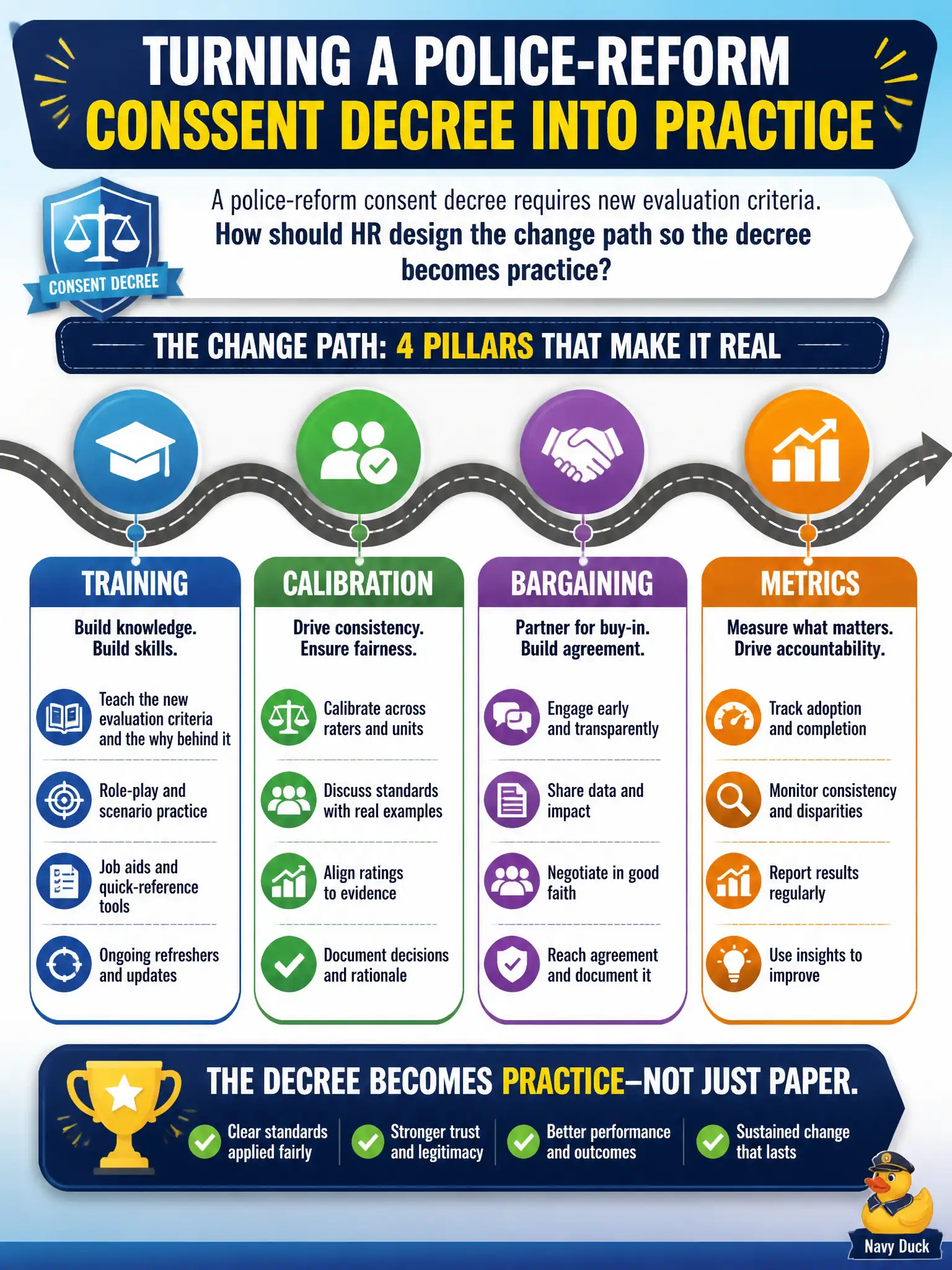
A consent decree in a binder is still just paper. New evaluation criteria land only if people are trained, ratings are calibrated, bargaining happens where required, and someone measures whether the new criteria are actually used. That path is the change strategy.
Full Explanation
Designing training, calibration, bargaining, and metrics so a police-reform consent decree’s new evaluation criteria become practice—not filing the decree unchanged, emailing the court order, or outsourcing evaluations to plaintiff’s counsel—is correct. A decree in a binder is still paper; criteria land only if raters are trained, ratings are calibrated, bargaining occurs where required, and someone measures whether new standards appear in real evaluations. A single email attaching the order creates awareness without skill or consistency. Outsourcing evaluations to plaintiff’s counsel abandons management responsibility. Exam caveat: SPHR translates legal mandates into trained, calibrated, bargained, and measured people practices. Operational check: train raters, run calibration, bargain where evaluation systems are covered, publish metrics on criteria use, and audit evaluations until the decree’s standards operate in daily civic policing supervision. Consent-decree evaluation criteria become real only through training, calibration, bargaining where covered, and metrics that show use in actual ratings. Filing, emailing, or outsourcing the duty leaves reform on the shelf and risks further court action.