
A big-bang HRIS go-live is failing in payroll and timekeeping. Which change-strategy switch should HR make?
Select an answer to reveal the explanation.
Short Explanation
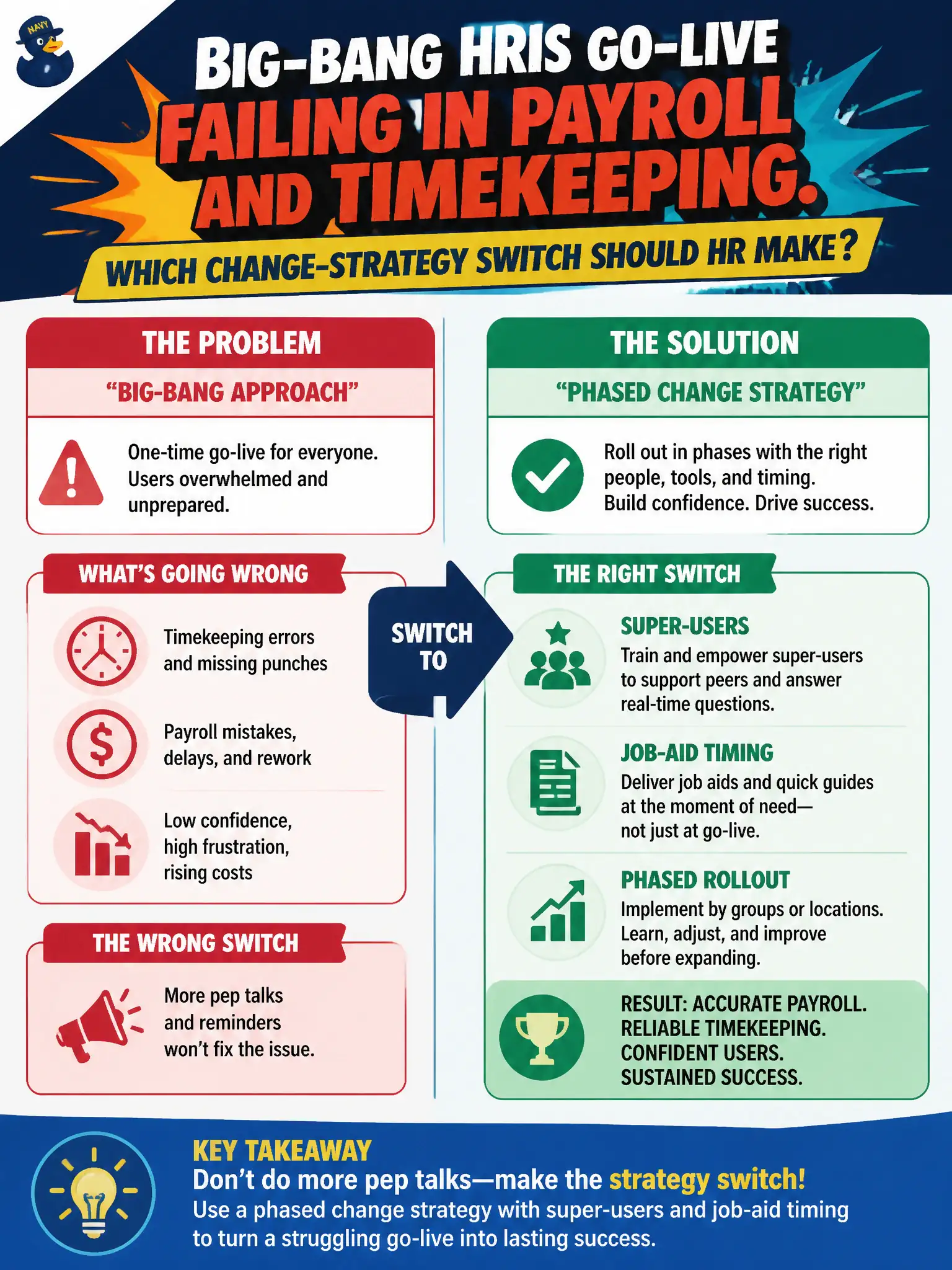
When a big-bang HRIS is eating payroll, more pep talks are just louder music on a sinking boat. Switch the implementation design: phase the modules, put super-users on the floor, and time the job aids. Enablement is the change strategy.
Full Explanation
Switching from a failing big-bang HRIS cutover to a phased change strategy with super-users and job-aid timing—rather than louder pep talks, shutting payroll until morale improves, or blaming the vendor in a press conference while leaving big-bang in place—is correct because implementation design is change strategy. When payroll and timekeeping are failing, motivational events are louder music on a sinking boat. Shutting payroll harms employees who deliver city services. Public blame without redesign leaves the cutover failure mode intact. Exam caveat: SPHR treats phasing, local support, and timed job aids as change-strategy choices when big-bang fails. Operational check: halt nonessential modules, phase payroll and timekeeping recovery, deploy floor super-users, release job aids at task moments, and communicate the new sequence until municipal pay is stable and trusted. Payroll-breaking HRIS cutovers need phased recovery, floor super-users, and job aids timed to real tasks. Pep talks, payroll shutdowns, or vendor blame without redesign leave employees unpaid and destroy trust in municipal systems. Assign an owner, a measure, and a review date so the choice remains visible in civic oversight.