
Unionized sanitation resists a route-optimization change. How should HR sequence labor engagement relative to the change strategy?
Select an answer to reveal the explanation.
Short Explanation
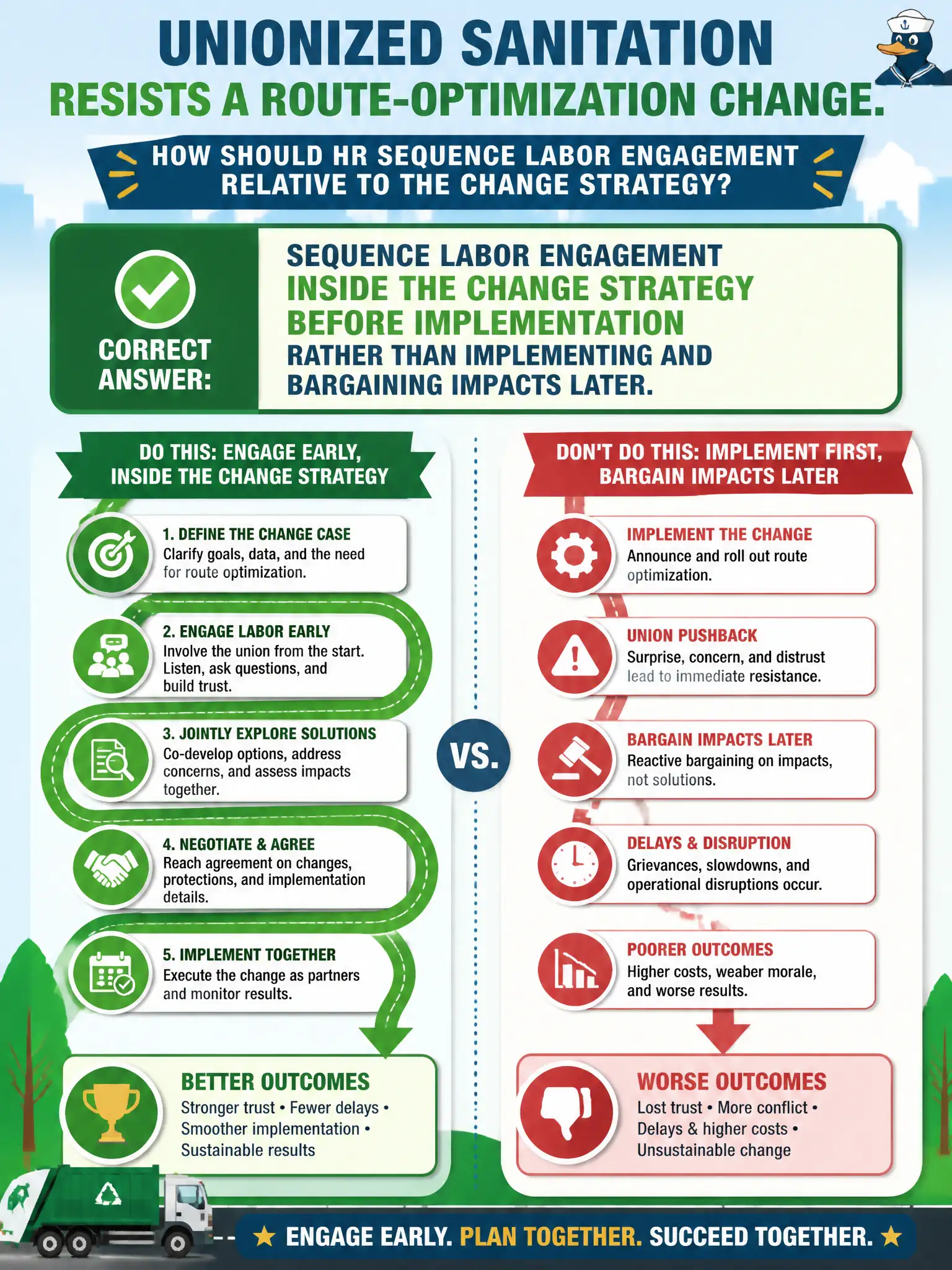
Bargaining after the trucks already run new routes is like painting the living room and then asking what color people wanted. Put labor engagement inside the change plan from the start. That is how a unionized shop actually moves, not an afterthought grievance.
Full Explanation
Sequencing labor engagement inside the change strategy before implementation—rather than implementing new sanitation routes first and bargaining impacts later, skipping talks because operations owns routing, or canceling the operational goal—is correct in a unionized public-sector setting. Bargaining after trucks already run new routes is like painting the room and then asking what color people wanted; it hardens resistance and risks unfair-practice exposure. Skipping labor talks abandons HR’s change and labor role. Canceling the operational goal to avoid bargaining obligation surrenders service improvement residents need. Exam caveat: SPHR change strategy in union environments integrates labor engagement before implementation when impacts are bargainable. Operational check: map bargainable impacts, engage the union early within the change plan, negotiate required terms, then implement route optimization with documented agreements supporting the civic sanitation goal. Unionized sanitation route changes that launch before labor engagement invite grievances and bad-faith claims. Sequencing talks inside the change plan before trucks roll preserves both the operational goal and lawful labor relations for the municipal service.