
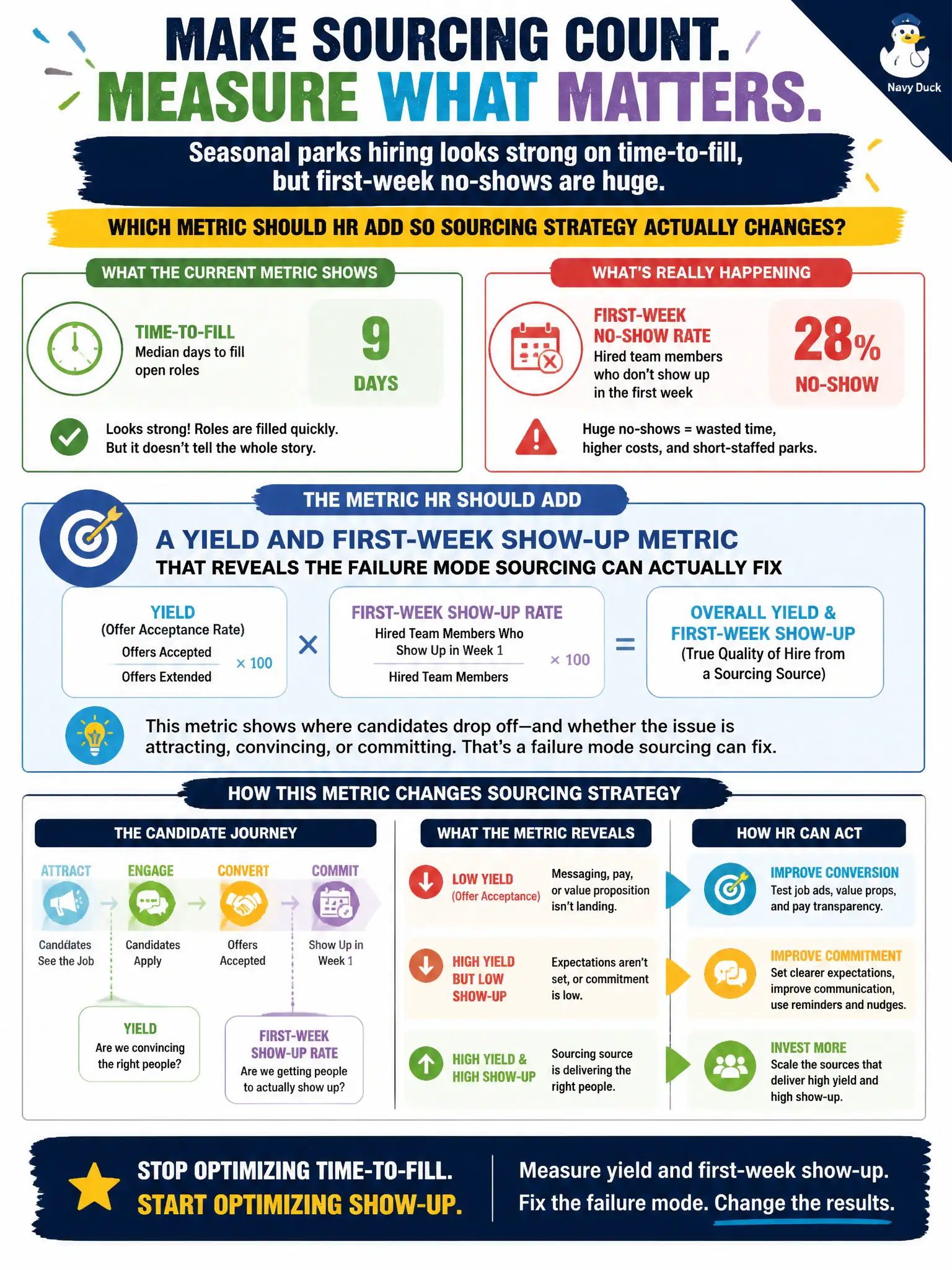
Seasonal parks hiring looks strong on time-to-fill, but first-week no-shows are huge. Which metric should HR add so sourcing strategy actually changes?
Select an answer to reveal the explanation.
Short Explanation
Time-to-fill can look great while the dugout is empty on opening day. If people accept and then no-show, the metric that matters is yield and who actually shows. That number tells sourcing to stop chasing speed and start chasing people who will report.
Full Explanation
Adding a yield and first-week show-up metric that reveals the failure mode sourcing can actually fix is correct when seasonal parks hiring looks strong on time-to-fill but first-week no-shows are huge. Time-to-fill can look great while the dugout is empty on opening day; if people accept and then no-show, speed metrics keep optimizing the wrong funnel stage. Average days to post a requisition, likes on the parks social page, and recruiter keystrokes per application measure activity or vanity, not who appears for work. Exam caveat: SPHR metrics must expose the real failure mode so sourcing strategy changes. Operational check: track offer-to-show and first-week attendance by source, shift spend toward sources with reliable show-up, fix onboarding friction that drives no-shows, and stop celebrating time-to-fill alone for municipal seasonal hiring that residents notice when parks open. Seasonal parks no-shows waste recruiting spend and close amenities residents expect on opening day. Yield and show-up metrics by source tell sourcing which channels produce workers who actually arrive, which time-to-fill cannot reveal. Assign an owner, a measure, and a review date so the choice remains visible in civic oversight.