
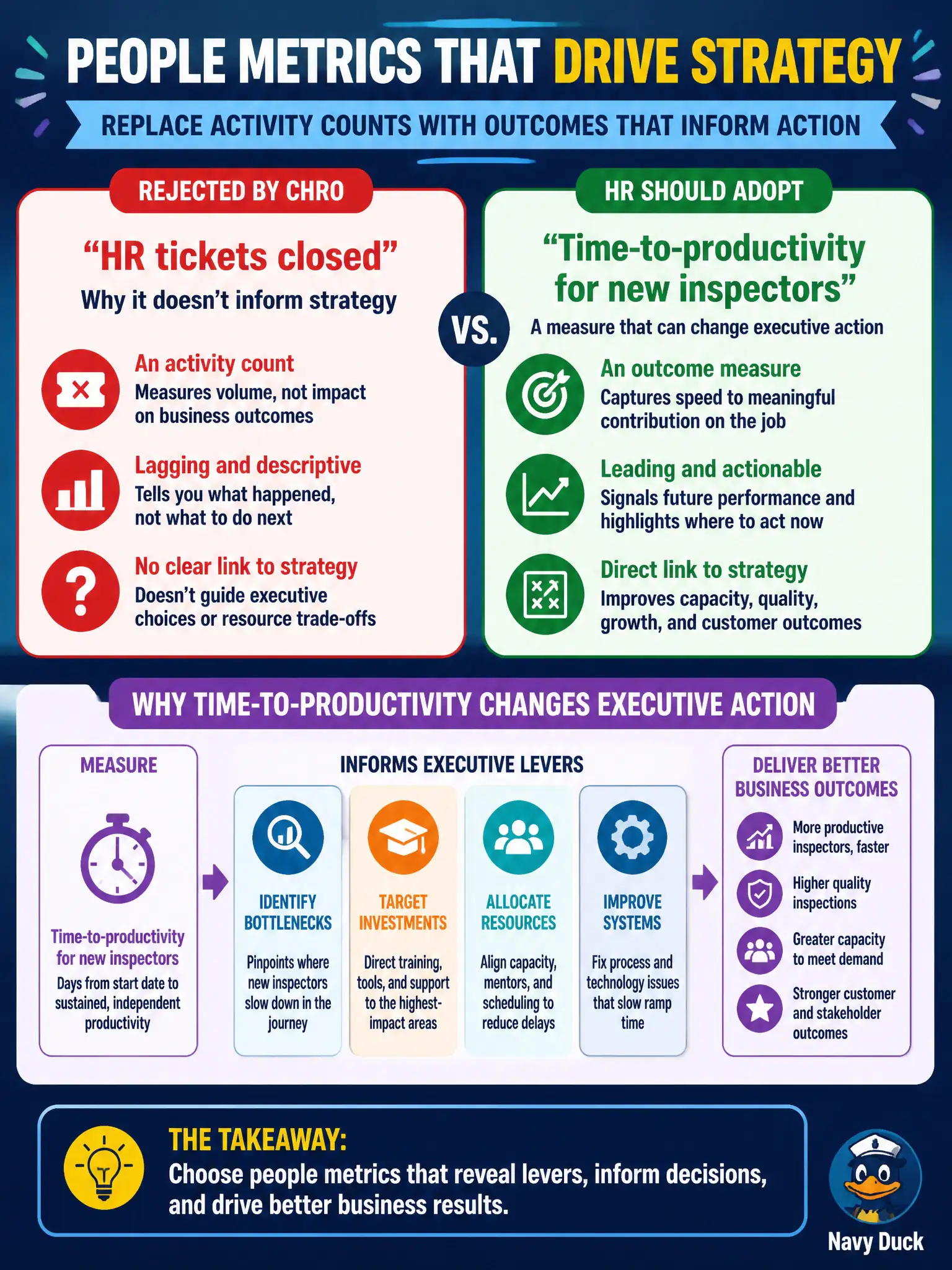
Operations proposes “HR tickets closed” as a headline people metric. The CHRO rejects it as not informing strategy. Which replacement should HR adopt?
Select an answer to reveal the explanation.
Short Explanation
Ticket counts measure how busy HR looks, like counting how many times the help desk picked up the phone. Executives need a number that changes what they do, such as how long a new inspector takes to become productive. That is a strategy metric; inbox volume is not.
Full Explanation
Adopting time-to-productivity for new inspectors—a measure that can change executive action—instead of HR tickets closed, emails answered, meeting hours, or handbook pages revised is correct because new metrics should inform strategy, not document HR busyness. Ticket counts measure how often the help desk picked up the phone; executives need to know how long a new inspector takes before closing permits for residents. Inbox volume, meeting time, and handbook-page counts are activity measures that do not tell leaders what to fund or fix in the permitting system. Exam caveat: SPHR headline people metrics must be actionable for executives on service outcomes. Operational check: define time-to-productivity for inspectors with operations, baseline it, tie onboarding and field training actions to movement in the metric, and drop vanity activity counts from the city manager’s people scorecard. Time-to-productivity for inspectors links onboarding design to permitting speed residents feel. Replacing that headline with HR inbox metrics invites executives to manage HR busyness instead of civic service capacity. Assign an owner, a measure, and a review date so the choice remains visible in civic oversight.