
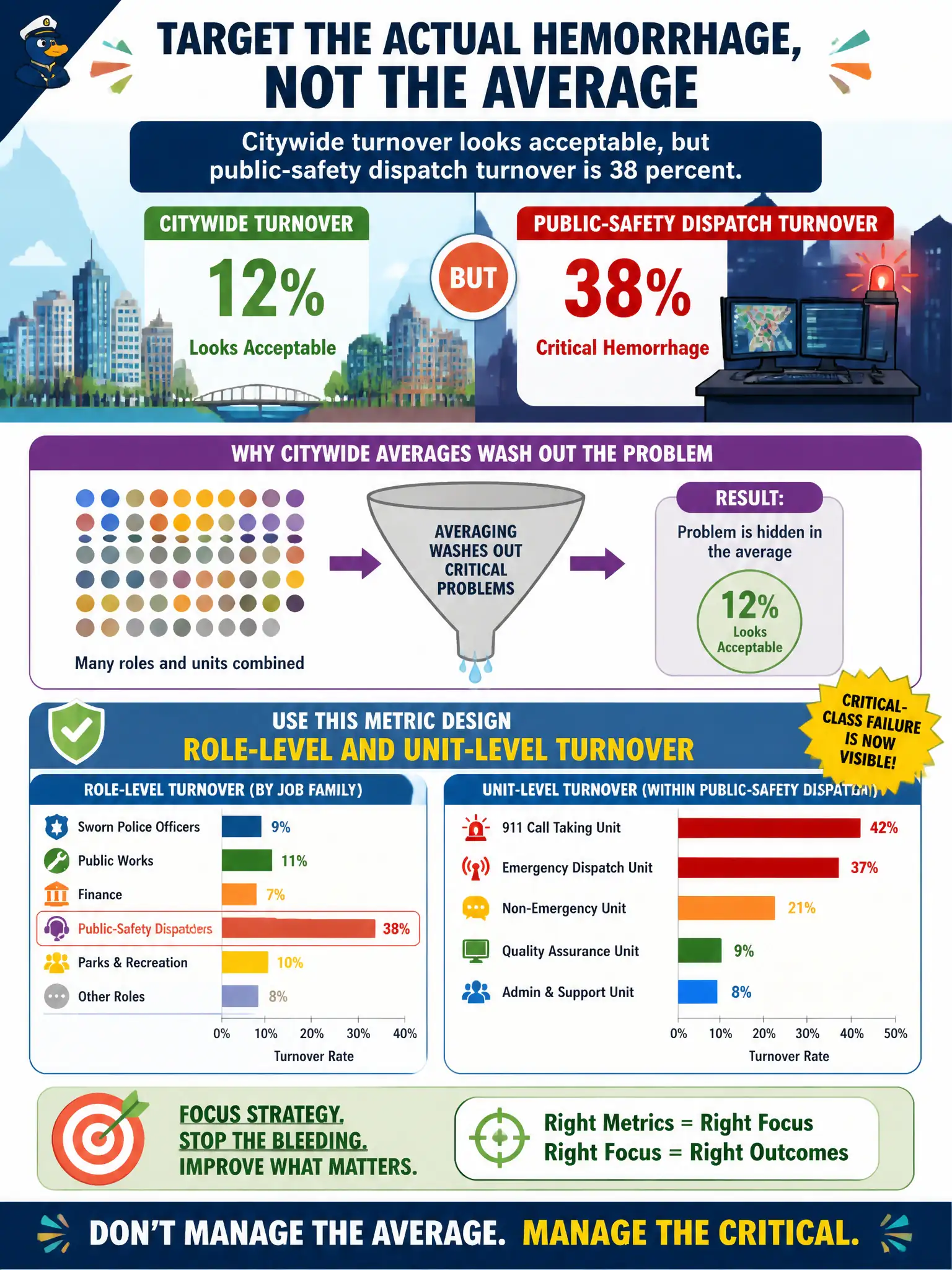
Citywide turnover looks acceptable, but public-safety dispatch turnover is 38 percent. Which metric design should HR use so strategy targets the actual hemorrhage?
Select an answer to reveal the explanation.
Short Explanation
A citywide average is a lake temperature while the kitchen is on fire. Dispatch at 38 percent is the fire. Slice turnover by role and unit so strategy actually aims at the class that is hemorrhaging.
Full Explanation
Using role-level and unit-level turnover so critical-class failure is visible instead of washed out in a citywide average is the correct metric design when public-safety dispatch turnover is 38 percent while citywide looks acceptable. A citywide average is lake temperature while the kitchen is on fire; dispatch is the fire. A single organization-wide percentage for the annual report hides the hemorrhage. Exit-interview comments without rates attached to jobs or units lack actionable targeting. Cost-per-hire for parks seasonal staff as a proxy for dispatch retention aims strategy at the wrong class. Exam caveat: SPHR metrics inform action only when sliced to reveal where strategic risk lives. Operational check: publish turnover by role and unit with dispatch highlighted, set retention actions and owners for that class, review monthly with public-safety leaders, and stop using citywide averages as the sole civic retention story. Retention strategy aimed at a flattering citywide average will miss a dispatch crisis until 911 capacity collapses. Role and unit slices make the 38 percent failure visible, assign owners, and stop parks or other proxies from distracting executive attention from the critical class.