
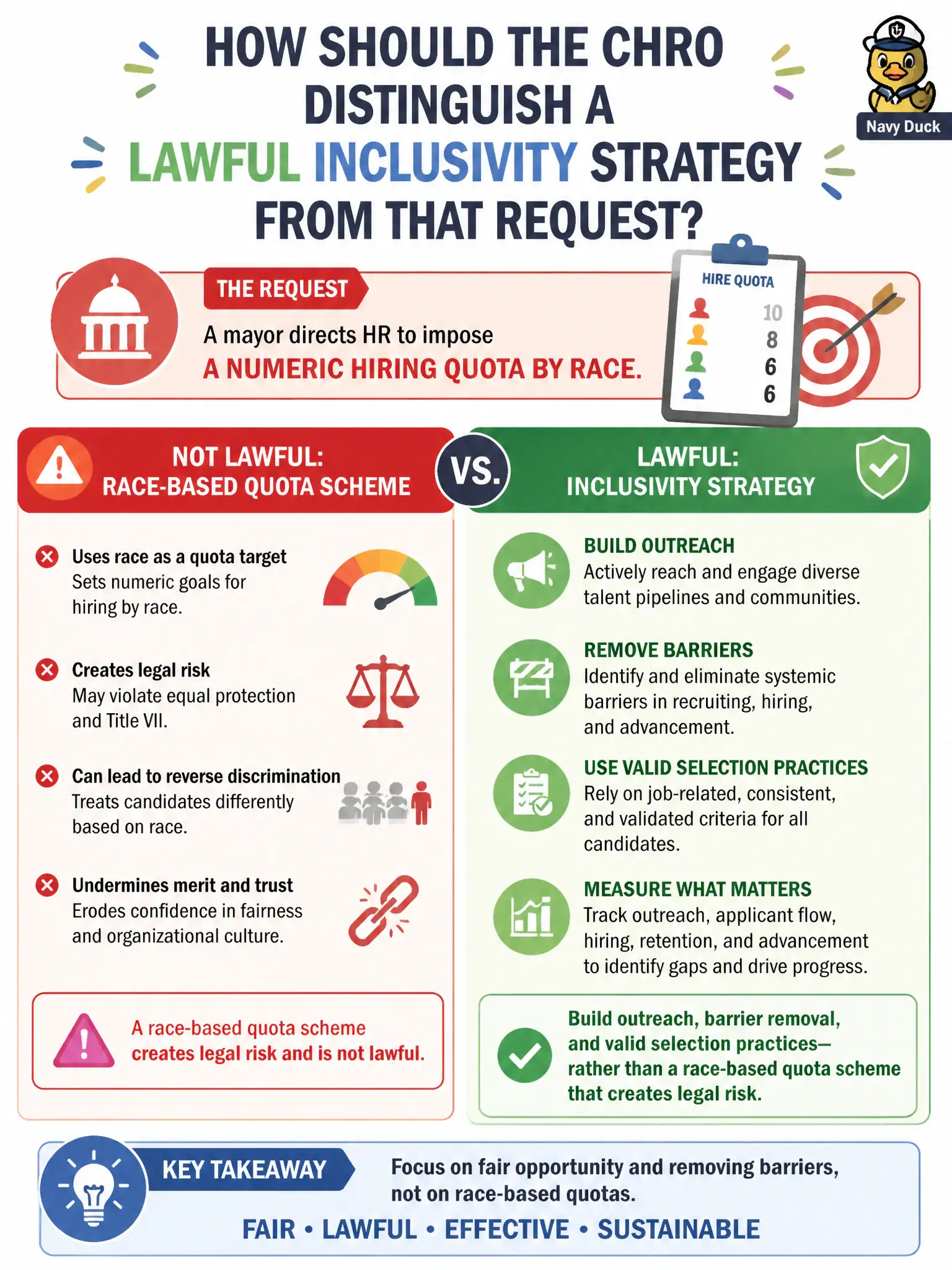
A mayor directs HR to impose a numeric hiring quota by race. How should the CHRO distinguish a lawful inclusivity strategy from that request?
Select an answer to reveal the explanation.
Short Explanation
A numeric race quota is a legal land mine, even when a mayor wants it. Lawful inclusivity still has plenty of tools: widen outreach, knock down real barriers, and keep selection job-related and valid. That is strategy that can survive a courtroom, not a headcount recipe by race.
Full Explanation
Building outreach, barrier removal, and valid selection practices rather than a race-based numeric hiring quota is how the CHRO distinguishes lawful inclusivity strategy from a mayor’s quota directive. Title VII and equal-protection principles generally prohibit race quotas and score-plus schemes for public employers; freezing hiring until census match or using race as a plus on every exam creates legal risk. Lawful tools remain: widen outreach, remove real barriers, keep selection job-related. Exam caveat: SPHR inclusivity strategies must be legally durable under U.S. federal law—not quota schemes even when elected officials request them. Operational check: decline the quota in writing with counsel, propose outreach and barrier-removal plans with measures, validate exams, and brief the mayor on lawful alternatives that still expand opportunity in civic hiring. In municipal practice, record the rationale in the recommendation packet so future leaders see why rejected options would weaken service, equity, or legal durability for residents. Re-validate after the next budget or bargaining cycle that the control still holds under current staffing and legal constraints. Lawful municipal inclusivity still has powerful tools—targeted outreach, barrier analysis, job-related validated selection—without adopting race quotas or exam plus-factors that create equal-protection and Title VII risk. Written counsel-backed refusal of quota directives protects the city while still expanding opportunity.