
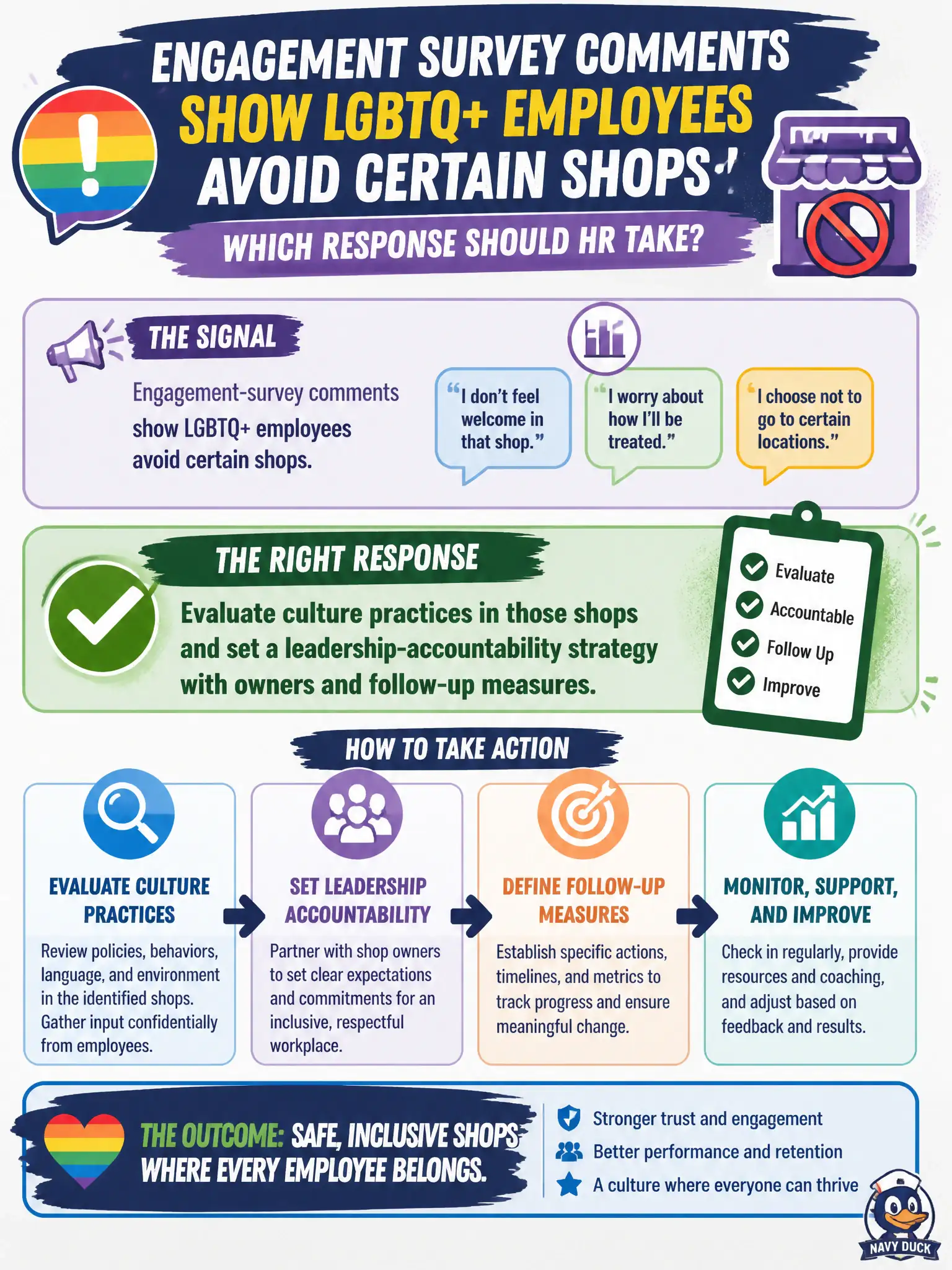
Engagement-survey comments show LGBTQ+ employees avoid certain shops. Which response should HR take?
Select an answer to reveal the explanation.
Short Explanation
A pride-month post does not fix a shop people are afraid to walk into. Survey comments like that are a climate finding, which means practices and bosses have to change. Put owners and follow-up measures on the shops that people avoid.
Full Explanation
Evaluating culture practices in shops LGBTQ+ employees avoid and setting a leadership-accountability strategy with owners and follow-up measures is the correct response to engagement-survey climate findings. A pride-month graphic does not fix a shop people fear entering; climate evidence requires practice and boss behavior to change. Deleting survey comments to reduce perceived legal exposure suppresses signal and increases risk. Transferring all LGBTQ+ employees into a single designated shop without changing the others abandons hostile workplaces and segregates talent. Exam caveat: SPHR inclusivity requires acting on climate evidence with practice change and leadership accountability, not communications or data suppression. Operational check: diagnose the named shops, set behavioral standards and leader owners, investigate harassment, measure climate follow-up, and refuse transfer-as-solution approaches that leave municipal workplaces unsafe for some employees. Climate findings that LGBTQ+ employees avoid specific shops are leadership problems requiring owners, investigation, and follow-up measures. Communications campaigns, data deletion, or concentrating people into a “safe” shop leave hostile municipal workplaces intact and shift burden onto targets instead of fixing culture.