
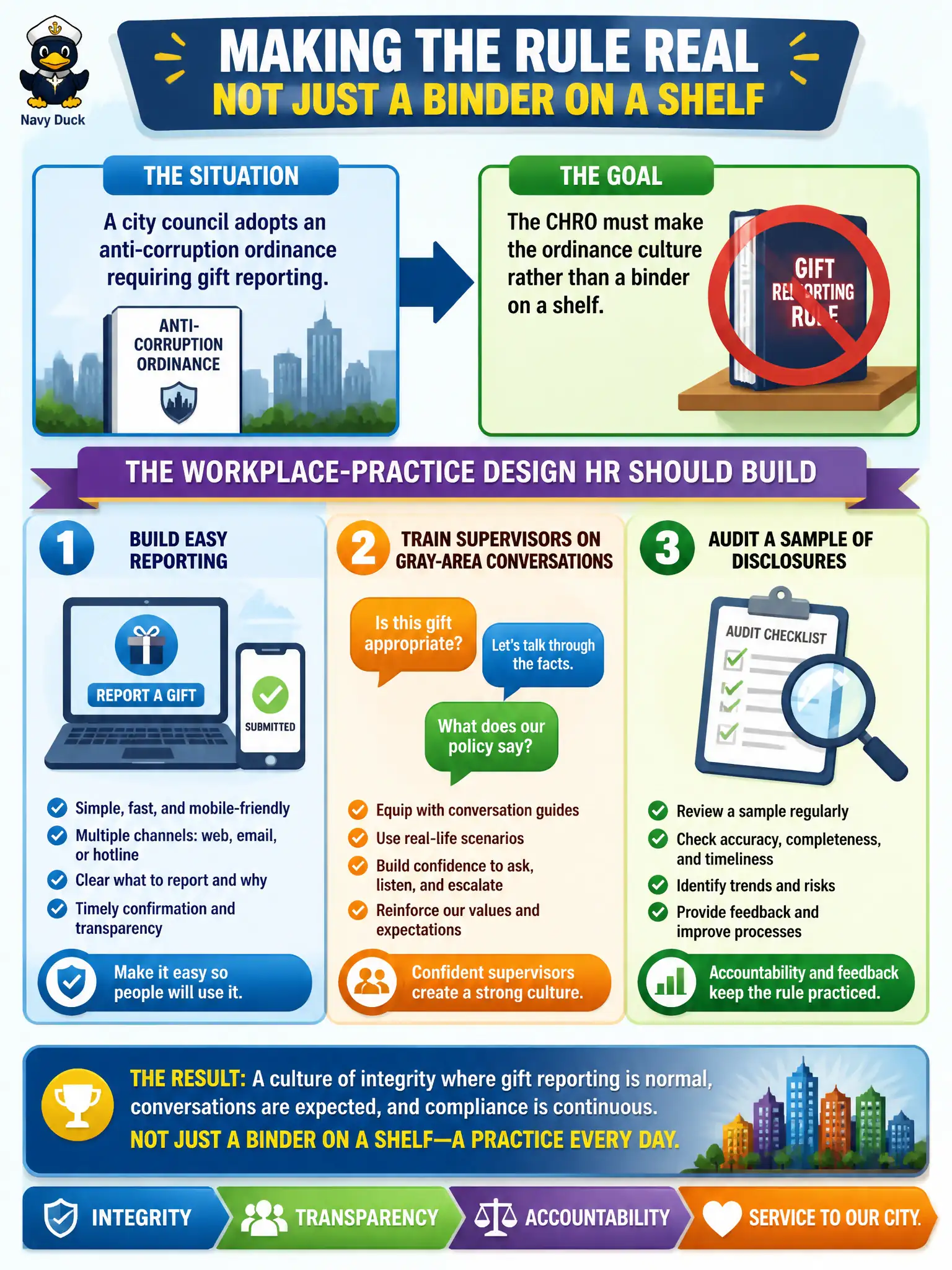
A city council adopts an anti-corruption ordinance requiring gift reporting. The CHRO must make the ordinance culture rather than a binder on a shelf. Which workplace-practice design should HR build?
Select an answer to reveal the explanation.
Short Explanation
A posted ordinance with no practice behind it is a speed-limit sign on an empty highway. Culture shows up when reporting is easy, supervisors can talk through the gray cases, and someone actually samples the disclosures. That is how a binder becomes how the city works.
Full Explanation
Building easy gift reporting, training supervisors on gray-area conversations, and auditing a sample of disclosures is correct so a council anti-corruption ordinance becomes culture rather than a binder on a shelf. Posting the ordinance with an annual acknowledgment, adding handbook language and waiting for the city attorney’s first complaint, or briefing only executives while treating supervisor gray-area talks as optional all stop at publication. Culture appears when reporting is usable on a busy workday, bosses can coach ambiguous gift situations, and someone samples disclosures for completeness. Exam caveat: SPHR ethics responsibility embeds anti-corruption in workplace practices and supervisory routines, not publications alone. Operational check: simplify reporting channels, train supervisors with municipal gift scenarios, audit a disclosure sample each quarter, remediate gaps, and report practice metrics to council or the ethics body overseeing the civic ordinance. Anti-corruption ordinances fail in cities when busy employees cannot report gifts easily and supervisors lack scripts for gray cases such as meals, tickets, or vendor swag at conferences. Easy channels, scenario training, and sampled audits convert the ordinance into daily municipal practice and create a detection trail council can oversee.