
Department heads treat take-home vehicles and engine idling as perks. How should the CHRO recast those everyday practices?
Select an answer to reveal the explanation.
Short Explanation
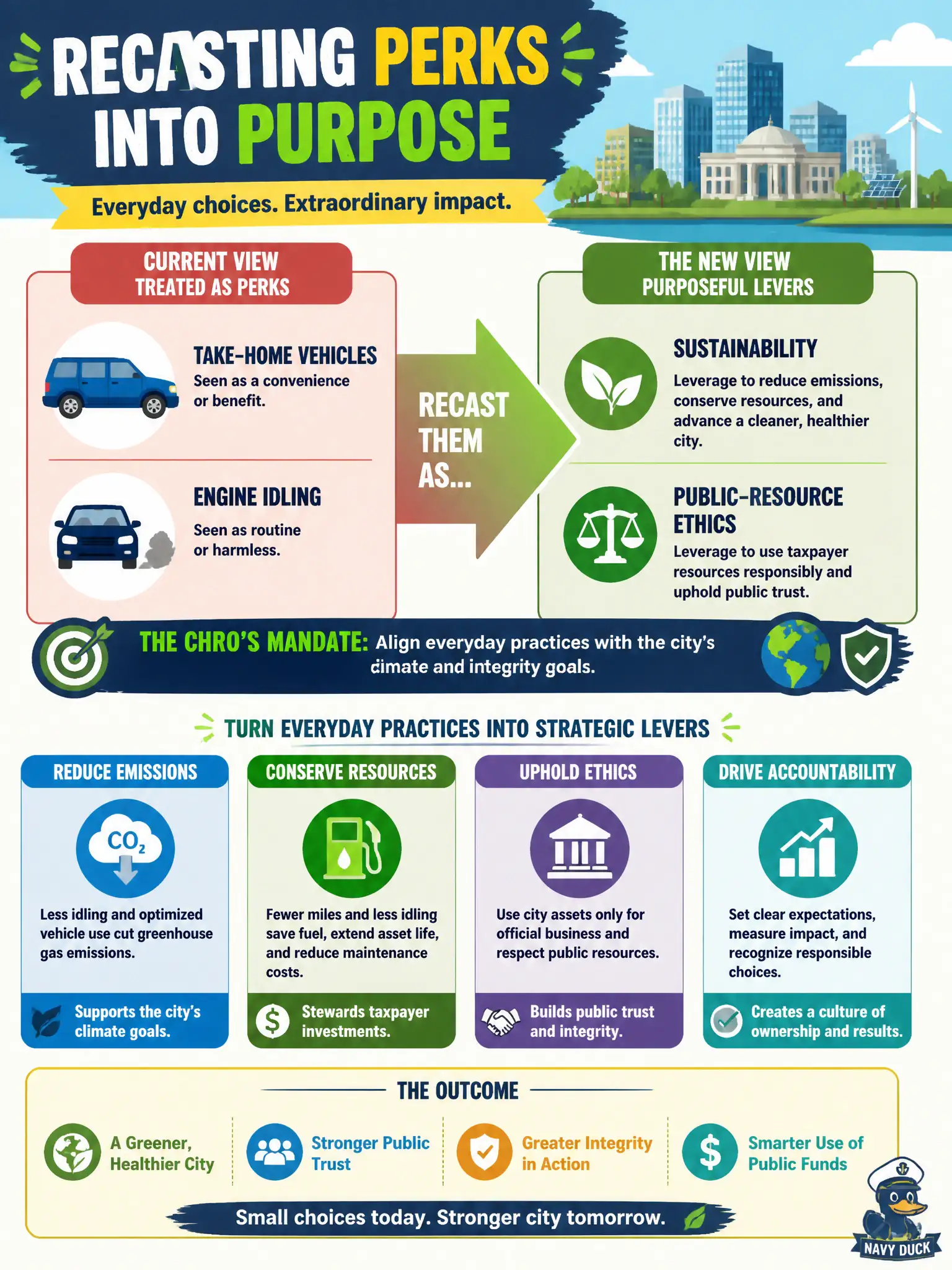
A take-home sedan idling at a ballgame is not just a perk—it is a public asset burning fuel on the city's integrity and climate tab. Everyday tools teach culture faster than a climate slide deck. Recast the practice as ethics and sustainability, and the perk story loses its cover.
Full Explanation
Recasting take-home vehicles and engine idling as sustainability and public-resource ethics levers tied to the city’s climate and integrity goals is correct because everyday workplace practices teach culture faster than slide decks. A take-home sedan idling at a ballgame is a public asset burning fuel on the city’s integrity and climate tab, not merely a bargained perk beyond discussion. Treating the practices as fleet-depreciation items only strips ethics and culture dimensions from tools residents fund. Expanding them as executive-only morale benefits worsens misuse and signals that rules bend upward. Claiming HR cannot discuss them without a union waiver may be wrong where management rights and policy still govern misuse, and it abdicates culture leadership. Exam caveat: SPHR treats routine resource-consuming practices as ethics and sustainability culture levers, not informal perks beyond review. Operational check: rewrite take-home and idling rules with public-interest criteria, train supervisors, audit compliance, publish exceptions, and report practice metrics with the city’s climate and integrity updates for residents. Public fleets and fuel are resident-funded assets; informal perk framing hides ethics and climate impacts that belong in workplace-practice design. Policy rewrite, supervisor training, exception logs, and compliance audits turn take-home and idling rules into lived culture supporting the city’s climate and integrity commitments rather than break-room custom.