
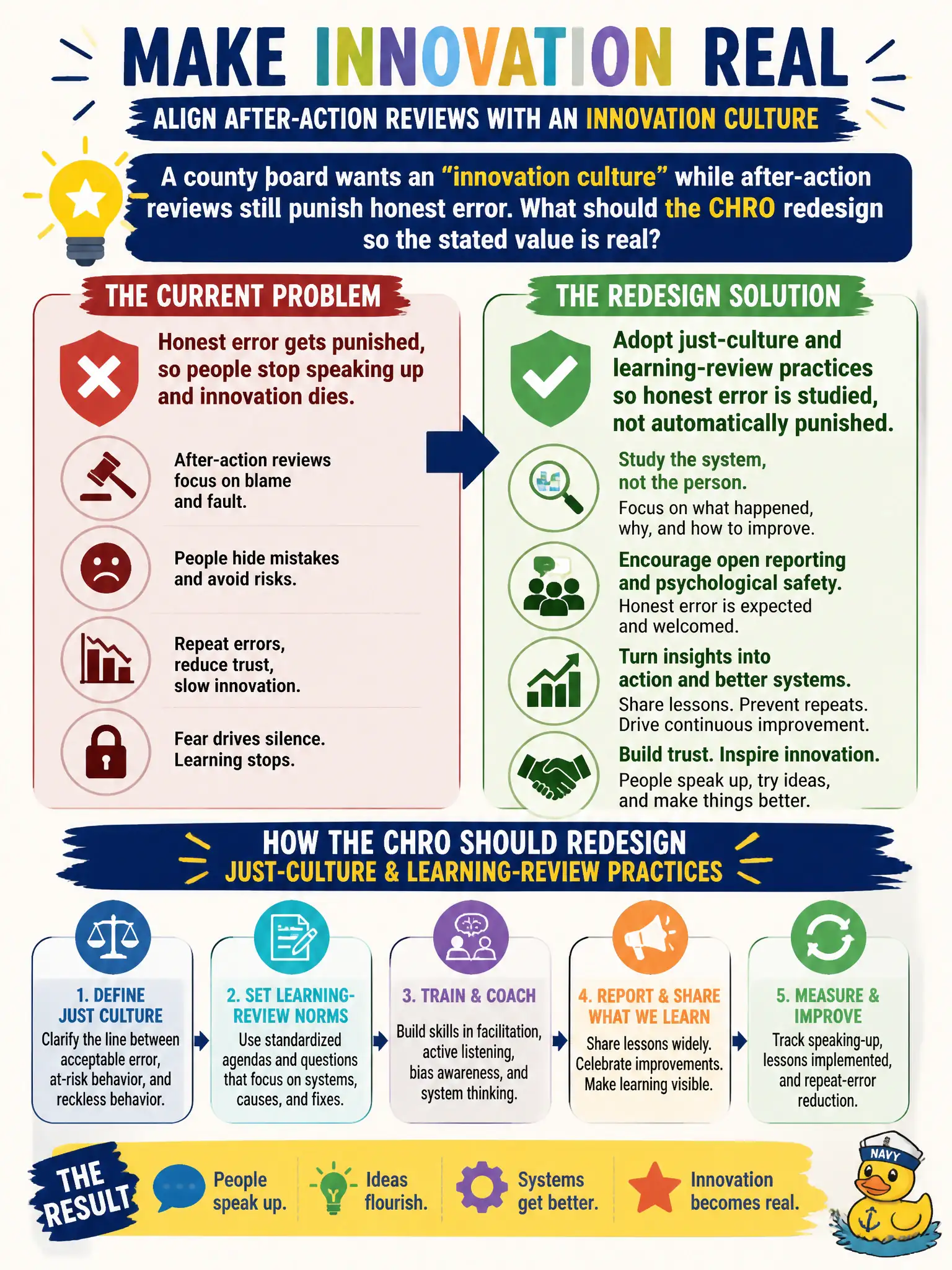
A county board wants an "innovation culture" while after-action reviews still punish honest error. What should the CHRO redesign so the stated value is real?
Select an answer to reveal the explanation.
Short Explanation
You cannot run a suggestion box and a trapdoor on the same floor. If honest mistakes in after-action reviews still end careers, nobody will innovate. Just-culture learning reviews are how the consequence system starts matching the poster.
Full Explanation
Redesigning just-culture and learning-review practices so honest error is studied—not automatically punished—is required when a county board wants an “innovation culture” while after-action reviews still punish honest mistakes. Stated values fail unless consequence systems match; suggestion boxes and trapdoors cannot share the same floor. A new slogan and awards banquet leaving discipline unchanged preserves fear. A rule that no after-action may name process failure blocks learning. Transferring reviews to public information so HR never sees errors hides signal. Exam caveat: SPHR culture strategy aligns consequence systems with innovation and learning values through just-culture design. Operational check: distinguish honest error, system failure, and reckless conduct in after-action policy; train reviewers; protect good-faith reporters; measure reporting volume and repeat incidents; and brief the board when punishment patterns again suppress civic learning. In municipal practice, record the rationale in the recommendation packet so future leaders see why rejected options would weaken service, equity, or legal durability for residents. Re-validate after the next budget or bargaining cycle that the control still holds under current staffing and legal constraints.