
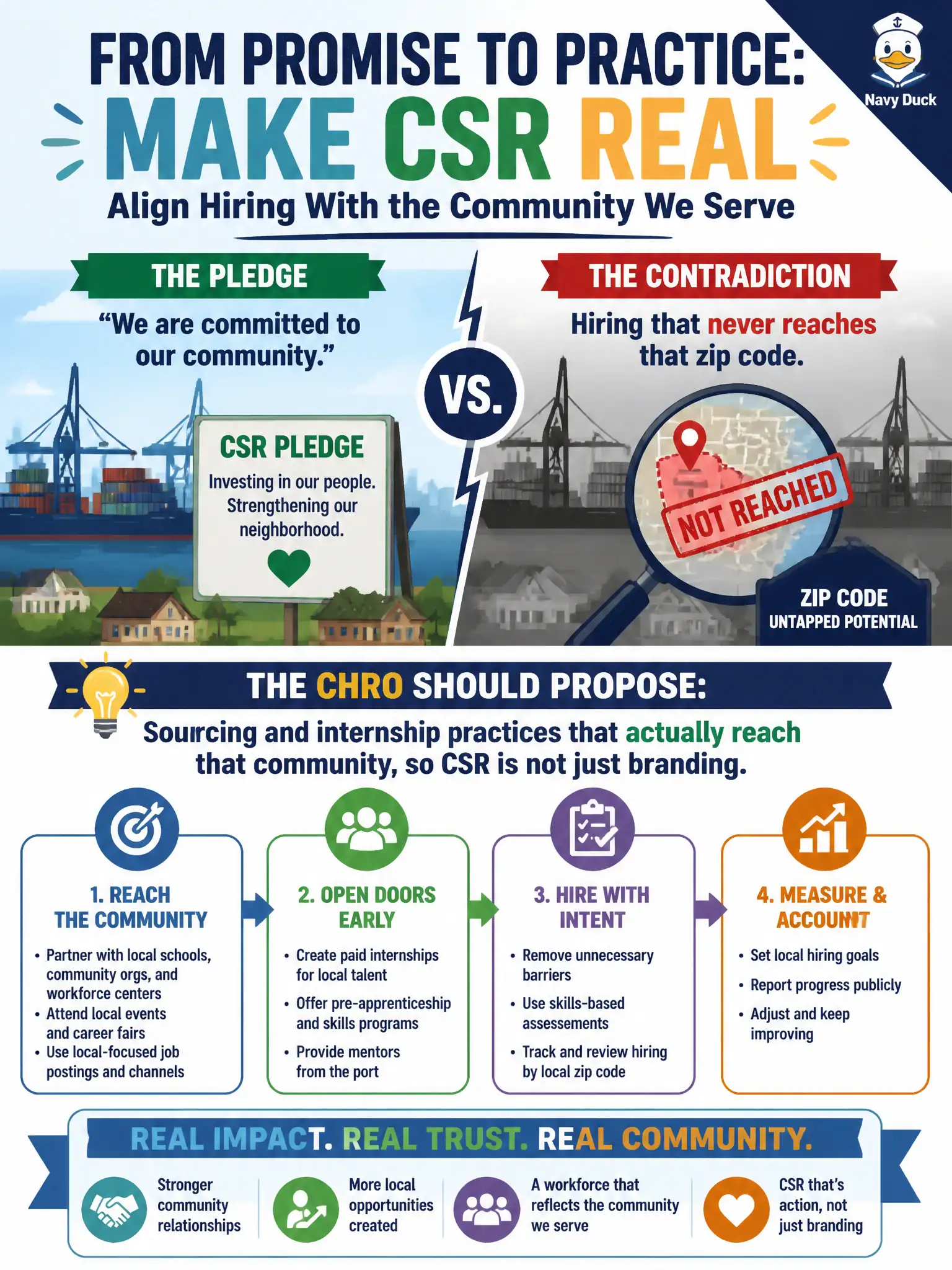
A port authority's CSR pledge to the adjacent neighborhood is contradicted by hiring that never reaches that zip code. What should the CHRO propose?
Select an answer to reveal the explanation.
Short Explanation
Promising the waterfront neighborhood a future and then never hiring from it is a billboard, not CSR. Culture strategy is who gets a shot at the job. Sourcing and internships that reach that zip code make the pledge real.
Full Explanation
Proposing sourcing and internship practices that actually reach the adjacent neighborhood is correct so the port authority’s CSR pledge is not mere branding. Culture and CSR aligned to vision require people-practice change; if hiring never reaches the zip code named in the commitment, the pledge is contradicted daily by talent systems. A new CSR brochure with neighborhood photos leaving sourcing unchanged is theater. A donation to a local festival in lieu of hiring-practice change buys goodwill without pathway jobs. Relocating CSR to marketing because hiring is a “separate brand” severs the pledge from employment reality. Exam caveat: SPHR ties corporate social responsibility commitments to workforce practices such as sourcing and early-career pipelines. Operational check: map applicant and hire geography against the pledged community, redesign sourcing and paid internships to reach that zip code, set hire and internship targets with owners, and report progress beside the port’s CSR scorecard for residents. In municipal practice, record the rationale in the recommendation packet so future leaders see why rejected options would weaken service, equity, or legal durability for residents.