
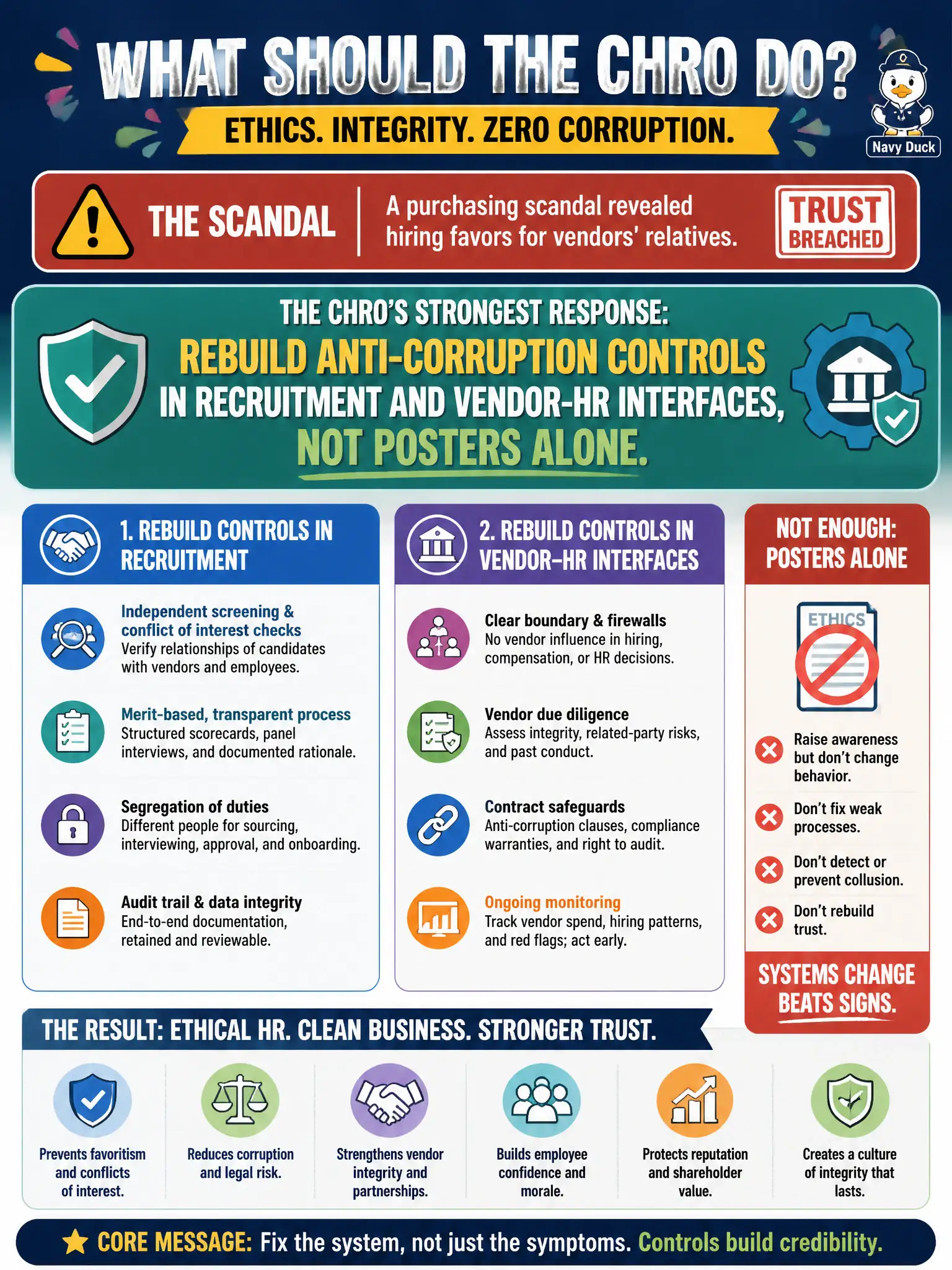
A purchasing scandal revealed hiring favors for vendors' relatives. What is the CHRO's strongest ethics and anti-corruption response?
Select an answer to reveal the explanation.
Short Explanation
A new poster in the break room does not stop a hiring favor—the process that allowed the favor does. Ethics has to live in who gets interviewed, who can influence a requisition, and how vendor-HR contact is logged. Rebuild those practices or the scandal is just waiting for a reprint.
Full Explanation
Rebuilding anti-corruption controls in recruitment and vendor-HR interfaces—not reprinting posters—is the strongest ethics response after a purchasing scandal revealed hiring favors for vendors’ relatives. Ethics strategy must live in who gets interviewed, who can influence a requisition, and how vendor contact with hiring is logged and restricted. Reprinting the code with a new signature page is acknowledgment theater. Transferring investigation to purchasing while leaving hiring unchanged leaves the people pathway open. Banning all vendor contact, including legitimate contract administration, overcorrects and breaks operations. Exam caveat: SPHR anti-corruption work embeds controls in people practices, not only in codes of conduct. Operational check: segregate vendor influence from selection panels, require conflict disclosures on requisitions, audit hires tied to active vendors, retrain hiring managers, and report control tests to the ethics board or council audit committee. In municipal practice, record the rationale in the recommendation packet so future leaders see why rejected options would weaken service, equity, or legal durability for residents. Re-validate after the next budget or bargaining cycle that the control still holds under current staffing and legal constraints.