
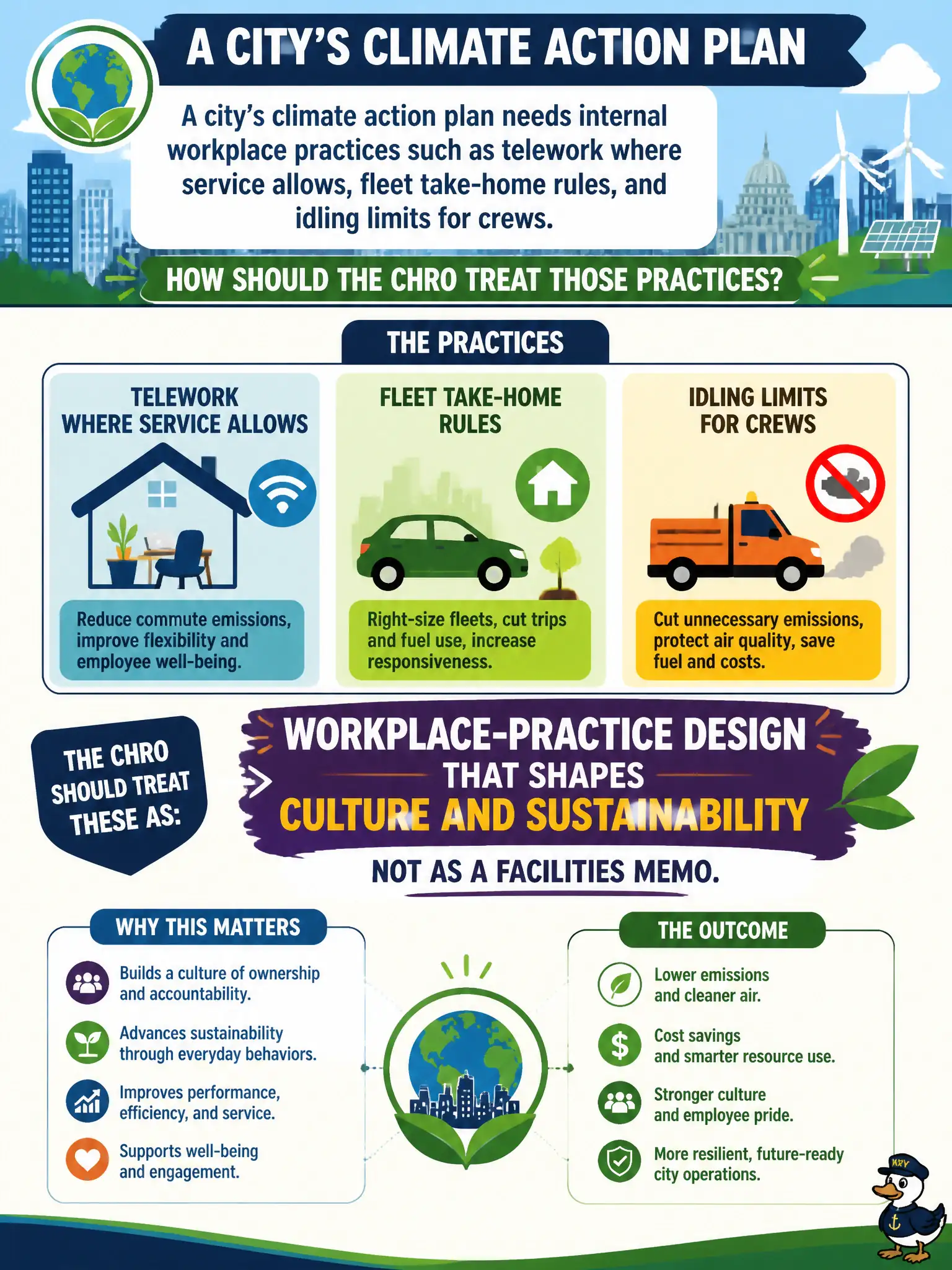
A city's climate action plan needs internal workplace practices such as telework where service allows, fleet take-home rules, and idling limits for crews. How should the CHRO treat those practices?
Select an answer to reveal the explanation.
Short Explanation
Climate goals that never touch how people work are a brochure. Telework rules, take-home vehicles, and idling are daily habits, and habits are culture. HR designs those practices on purpose so the climate plan lives in the workday, not only in public works.
Full Explanation
Treating telework where service allows, fleet take-home rules, and idling limits as workplace-practice design that shapes culture and sustainability—not as a facilities memo—is correct for a city’s climate action plan. SPHR culture responsibility includes sustainability habits people practice daily with public assets. Leaving practices as a public-works SOP with no HR role abandons culture design after the climate plan is adopted. Framing them as optional senior perks separates behavior from strategy. A one-time poster campaign assumes behavior change without redesigning rules and accountability. Exam caveat: SPHR links sustainability goals to workplace practices HR helps design and reinforce. Operational check: rewrite telework, take-home, and idling policies with service exceptions, train supervisors, audit idling and take-home compliance, and report practice metrics beside climate plan milestones for residents. In municipal practice, record the rationale in the recommendation packet so future leaders see why rejected options would weaken service, equity, or legal durability for residents. Re-validate after the next budget or bargaining cycle that the control still holds under current staffing and legal constraints.