
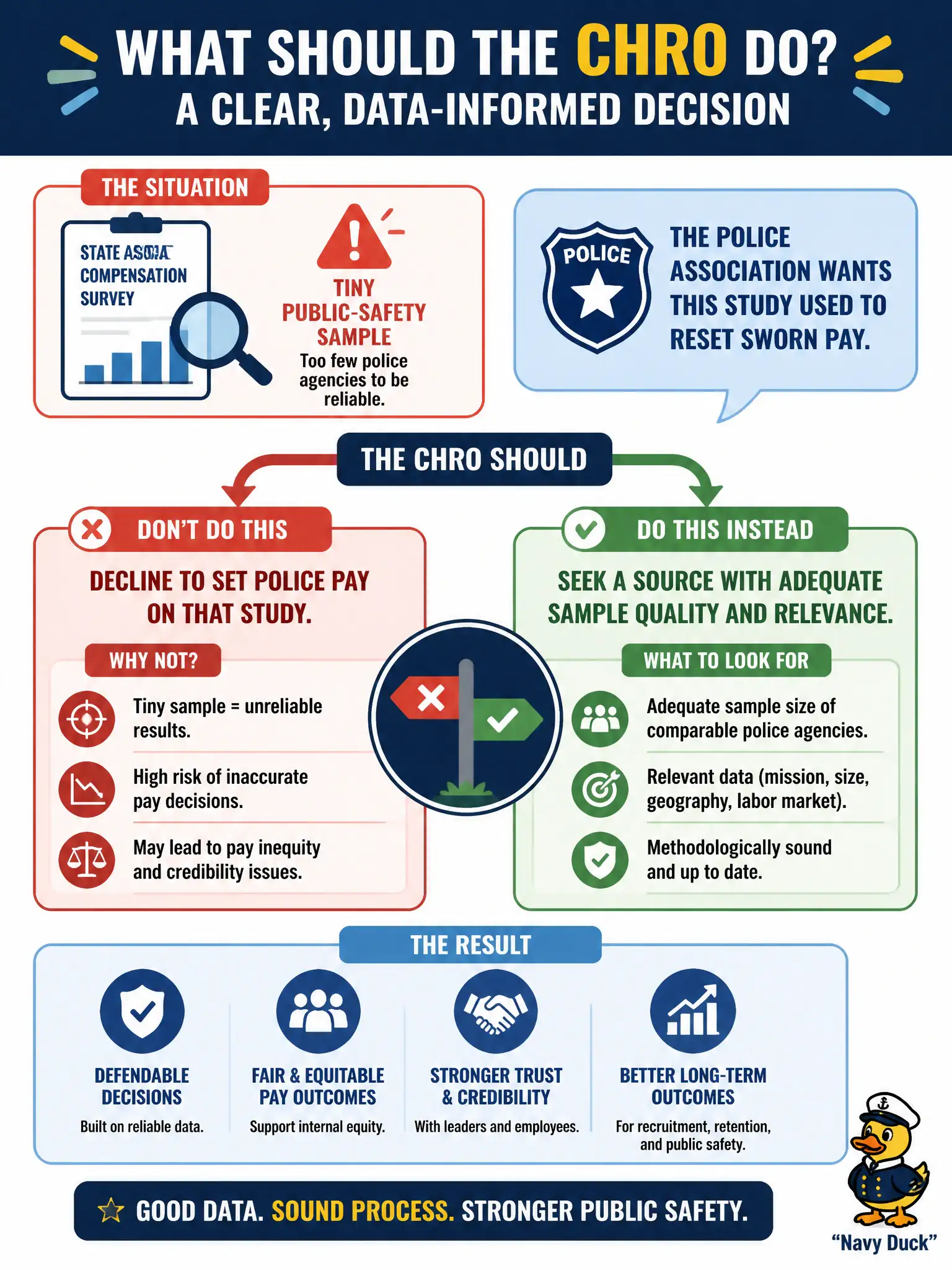
A state association compensation survey has a tiny public-safety sample, and the police association wants it used to reset sworn pay. What should the CHRO do?
Select an answer to reveal the explanation.
Short Explanation
A survey with almost no police jobs in it is a menu with one entrée—do not price the whole restaurant from that plate. Sample quality can disqualify a study even if the logo looks official. Find a source with enough relevant public-safety matches, or do not set sworn pay from it.
Full Explanation
Declining to set police pay on a state association survey with a tiny public-safety sample and seeking a source with adequate sample quality and relevance is correct because credible salary information requires adequate n for the jobs priced. Weighting a tiny n double because the class is hard to fill invents precision. Inferring sworn pay from civilian portions mismatches work. Adopting figures because association branding looks official confuses logo with method. Exam caveat: SPHR rejects pay studies that fail sample-quality and relevance screens even when politically convenient. Operational check: document the n-count and job-match gaps, refuse to reset sworn ranges on that study, procure a survey with adequate public-safety matches, and explain the evidence standard to the police association and county board. In municipal practice, record the rationale in the recommendation packet so future leaders see why rejected options would weaken service, equity, or legal durability for residents. Re-validate after the next budget or bargaining cycle that the control still holds under current staffing and legal constraints. Association branding does not convert a thin public-safety cell into a pricing study. Weighting a tiny n-count, inferring sworn pay from civilian rows, or adopting figures to quiet bargaining pressure all manufacture false precision. Document the sample failure for the police association and board, procure a survey with adequate sworn matches, and freeze range resets until that evidence arrives so municipal pay actions remain defensible.